Table Lamps Guide: Sizes, Shade Shapes, Bulbs and Placement
A table lamp does two jobs at once. It gives you light where you need it, and it adds shape, color and warmth to a room. A lamp that is too tall for the table, too dim for reading or too bright for a bedroom makes a room feel off, even when everything else is right. Choosing a lamp by size, shade and bulb solves most of these problems.
A table lamp is a portable light that sits on a table, dresser or desk. It has a base, a shade, a bulb and a switch or dimmer. Lamps provide ambient light for a room, task light for reading or working and accent light for decoration.
This guide explains how to choose the right size, how to pick the base and shade, which bulbs to use, where to place lamps and how to avoid common mistakes. It also covers cord management and safety.
How tall should a table lamp be?
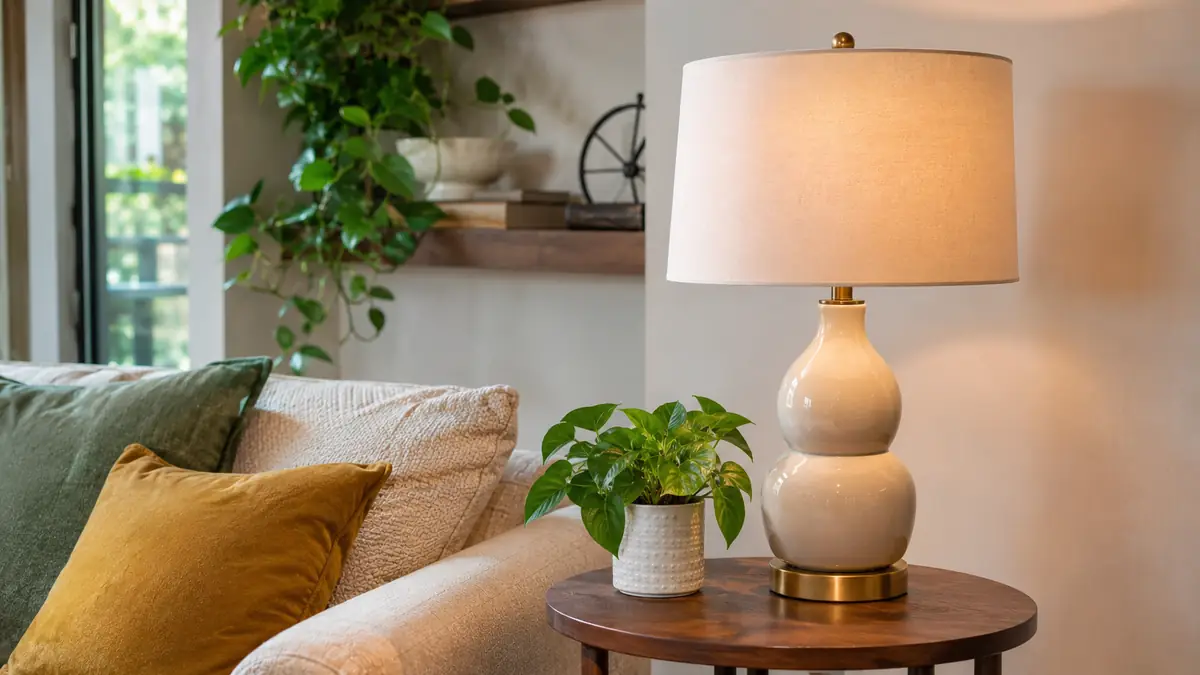
A good rule is that the bottom of the shade should sit at about eye level when you are seated. For a lamp beside a sofa or chair, a total height of about 26 to 34 inches usually works. For a bedside lamp, aim for a lamp whose shade bottom is roughly at the height of your shoulder when you sit up in bed.
Match the lamp to the table. A common guideline is that the lamp should be about one and a half times the height of the table it sits on, or less. For a 24-inch nightstand, a lamp about 24 to 28 inches tall is usually balanced. A lamp that is too large for the table looks crowded, and one that is too small looks lost.
Consider the width. The lamp base should not take up more than about a third of the table surface, so you still have space for a phone, a book or a drink. A pair of lamps should match in height and scale.
What base style should you choose?
The base sets the style. Ceramic and glass bases suit traditional and transitional rooms and come in many colors. Metal bases in brass, black or nickel suit modern and industrial looks. Wood bases give a warm, natural feeling, and woven or rattan bases suit coastal and boho spaces.
Think about the shape. A slim column base suits a narrow table, a wide gourd shape adds presence to a console and a sculptural base becomes a decorative object. Match the finish to other elements in the room, such as picture frames, hardware or furniture feet.
Check stability. A lamp with a narrow base and heavy shade can tip over. Look for a weighted base, and choose a sturdy one if you have kids or pets.
How do you choose a shade?
The shade controls how light spreads and how the lamp looks. Drum shades are cylinder shaped and give a modern, balanced glow. Empire shades are narrower at the top and suit classic lamps. Bell and coolie shades are tapered and add a traditional feel.
Shade material changes the light. Linen and cotton diffuse light softly. Paper gives a bright, clean light. Dark or lined shades direct light up and down, creating a dramatic effect, and a white lining gives more light. Choose a shade color that suits the room, remembering that darker shades reduce brightness.
Check the proportions. The shade should be about the same height as the base or slightly shorter, and its width should be wide enough to hide the bulb and socket when seen from the side. As a guide, the shade’s bottom diameter is often about the same as the height of the base.
Which bulbs should you use?
LED bulbs are the usual choice. They use less energy, run cool and last a long time. Choose a bulb with a color temperature that fits the room. About 2700K gives a warm, cozy light that suits bedrooms and living rooms. 3000K is slightly whiter, and 4000K or higher feels bright and cool, which suits workspaces.
Check brightness, measured in lumens. A bedside lamp for reading usually needs about 450 to 800 lumens, and a reading lamp for a desk or chair may need 800 lumens or more. For soft ambient light, 300 to 450 lumens is enough. A dimmable bulb with a dimmer or a touch switch lets you change the mood.
Check the color rendering index, or CRI. A CRI of 80 or higher makes colors look more natural. Make sure the bulb fits the lamp socket and does not exceed the maximum wattage listed on the lamp.
Where should you place table lamps?
Next to the sofa, a lamp provides light for reading and softens the room. Place it on a side table so the shade bottom is near eye level when seated. A pair of lamps on a console behind the sofa gives balance and ambient light.
On a bedside table, place the lamp so the light does not shine in your partner’s eyes. Choose a lamp with a shade that directs light down for reading, and keep it close to the bed. On a desk, place the lamp opposite your writing hand to avoid shadows, and angle it to light the work surface.
In an entryway, a lamp on a console welcomes guests and gives a warm first impression. In a dining room, a pair of lamps on a buffet adds soft light for dinner. Use lamps at different heights across the room to create layers of light.
How many lamps do you need?
A good lighting plan uses several sources. A room with only an overhead light can feel flat and harsh. Add two or three lamps at different heights and corners to create a soft glow. In a living room, one lamp near each seating area is a good start.
Pairs create symmetry, which suits bedsides and consoles. Single lamps suit side tables and desks. Use odd numbers of lamps around a room for a casual look, and spread them so no corner is dark.
Combine table lamps with floor lamps, wall sconces and overhead lighting. This gives you options for different activities, from reading to watching TV to entertaining.
How do you manage cords and stay safe?
Plan the cord path before you place the lamp. Use cord covers or clips to keep cords tidy, and avoid running them under rugs, where they can overheat or wear. Place lamps near outlets, and avoid extension cords for permanent use.
Check the plug and cord for damage. Replace frayed cords, and do not exceed the wattage rating. Keep lampshades away from heat and flammable items like curtains. For homes with children, choose lamps with stable bases and tamper-resistant outlets, or use cord shorteners.
Wireless and rechargeable lamps are an option for places with no outlet, such as a patio table or a bookshelf. They offer flexibility and avoid cord clutter.
What mistakes should you avoid?
The most common mistake is choosing a lamp that is the wrong size for the table. Another is using a bulb that is too bright or too dim for the purpose. A third is forgetting about the shade, which can block light or glare.
Others include placing a lamp too far from the seat, using only one lamp in a large room and mixing bulb color temperatures in one room. Try the lamp on the table with the bulb on before you commit, and check how the light looks at night.
Frequently Asked Questions
How tall should a bedside lamp be?
About 24 to 28 inches for a standard nightstand, with the shade bottom near shoulder height when you sit up.
What bulb is best for a table lamp?
A warm white LED, about 2700K, in 450 to 800 lumens works for most lamps. Use brighter bulbs for reading.
How big should a lamp shade be?
About the same height as the base or slightly shorter, and wide enough to hide the bulb.
Should table lamps match?
Pairs on a nightstand or console often match. Other lamps can differ if they share a color or finish.
Where should I put a lamp in a living room?
Beside the sofa and chairs, so the shade bottom sits near eye level when you are seated.
Conclusion
A good table lamp suits its table, gives the right light and fits the style of the room. Choose a height and base that are in proportion, pick a shade that diffuses light well and use a warm, dimmable LED.
Place lamps where you need them, and layer them with other lights. With a little planning, table lamps make a room more comfortable and more beautiful.
Related guides
 Gallery Wall Guide: Layouts, Spacing, Frame Heights and Hanging TipsA gallery wall turns a blank stretch of wall into the focal point of a room. It lets you mix photos, prints,…Read more →
 Floor Vases Guide: Sizes, Materials, Styling and What to Put in ThemA floor vase fills the awkward gaps in a room, such as an empty corner, the space beside a fireplace or the end…Read more →
 Wall Clocks Guide: Sizes, Styles, Movements and Where to Hang OneA wall clock is one of the few decor pieces that has to work as well as it looks. It should be easy to read fromRead more →
 Throw Blankets Guide: Sizes, Fabrics, Care and How to Style ThemA throw blanket is the easiest way to make a sofa or bed feel inviting. It adds color, texture and warmth, and…Read more →