Floor Vases Guide: Sizes, Materials, Styling and What to Put in Them
A floor vase fills the awkward gaps in a room, such as an empty corner, the space beside a fireplace or the end of a hallway. It adds height and shape without taking much room, and it gives you a place to show branches, dried stems or pampas grass. But tall vases can also tip, look out of scale or collect dust with nothing inside. A few simple rules help you choose and style one well.
A floor vase is a large vase that stands on the floor, often 20 to 40 inches tall or more. It can be a decorative object by itself, or it can hold stems, branches or flowers. Floor vases come in ceramic, glass, metal, wood and woven materials.
This guide covers sizes, materials, shapes, placement, what to put inside and how to keep a floor vase stable and safe. You will also find tips for homes with pets and children.
How tall should a floor vase be?
Most floor vases are 20 to 36 inches tall. A good guideline is to choose a vase that is about one third to one half of the height of the wall or nearby furniture, so it adds presence without overwhelming the space. Beside a sofa or armchair, a vase around the height of the arm to the back works well. In a tall entryway or next to a high window, a taller vase of 36 inches or more gives balance.
Consider the width as well. A narrow vase suits a tight corner, while a wide urn-shaped vase makes a statement in an open area. Check that you have enough clearance for walking around it, especially in hallways.
If you plan to fill the vase with branches or stems, the finished height will be taller than the vase itself. Branches can add 20 to 40 inches, so make sure the total fits under the ceiling and does not block lights or art.
Which materials work best?
Ceramic vases come in many colors and finishes, from glossy glazed to matte and textured. They are heavy and stable, but can chip or break. Glass vases look light and modern, and they show water and stems, which is great for fresh flowers. They need cleaning to avoid cloudy water.
Metal vases in brass, copper or black iron suit modern and industrial rooms and are durable. Woven rattan and wicker give a natural, textured look, but they are usually used with a liner for fresh flowers. Wood vases are warm and sturdy. Terracotta is rustic and breathable, and it often needs a liner for water.
Think about weight. Heavy materials resist tipping, which is helpful if you have kids or pets. Lightweight vases are easier to move, but they need stable weights or a wide base.
What shapes and styles are there?
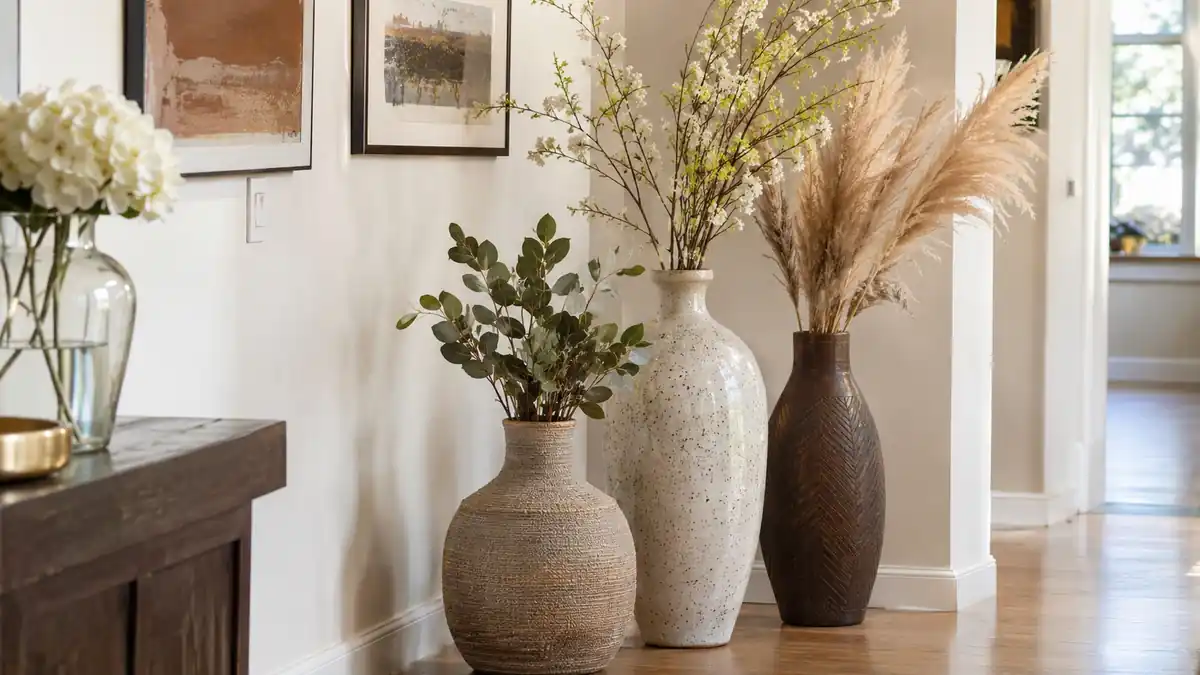
Cylinder vases are simple and modern, and they hold tall branches well. Bottle and bud shapes are slim and suit narrow spaces. Urn and amphora shapes feel classic and look elegant with a wide mouth. Gourd and bulb shapes are sculptural and look good even when empty.
Choose a style that matches your room. Minimal rooms suit clean lines and neutral colors. Traditional rooms suit ornate or classic shapes in blue and white or cream. Boho and coastal rooms suit woven or textured vases. A colorful vase can serve as an accent, and a neutral one blends in.
Consider whether the vase is meant to be seen empty. Many floor vases are beautiful enough on their own, which means you never have to worry about stems or water.
Where should you place a floor vase?
Corners are a classic spot, as a vase fills dead space and adds height. Beside a fireplace or a TV unit, a floor vase balances the vertical lines. In a hallway or entry, a vase at the end draws the eye and welcomes people in.
Next to a sofa or a bed, a vase can act like a side table decoration, but keep it away from walking paths. Beside a window, it balances curtains and adds a focal point. In a dining room, a vase near a buffet adds height to a low piece of furniture.
Avoid high-traffic spots where people can bump into the vase, and keep it away from doors that swing open. Leave a few inches between the vase and the wall, so stems do not get squashed, and so you can clean around it.
What can you put in a floor vase?
Branches are a popular choice. Eucalyptus, olive, birch, cherry and willow branches add height and a natural look. Choose branches that suit the season and cut them to varying lengths. Remove leaves that sit below the water line if you use fresh branches.
Dried stems last a long time and need no water. Pampas grass, wheat, bunny tail grass, reeds and dried palms create a soft, airy shape. Faux stems and branches look realistic if you choose good quality ones, and they need no care. Fresh flowers work in a tall vase, but they need water and a stable base.
You can also use the vase for decorative objects, such as rolled-up posters, umbrellas or bamboo sticks. A vase filled with decorative sand or stones adds weight and stability if you use light stems.
How do you make a floor vase stable?
Tall vases tip easily, so stability is important. Add weight to the bottom with sand, pebbles, marbles or decorative stones. For fresh flowers, put a liner or a plastic container inside, so you can fill it with water and still add weight around it.
Place the vase on a flat, even surface. On a rug, check that it does not wobble. Use museum putty or adhesive wax to secure the base to the floor if you have kids or pets, and choose a vase with a wide base. Do not overfill the vase with top-heavy branches.
If you have an active pet or a toddler, choose a heavy ceramic vase or a vase that is hard to knock over, and keep stems that are toxic to pets out of reach. Lilies, for instance, are harmful to cats.
How do you style the stems?
Start with the tallest stems at the back and center, and add shorter ones around. Use an odd number of branches, such as three, five or seven, for a natural look. Let the branches lean and spread out rather than standing straight.
Match the stem volume to the vase. A wide urn looks best with a full, loose arrangement, while a slim cylinder suits a few tall stems. Keep the proportions balanced, with the arrangement about one and a half to two times the height of the vase.
Refresh the arrangement with the seasons. Use green branches in spring, dried grasses in autumn, and evergreen or berry branches in winter. Dust dried stems with a soft brush or a hair dryer on a cool setting.
What mistakes should you avoid?
The most common mistake is choosing a vase that is too small for the space, which looks lost. Another is placing a tall, light vase in a traffic area, where it can tip. A third is using stems that are too thin and floppy for the vase.
Others include ignoring the ceiling height, not weighting the vase, putting a vase in direct sun if it holds fresh flowers and not cleaning it. Measure the space, choose a stable vase and style it to suit the room.
Frequently Asked Questions
How tall should a floor vase be?
Most are 20 to 36 inches. Choose a height that is in scale with nearby furniture and the wall.
What can I put in a floor vase?
Branches, dried grasses, faux stems or fresh flowers. An empty sculptural vase also looks good.
How do I stop a floor vase from tipping?
Add sand or stones in the bottom, use a wide base and use museum putty on the floor.
Where should I put a floor vase?
In a corner, beside a fireplace or sofa, at the end of a hallway or next to a window.
Are floor vases safe with pets?
Yes if they are heavy and stable, and if the stems are not toxic. Keep lilies and similar plants away from cats.
Conclusion
A floor vase adds height, texture and style to a room. Choose a size that suits the space, pick a material that fits your style and place it where it will not be bumped. Add weight at the bottom, and style it with branches, dried stems or leave it empty.
With a stable base and some seasonal updates, a floor vase becomes an easy way to make a room feel complete.
Related guides
 Gallery Wall Guide: Layouts, Spacing, Frame Heights and Hanging TipsA gallery wall turns a blank stretch of wall into the focal point of a room. It lets you mix photos, prints,…Read more →
 Table Lamps Guide: Sizes, Shade Shapes, Bulbs and PlacementA table lamp does two jobs at once. It gives you light where you need it, and it adds shape, color and warmth…Read more →
 Wall Clocks Guide: Sizes, Styles, Movements and Where to Hang OneA wall clock is one of the few decor pieces that has to work as well as it looks. It should be easy to read fromRead more →
 Throw Blankets Guide: Sizes, Fabrics, Care and How to Style ThemA throw blanket is the easiest way to make a sofa or bed feel inviting. It adds color, texture and warmth, and…Read more →