Floor Mirror Guide: Sizes, Leaning vs Freestanding, Placement and Anti-Tip Safety
A floor mirror is a tall mirror that stands on the floor, usually leaning against a wall. It lets you check your whole outfit, makes a room feel bigger and bounces light around. It is one of the easiest ways to add style and function to a bedroom, closet, entryway or living room. But a tall piece of glass is also something you do not want to fall. Choosing the right size, placing it well and securing it make the difference.
This article is part of our home decor accessories guide, where you can compare related options.
A floor mirror, also called a full-length mirror, is a tall mirror that stands on the floor, either leaning against a wall, standing on its own stand or hanging on a wall. This guide explains sizes, the types (leaning, freestanding and wall-mounted), where to place it, how to anchor it safely, how to choose a frame and how to clean and care for it. “Shatterproof” and “explosion-proof” glass claims are seller claims, and I found no authoritative source on glass thickness, so check manufacturer specs.
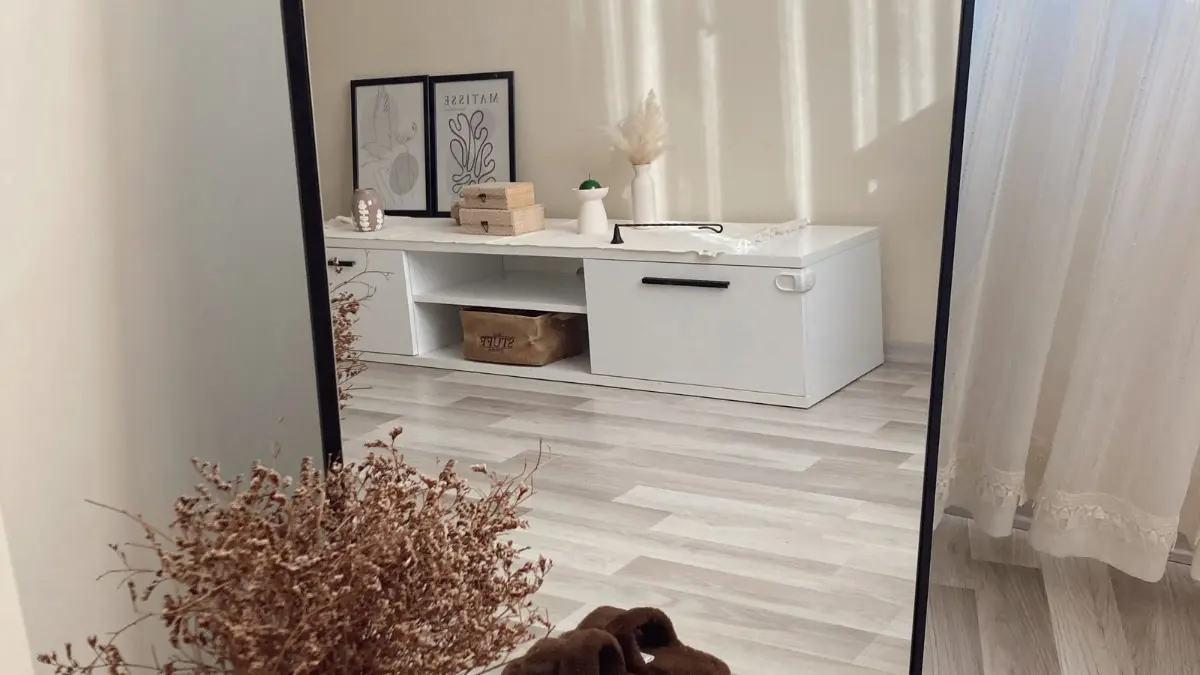
Standard Sizes
One source says a standard floor-length mirror is typically around 60 to 72 inches in height, with taller options available. Retailer listings show common sizes such as 56 by 21 inches (arched), 59 by 16 inches, 60 by 20 inches, 64 by 21 inches, 68 by 26 inches and 72 by 44 inches.
How to choose a size: To see your full body, choose a mirror at least as tall as you, or about 60 inches or more for most adults. Wide mirrors show more of the room and are good for dressing areas. Narrow mirrors fit tight spaces and walls. Oversized mirrors make a statement and bounce more light.
A guide for small bedrooms advises measuring your wall and choosing a mirror that does not overwhelm the room. In a small bedroom, a narrower mirror between a door and a window can work well.
| Height | Best for |
|---|---|
| About 56 to 60 inches | Small rooms, narrow walls |
| About 64 to 68 inches | Most adults |
| About 72 inches or more | Tall people, statement mirrors |
Types of Floor Mirrors
Leaning mirror: rests against the wall on the floor. Casual and easy to move. Needs anchoring so it cannot slide or tip. Freestanding mirror (with stand): has a built-in stand or easel at the back. Many modern freestanding mirrors have a fold-away stand, which can be folded flat so the mirror leans directly against the wall. Some can pivot or tilt. Wall-mounted full-length mirror: hangs on the wall with brackets or hooks. Some sellers include screws and anchors so the mirror can be mounted. It keeps the floor clear and is the most secure. Over-the-door mirror: hangs on the back of a door. No drilling, good for renters and dorms. Cheval (pivoting) mirror: a mirror in a frame that tilts on a pivot. Classic bedroom piece. Mirror with lights: a full-length mirror with built-in LED lights. Good for makeup and dressing.
Many models offer multiple options: standing, hanging or leaning.
Frame Styles and Shapes
Thin metal frames. Aluminum alloy frames in black, gold or silver. Modern and slim. Wood frames. Warm and classic. Can be painted or stained. Arched mirrors. Soft curve at the top. Popular now. See the arched bookcase guide for the arch shape. Rounded rectangle. Rounded corners for a modern look. Rectangular. Classic and flexible. Irregular or organic shapes. Add a design twist. Frameless. Sleek and minimal. Ornate or vintage frames. For traditional rooms.
Match the frame to your furniture, bed frame and hardware.
Where to Put a Floor Mirror
Bedroom. Near the closet or beside the dresser, where you dress. Closet or dressing area. For checking outfits. Entryway. A last check before leaving, and it makes the space feel bigger. Living room. An oversized mirror leaning behind a sofa or console adds depth. Hallway. Opens a narrow space. Bathroom. Moisture can damage frames. See the bathroom mirrors guide. Dance or yoga space. Full-length wall mirrors.
Placement tips: Reflect light. Place across from or beside a window to bounce daylight. Reflect something nice. A view, art or a plant. Avoid reflecting clutter. Do not put it directly opposite the bed if you do not like seeing yourself when you wake up. Keep it out of direct sun that could create glare or heat. Avoid high-traffic paths where it could be bumped.
Safety: Anchoring and Anti-Tip
A tall mirror can tip or slide. A leaning or freestanding mirror should be secured to the wall.
One guide recommends always securing a leaning or freestanding mirror with anti-tip safety straps anchored directly into the wall. Another advises placing it on a stable surface and securing it with wall anchors if necessary to prevent tipping. A third suggests anchoring the top of a leaning mirror so that children, pets or bumps cannot knock it over.
How to secure a mirror:
- Find a wall stud, if possible.
- Attach an anti-tip strap or bracket to the back of the mirror frame.
- Screw the other end into the stud or a rated anchor.
- Check that the strap is tight and the mirror cannot slide.
- Place felt or rubber pads at the bottom to prevent slipping.
Check the mirror regularly. In earthquake-prone areas, take extra care.
Glass Safety
Retailer listings often claim “shatterproof” or “explosion-proof” glass, but none gave a thickness or a standard. Those claims come from sellers, not testing bodies, so treat them with caution. Some mirrors include a safety film on the back to hold glass if it breaks. Ask the seller what kind of glass and backing the mirror has. If you have small children or pets, a mirror with a safety backing and a secure anchor is a better choice.
Care and Cleaning
Dust with a soft, dry cloth. Clean glass with a gentle glass cleaner. Spray the cloth, not the mirror, to prevent liquid from seeping behind the edges and damaging the silvering. Avoid ammonia-heavy cleaners that can damage frames. Wipe frames with a damp cloth. Keep moisture away from the edges. Check hardware and straps every few months. Move carefully. Lift with two hands.
How to Hang a Full-Length Mirror
If you want to wall-mount, there is a question of height. One guide discusses how high to hang a full-length mirror. A common approach is to make sure the mirror shows your head to your feet, with the bottom a few inches off the floor. Use heavy-duty hardware rated for the mirror’s weight, and mount into studs.
How to Choose a Floor Mirror
Measure the wall space. Choose a height that shows your full body. Choose a width for your room. Pick a type: leaning, freestanding or wall-mounted. Pick a frame style and finish. Check the glass and backing. Plan the anti-tip anchor. Check delivery and weight. Read reviews for notes on distortion and frame quality.
What mistakes should you avoid?
A few common mistakes are worth avoiding: not anchoring a leaning mirror; buying a mirror that is too short to see your whole body; placing it where it gets bumped; reflecting clutter or a bright light directly; trusting “shatterproof” without details; cleaning with liquid that seeps behind the glass.
Frequently Asked Questions
What size is a standard floor mirror?
Typically 60 to 72 inches tall, with various widths.
Do I need to anchor a leaning mirror?
Yes. Use anti-tip straps anchored into the wall.
What is the difference between leaning and freestanding?
A leaning mirror rests on the wall. A freestanding mirror has a stand and may also lean.
Where is the best place for a floor mirror?
Where you dress, in an entryway or across from a window to reflect light.
Is a floor mirror safe for kids?
With a secure anchor and safety backing, yes. Keep it out of high-traffic spots.
How do I clean a floor mirror?
Use a soft cloth and a gentle glass cleaner sprayed onto the cloth.
Can I wall-mount a floor mirror?
Many can be wall-mounted with the right hardware.
Conclusion
A floor mirror adds light, depth and function to a room. Choose a size that shows your full body, pick the type and frame you like and place it where it reflects something nice.
Above all, anchor it with an anti-tip strap and check the glass and backing. With simple precautions, a floor mirror is a safe and stylish addition.
Related guides
 Rattan Mirror: Sizes, Hanging Tips and Whether It Belongs in a BathroomA rattan mirror is a mirror with a woven rattan frame. It brings a natural, boho or coastal look to a wall.…Read more →
 Standing Mirror Guide: Size, Placement, Frames and How to Stop It Tipping OverQuick answer: a standing mirror is a tall mirror that rests on the floor, either on its own stand or leaning…Read more →
 Woven Basket: Seagrass, Rattan and Water Hyacinth Compared, Plus Care and UsesA woven basket is a storage container made by weaving natural fibers, most often seagrass, rattan or water…Read more →