
Throw Blankets Guide: Sizes, Fabrics, Care and How to Style Them
A throw blanket is the easiest way to make a sofa or bed feel inviting. It adds color, texture and warmth, and it is there when you need a layer for a movie night or a chilly morning. But a throw is also a piece you will wash, fold and handle often, so fabric and size matter. The wrong blanket pills, sheds, shrinks or feels scratchy.
A throw blanket is a lightweight blanket for casual use. It is smaller than a bed blanket, typically around 50 by 60 inches, and it is meant to drape over furniture or the foot of a bed. Throws come in cotton, wool, fleece, knit, linen and faux fur, and many are made for both decoration and use.
This guide explains sizes, compares fabrics, covers care and washing, and shows how to style throws on sofas, chairs and beds. You will also find tips on choosing for kids, pets and different seasons.
What size should a throw blanket be?
Most throws measure about 50 by 60 inches, which suits one person for lounging. Larger throws, around 60 by 80 inches, cover two people or drape across a sofa. Smaller throws, like 40 by 50 inches, are lap size and work on chairs or for kids.
Think about how you use it. For snuggling on a sofa, a bigger throw is better. For decoration only, a smaller throw draped over an arm looks neat. Chunky knit throws are often wide and heavy, so check the dimensions and the weight.
For a bed, a throw draped across the foot is usually 50 by 60 inches or larger. A throw that is too small looks lost on a big bed, and one that is too large looks messy on a chair.
Which fabric is best?
Cotton throws are soft, breathable and easy to wash. They suit warm weather and year-round use, and they come in weaves such as muslin, waffle and chenille. Wool throws are warm and naturally temperature regulating. They can be scratchy, so look for merino or lambswool, and check the care label.
Fleece and microfleece throws are light, warm and inexpensive. They can attract static and pill after washing. Sherpa and faux fur throws are very cozy and give texture, though they can shed and may need gentle care.
Knit throws, from chunky to fine, look handmade and add a textured accent. Linen throws are cool, durable and softer after each wash, and they suit a relaxed style. Velvet and cashmere throws feel luxurious but need more careful handling. Acrylic and polyester blends are affordable and hold their color, but they are less breathable.
What weight and weave should you pick?
Weight changes how a throw feels. A lightweight cotton or linen throw suits spring and summer. A mid-weight cotton or knit suits year-round use. Heavy wool and sherpa suit winter. Weighted throws, which add gentle pressure, are heavier and meant for specific use, so check the weight limits and manufacturer guidance.
Weave affects texture and durability. A tight weave resists snags and pilling, and a loose weave is cozy but can catch on rings and pet claws. Check the edges for binding or stitching, since raw edges can fray.
Feel the fabric if you can. A throw that feels scratchy in the store will be uncomfortable at home. Read reviews for comments about shedding, pilling and color fading.
How do you wash and care for a throw?
Always check the care label. Cotton and many synthetic throws can go in the washing machine on a gentle cycle with cold or warm water and mild detergent. Dry them on low heat or air dry. Wool and cashmere throws often need hand washing or dry cleaning, and they should dry flat.
Wash a heavy throw alone so it can move freely. Do not use fabric softener on microfiber and fleece, because it can reduce softness. For faux fur, wash on a gentle cycle, then shake and air dry to restore the fluff. Avoid hot dryers, which can matt fibers.
Wash throws every few weeks if you use them daily, or sooner if they are stained. Shake out loose hair and dust between washes. Spot clean spills right away with mild soap and cold water.
How do you style a throw on a sofa?
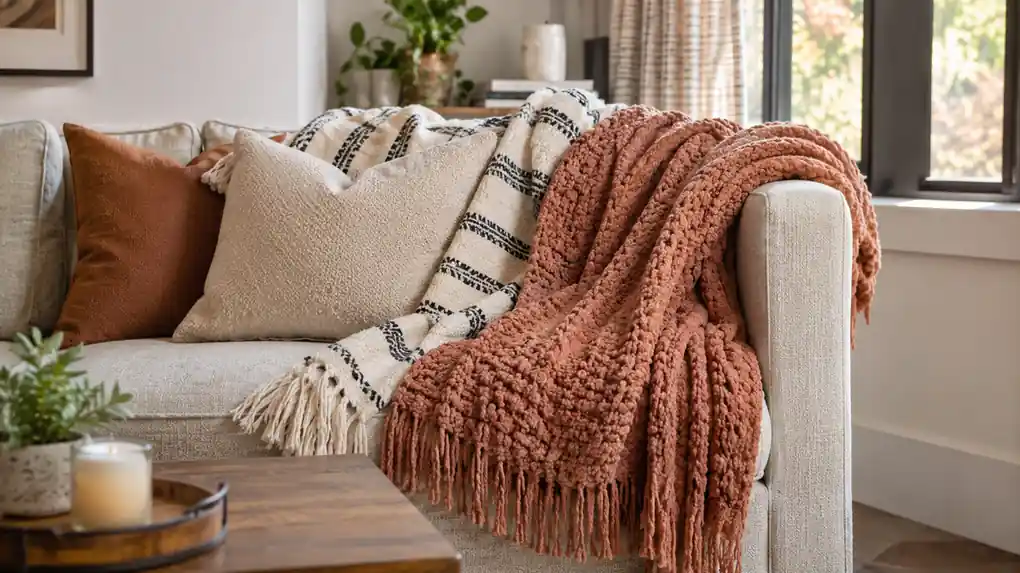
Drape a throw over one arm or the back corner, so it looks casual but easy to grab. Fold it in thirds lengthwise and lay it over the back of the sofa, or fold and place it in a basket nearby. Choose a color that picks up an accent from your pillows or rug.
Layer textures. A chunky knit throw on a smooth leather sofa adds contrast, and a linen throw on a velvet sofa feels fresh. Match the throw to your color palette, or use it as a bold accent in a neutral room.
For a tidy look, fold the throw neatly after use. For a more relaxed style, let it fall in loose folds. Keep it away from fireplaces and heaters.
How do you style a throw on a chair or bed?
On an armchair, drape the throw over the back or one arm, letting it hang down. A smaller throw suits a chair and adds color. On a reading chair, keep a throw within reach, folded on the seat.
On a bed, fold the throw lengthwise and place it across the foot, about a third of the way up. It adds a layer of texture and warmth and keeps the duvet clean. Choose a throw that matches or contrasts with the bedding. For a layered look, add a runner or a quilt under the throw.
You can also use a throw in a nursery, a porch or a patio, but choose materials that suit the use. For outdoors, use fabrics that are weather resistant and dry quickly.
What should you consider for kids and pets?
Choose washable materials for families with kids and pets. Cotton and polyester blends survive frequent washing. Avoid throws with loose threads or tassels that pets can chew. Tight weaves resist snags from claws.
Check safety for young children. Do not leave blankets in a crib or near an infant while sleeping, and follow safe sleep guidance from your pediatrician. For kids’ rooms, choose soft, machine-washable throws with no small decorations.
For pets, pick a throw they like and that is easy to clean, and keep a separate blanket for them if you want to protect your good throws. Lint rollers and rubber gloves help remove pet hair.
How do you store throws?
Fold throws and store them in a basket, a ladder or a storage ottoman. A blanket ladder keeps them visible and handy. Keep them away from damp areas, and use breathable bags for off-season storage. Add cedar blocks or lavender sachets to deter moths for wool.
Do not leave a wool or knit throw in sunlight, which can fade it. Rotate throws with the seasons, and wash them before you store them.
What mistakes should you avoid?
The most common mistake is buying a throw for looks alone and ignoring comfort and care. Another is picking a size that is too small to use. A third is ignoring washing instructions, which leads to shrinking and pilling.
Others include using too many throws on one sofa, which looks cluttered, and choosing a fabric that sheds on dark furniture. Decide how you will use the throw, check the care label and choose a color that suits your room.
Frequently Asked Questions
What size is a standard throw blanket?
About 50 by 60 inches. Larger throws are around 60 by 80 inches.
What is the warmest throw blanket fabric?
Wool, sherpa and chunky knit are warm. Cotton and linen are cooler and suit warmer weather.
How often should I wash a throw blanket?
Every few weeks if you use it daily, or when it is stained. Follow the care label.
How do I style a throw on a sofa?
Drape it over an arm or fold it on the back. Choose a color and texture that suit your pillows.
Are throw blankets safe for babies?
Not in a crib or for sleeping infants. Follow safe sleep guidance from your pediatrician.
Conclusion
A good throw blanket balances comfort, style and easy care. Choose a size that suits your use, pick a fabric for the season and check the care label before you buy. Style it with texture and color, and store it where you can reach it.
With the right throw, a sofa, chair or bed feels warmer and more welcoming for years.
Related guides
 Gallery Wall Guide: Layouts, Spacing, Frame Heights and Hanging TipsA gallery wall turns a blank stretch of wall into the focal point of a room. It lets you mix photos, prints,…Read more →
 Table Lamps Guide: Sizes, Shade Shapes, Bulbs and PlacementA table lamp does two jobs at once. It gives you light where you need it, and it adds shape, color and warmth…Read more →
 Floor Vases Guide: Sizes, Materials, Styling and What to Put in ThemA floor vase fills the awkward gaps in a room, such as an empty corner, the space beside a fireplace or the end…Read more →
 Wall Clocks Guide: Sizes, Styles, Movements and Where to Hang OneA wall clock is one of the few decor pieces that has to work as well as it looks. It should be easy to read fromRead more →




One Comment