Clothes Drying Rack Guide: Types, Sizes, Capacity and Where to Use One
Air drying saves energy, protects delicate fabrics and keeps clothes lasting longer. A good drying rack makes it practical, even in a small apartment. A bad one wobbles, takes up the whole living room and still leaves your jeans damp two days later. Choosing the right style and using it well makes a big difference.
A clothes drying rack is a frame with bars or lines where wet laundry hangs to dry in the air. Racks stand on the floor, hang from the wall or ceiling, or sit over a door or radiator. Each type suits a different amount of space and a different amount of laundry.
This guide compares the common rack types, explains how to check capacity and size, covers materials and stability, and shares tips for drying clothes faster and avoiding damp smells. You will also find the mistakes that make racks frustrating to use.
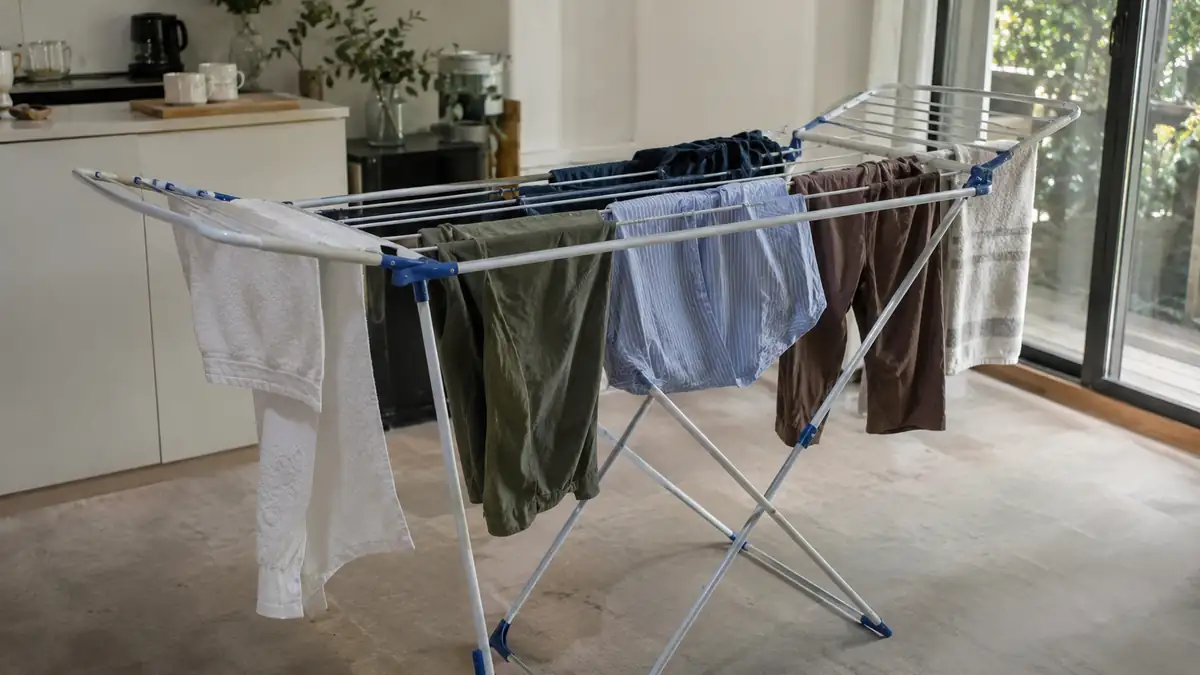
What types of drying racks are there?
A tiered or accordion rack is the classic style. It has several horizontal bars that fold out in a zigzag shape and fold flat for storage. It is affordable, holds a moderate load and works in most homes.
A gullwing or butterfly rack has two side wings that fold up, so you can hang long items like sheets and dresses on a central line. It holds a lot, but it needs more floor space when open. A tower rack has vertical levels and arms that extend, which suits narrow spaces.
A wall-mounted rack folds flat against the wall when not in use, and swings out when needed. It is excellent in a laundry room or hallway. A ceiling-mounted pulley rack, sometimes called a clothes airer, lifts clothes up near the ceiling where warm air collects. It works well in kitchens and utility rooms with enough ceiling height and a solid fixing point.
Smaller options include over-the-door racks, radiator racks and sock or small item racks with clips. They are good for a few items, not for a full load.
How much can a rack hold?
Manufacturers often list capacity in meters of drying line or in kilograms of laundry. As a rough guide, one full washing load is around 4 to 6 kilograms when wet, and wet clothes are much heavier than dry ones. Check that the rack can carry the weight, not just the length.
A compact rack with about 10 to 15 meters of line suits one person. A couple or small family may want 20 meters or more. If you do several loads a week, a large gullwing rack or a ceiling airer gives the most room.
Spacing matters as much as total length. Clothes dry slowly when they touch each other. A rack with wide gaps between bars and enough height to let long items hang freely dries better than one with a lot of line but little space.
Which materials last?
Steel racks are strong and stable, and powder coating helps resist rust. Aluminum is lighter and does not rust, which suits humid rooms, but cheap thin aluminum can bend. Wooden racks look nice and feel solid, though they can swell, warp or mark if they stay damp, so choose a sealed finish. Plastic racks are light and cheap, but they can crack or sag under heavy loads.
Look at the joints and hinges. Weak hinges are the first thing to fail on folding racks. Rubber or plastic feet prevent slipping and protect floors. Check that locking mechanisms hold firmly when the rack is open, since a collapsing rack can drop wet laundry on the floor.
For ceiling and wall racks, check the weight limit and the fixings supplied. Mount them into studs or solid masonry, and use the correct anchors for your wall type. If you rent, check your lease before drilling.
Where should you set up a drying rack?
The best spot has air movement, warmth and low humidity. A room with a window you can open, or a bathroom with a working extractor fan, helps moisture escape. Placing a rack near a radiator or a heater speeds drying, but keep clothes a safe distance from direct heat, and never drape fabric over a heater.
In a small flat, a rack in the bedroom or hallway can work, but good ventilation is important so humid air does not cause condensation or mold on walls and windows. A dehumidifier in the same room dries clothes quickly and keeps the air comfortable. A small fan pointed at the rack also helps.
Outdoors, a rack on a balcony, patio or garden is the fastest in sunny, breezy weather. Check that the rack is stable in wind, and bring clothes in before rain or dew. Dark clothes may fade in strong sun, so turn them inside out or dry them in shade.
How do you dry clothes faster?
Start with a good spin cycle. A higher spin speed removes more water and can cut drying time a lot. Shake each item before hanging to remove wrinkles and open up the fabric. Hang shirts by the shoulders on hangers over the bar, and drape trousers by the hems or fold them over the bar with the legs open.
Leave space between items, and put thick items like towels and jeans on the outer bars where air reaches them. Place small items like socks and underwear on the inner bars or on a clip rack. Rotate pieces halfway through the drying time if one side stays damp.
Increase airflow with a fan or open window, and use a dehumidifier in a closed room. A good rule is to dry in a room that is not closed off and humid, since moisture has to go somewhere.
What can and cannot be air dried?
Most everyday clothes dry well on a rack. Lay sweaters and knits flat on a towel or a mesh sweater rack to keep their shape, since hanging can stretch them. Silk and delicates should dry away from direct sun and heat. Wool should be laid flat as well.
Towels can feel stiff when air dried, but a few minutes in the dryer on low heat or a good shake before and after helps soften them. Heavy items like bedding take a long time, so use a large rack and a well ventilated room, or dry them outdoors on a sunny day.
Check the care label. Some items can be damaged by drying in the sun, and a few should never be hung wet. If in doubt, choose the gentlest method.
How do you avoid damp smells and mold?
Clothes that stay wet for too long can smell sour. Make sure laundry is spun well, dry it in a ventilated space and do not pile it. If a rack is full and the clothes stay damp for more than a day, spread the load across two racks or run a fan.
Watch for condensation on windows and mold in corners. Drying a lot of laundry indoors adds moisture to the air. Open a window for a few minutes, run an extractor fan or use a dehumidifier. Wipe down window sills if they get wet.
Clean the rack too. Wipe the bars with a damp cloth and a little mild soap every so often, and let it dry fully before folding. A damp rack stored in a cupboard can smell and grow mildew.
How do you store a drying rack?
Foldable racks slide behind a door, under a bed or beside a wardrobe. Check the folded size before you buy, and compare it to your storage spot. Wall racks fold against the wall and take almost no space. Ceiling airers can be raised out of the way when not in use.
If you have a laundry room, leave a rack permanently set up there, so it is always ready. In a small home, choose a rack that folds slim and stands upright when closed.
What mistakes should you avoid?
The most common mistake is buying a rack that is too small for your laundry. Another is overloading, which makes the rack unstable and the clothes slow to dry. A third is placing it in a closed, humid room, which causes smells and condensation.
Others include ignoring weight limits, forgetting to check fixings for wall and ceiling racks and using a flimsy rack for heavy items like jeans and towels. Think about how much laundry you dry each week, and pick a rack with space and stability to match.
Frequently Asked Questions
What is the best type of clothes drying rack?
Tiered racks suit most homes, gullwing racks hold more and wall or ceiling racks save floor space. The best one depends on your space and load.
How long does it take to dry clothes on a rack?
Light items may dry in a few hours, while jeans and towels can take a day or more. Airflow, warmth and humidity change the time.
Can I dry clothes indoors without mold?
Yes, if you ventilate the room, use a fan or dehumidifier and avoid overcrowding the rack.
How much laundry can a rack hold?
Many racks hold one wash load, about 4 to 6 kilograms of dry clothes. Check the weight and line length listed.
Where should I put a drying rack in a small apartment?
Near a window, in a bathroom with a fan or in a room with a dehumidifier. Keep it away from walls so air can move.
Conclusion
A good drying rack matches your laundry load, your space and your climate. Choose a type that fits your home, check the capacity and stability and place it where air moves well. Use a fan or dehumidifier when you dry indoors.
With the right rack and a few simple habits, air drying becomes easy, saves energy and helps your clothes last longer.
Related guides
 Laundry Hamper Guide: Sizes, Materials, Lids and How to ChooseA laundry hamper looks like a simple purchase, but the wrong one becomes a daily annoyance. A basket that is…Read more →
 Closet Organizers Guide: Systems, Shelves, Rods and How to Plan YoursMost closets waste space. One rod, one shelf and a pile on the floor mean you use perhaps half of the room you…Read more →
 Storage Baskets and Bins Guide: Sizes, Materials, Lids and Smart UsesBaskets and bins are the most flexible organizing tools in the home. They corral toys, hide cables, hold…Read more →