Decorative Pillows Guide: Sizes, Insert vs Cover Fit, Fill Types, Sofa and Bed Arrangements
Quick answer: decorative pillows, also called throw pillows, usually come in square sizes like 18 by 18, 20 by 20 and 22 by 22 inches. For a full, plump look, buy an insert about 1 to 2 inches larger than the cover. Mix sizes, textures and patterns, and use odd numbers like three or five on a sofa.
This article is part of our home decor accessories guide, where you can compare related options.
Decorative pillows are the cheapest way to change the look of a sofa, chair or bed. They add color, texture and comfort without a big spend. But the wrong size or a flat insert makes them look sad. This guide explains standard sizes, how to match insert and cover, fill choices, how to mix patterns and textures, how to arrange pillows on a sofa and bed and how to care for them. No independent source compared fill types, so I keep fill advice general.
Common Sizes
| Size | Typical use |
|---|---|
| 16 x 16 inches | Small accents, chairs |
| 18 x 18 inches | Most common; layering in front |
| 20 x 20 inches | Standard sofas, a classic size |
| 22 x 22 inches | Large sofas and sectionals |
| 12 x 20 or 14 x 24 inches | Lumbar pillows |
| 24 x 24 inches | Floor pillows and large accents |
| 26 x 26 inches | Euro shams on beds |
A guide in the search says the 18 to 20 inch size is appropriate for most standard-height sofas. Low-profile loveseats or sofas with short backs suit 18 by 18 or 20 by 20. These sizes are retail conventions, not strict standards, so check each product.
Insert vs Cover: The Fit Rule
A pillow looks best when it is full. Another says a 20 by 20 cover looks fuller with a 22 by 22 insert, and the rule applies to covers 18 by 18 and larger. A third table lists an 18 by 18 insert for a 17 by 17 cover, about a 1-inch difference.
Practical approach: use an insert at least 1 inch larger and up to 2 inches for a plump look, and check the listed size of the insert you buy. Down inserts compress more than polyester, so a down insert may be sized the same or just slightly larger. This last point is general knowledge, not from the search.
Fill Types
Insert listings describe down-and-feather and polyester (fiberfill) options, and some use foam or shredded foam. I found no independent comparison, so here are general notes: Down and feather. Soft, can be fluffed, often costs more. Not for people with allergies. Polyester fiberfill. Affordable, hypoallergenic for many, can flatten over time. Foam. Firm and structured, useful for floor or bench cushions. Blends. A mix of down and fiber for balance.
Look for a tight, sturdy insert cover to prevent leaks. See the mattress topper guide for fill concepts.
Shapes
Key points: square. The default; lumbar (rectangle). For the middle of a sofa or bed; round and bolster. For an accent; euro shams. Large squares, 26 inches, for beds; neck rolls. For daybeds.
Mixing Textures and Patterns
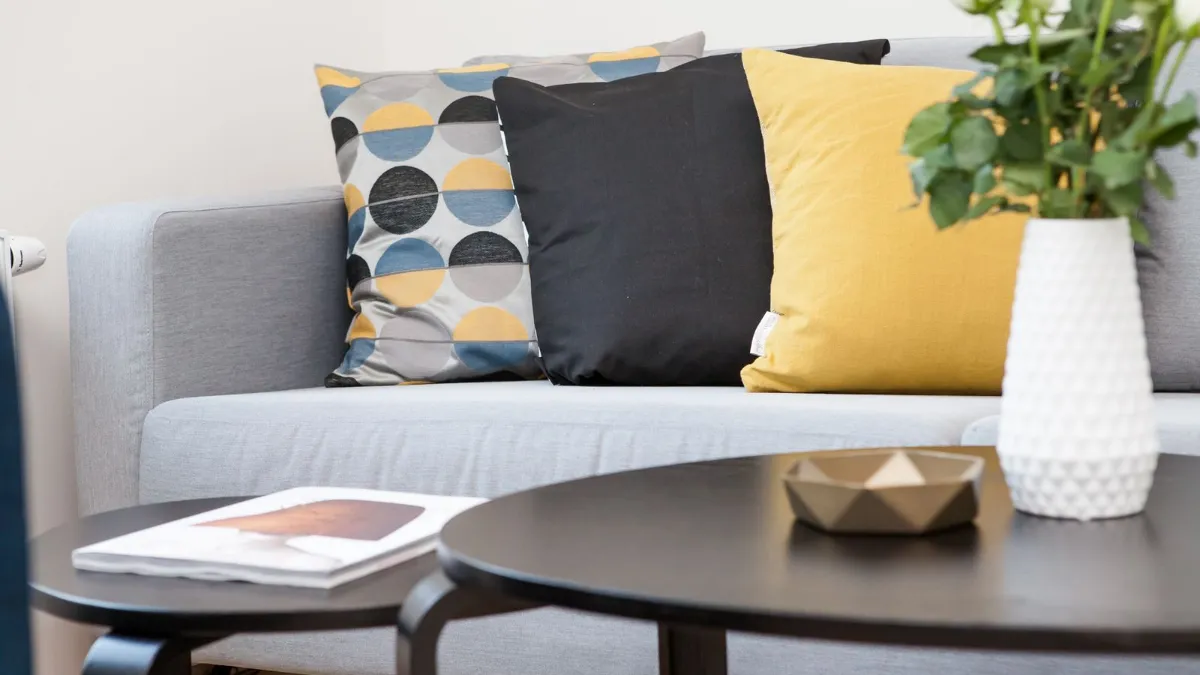
A guide in the search advises mixing sizes and textures. For example, a solid textured 20 by 20 pairs well with a patterned 18 by 18, while using one texture for every pillow flattens the look.
Formula:
- Pick a color palette of two or three colors from the room.
- Choose one pattern to lead.
- Add a smaller pattern or stripe.
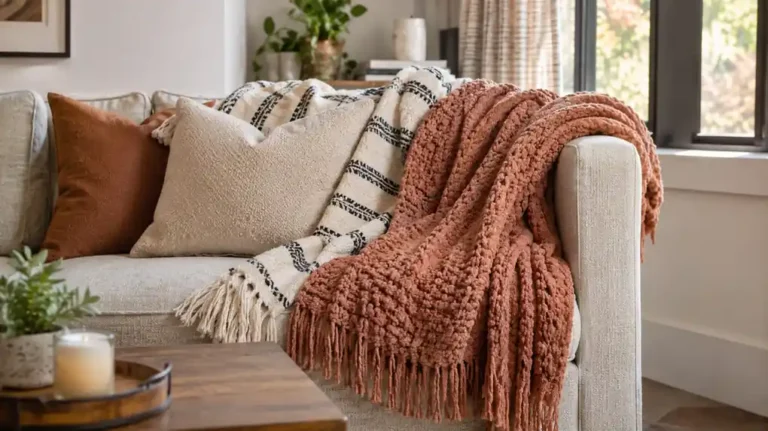
- Add solids in different textures such as linen, velvet, boucle or knit.
- Add one accent in a surprising color or a lumbar.
- Vary scale: one large pattern, one medium, one small.
Arranging Pillows on a Sofa
Odd numbers. Three or five pillows look natural. Layer sizes. One source suggests layering 18 by 18 pillows in front of 20 by 20 or 22 by 22 pillows. Symmetry vs balance. Match pairs on each end for a formal look. Use different pillows with similar weight for a relaxed look. Lumbar in the middle on a long sofa. Do not overcrowd. Leave seating space. One to two pillows per person is usually enough. Karate chop is a styling trick (an indent on top) that some people like. It is optional.
Arranging Pillows on a Bed
One source says for a queen or king, layer 2 to 3 euro shams. A common layering: sleeping pillows at the back, euro shams in front, then standard pillows, then 1 to 3 decorative pillows and a lumbar at the front. For a twin bed or a small sofa, one or two pillows is enough. Match the color to the duvet, throw and rug.
See the small bedroom ideas guide for bed styling and the fitted sheet guide for bedding basics.
Covers: Material and Closure
Key points: cotton and linen. Breathable and easy to wash; velvet. Rich and soft, shows crush marks; wool and knit. Cozy for winter; faux fur. Soft but sheds; outdoor fabric. For patios; closures. An envelope back is easy, a zipper is tidy, a hidden zipper looks cleanest.
Check the care label. Washable covers help in homes with kids and pets.
Care and Cleaning
Key points: remove the cover and wash per the label; fluff inserts regularly; spot clean stains; air out down inserts; replace flat or lumpy inserts; keep pillows away from direct sun to prevent fading; rotate pillows between rooms to refresh your decor.
Safety Notes
Keep decorative pillows out of infant sleep areas. Safe-sleep guidance says infants should sleep on a firm, flat surface without pillows or soft items. Ask your pediatrician and see current safe-sleep guidance. This is not medical advice. Check for small decorations like buttons and beads around children. Choose flame-resistant or labeled fabrics when required.
What are the main strengths and weaknesses?
On the plus side: cheap way to refresh a room; easy to swap with seasons; add comfort and support; come in endless colors and textures. On the downside: fill can flatten; too many pillows are a nuisance; some fabrics show wear; down is not for allergy sufferers.
How to Choose Decorative Pillows
Measure the sofa or bed. Pick sizes: 18, 20 or 22 inch squares plus a lumbar. Choose inserts 1 to 2 inches larger than covers. Choose fill for comfort and allergies. Choose a palette from your room. Mix textures and one pattern. Pick washable covers. Buy odd numbers. Check return policies for color match. Style and adjust.
What mistakes should you avoid?
A few common mistakes are worth avoiding: buying inserts the same size as covers; using one pattern and one size for all; too many pillows; ignoring care labels; choosing pillows too big for a small sofa; matching everything exactly.
Further reading: the Sleep Foundation mattress information hub.
Frequently Asked Questions
What size are standard decorative pillows?
Commonly 18 by 18, 20 by 20 and 22 by 22 inches.
Should the insert be bigger than the cover?
Yes.
How many pillows should I put on a sofa?
Odd numbers like three or five often look natural. Avoid crowding.
What is the best fill?
It depends. Down is soft, polyester is affordable, foam is firm. No independent comparison was found.
How many pillows on a queen bed?
One source suggests 2 to 3 euro shams plus sleeping pillows and a few decorative ones.
Can I use decorative pillows for a baby?
No. Safe-sleep guidance says infants should sleep without pillows or soft objects. Ask your pediatrician.
Conclusion
Decorative pillows are the easiest way to change a room. Choose common sizes, buy inserts a little larger than covers, mix textures and patterns and use odd numbers.
Keep covers washable and fluff inserts often. With a few good pillows, a sofa or bed feels finished.
Related guides
 Throw Pillow Covers: Sizes, Insert Fit, Closures and CareThrow pillow covers are removable fabric cases that slip over a pillow insert. The most common sizes are 16, 18…Read more →
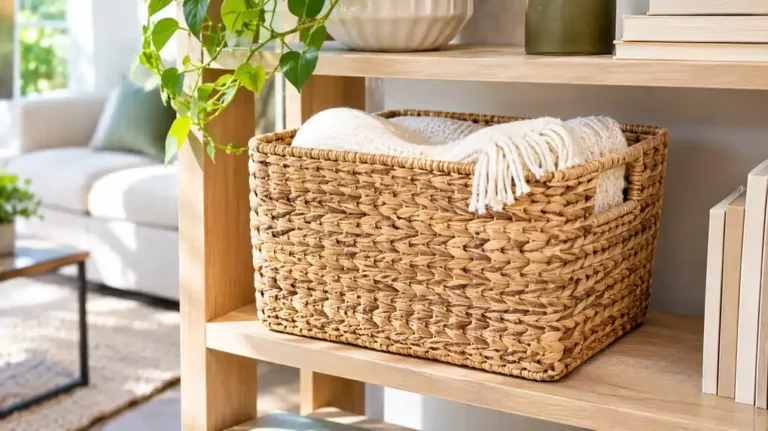 Woven Basket: Seagrass, Rattan and Water Hyacinth Compared, Plus Care and UsesA woven basket is a storage container made by weaving natural fibers, most often seagrass, rattan or water…Read more →
 Rattan Mirror: Sizes, Hanging Tips and Whether It Belongs in a BathroomA rattan mirror is a mirror with a woven rattan frame. It brings a natural, boho or coastal look to a wall.…Read more →