Memory Foam Pillows Guide: Solid vs Shredded vs Contour, Loft, Heat and Care
A good pillow keeps your head and neck in a comfortable position all night. Memory foam pillows are popular because they respond to your weight and heat, slowly shaping around your head and neck, then returning to shape when you get up. But “memory foam pillow” covers very different products: a solid block, a bag of shredded foam, a contoured shape with a dip and a ridge. Choosing the wrong one can leave you with a sore neck or a hot head.
This article is part of our bedding guide, where you can compare related options.
A memory foam pillow is a pillow made of viscoelastic foam, which softens with heat and pressure. This guide explains the main types, how to choose loft and firmness for your sleep position, how heat and off-gassing work, how long these pillows last and how to care for them. This is general information, not medical advice. If you have neck pain or a medical condition, ask a doctor or physical therapist.
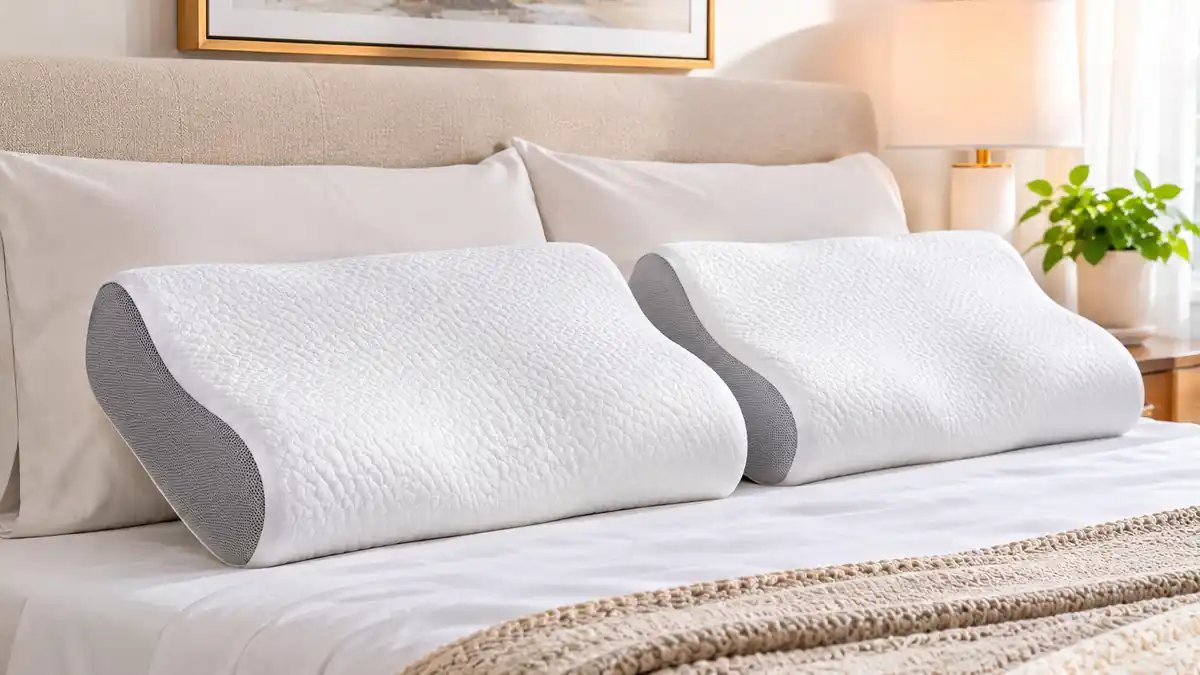
Types of Memory Foam Pillows
Solid (block) foam: one piece of foam. Block foam pillows are sturdy, firm and tall. They hold their shape and give consistent support. They can run warm and are heavy. Shredded foam: small pieces of foam inside a cover. Shredded foam pillows are malleable, soft and responsive. They breathe better because air can move between the pieces. Many have zippered covers, so you can add or remove fill to adjust loft. They compress overnight and need a shake in the morning. Contour (cervical) foam: a shaped pillow with a lower dip for your head and a higher ridge for your neck. Contour shapes are a separate category. They are designed for back and side sleeping, and stomach sleepers should not use one. Layered foam: a mix of memory foam and another foam, such as latex or polyfoam, for added bounce or cooling. Gel-infused memory foam: foam with gel beads or swirls to help absorb and move heat. See the cooling pillow guide. Memory foam with a cooling cover: a cover made of cooling fabric.
| Type | Feel | Adjustable | Heat |
|---|---|---|---|
| Solid block | Firm, tall | No | Warmer |
| Shredded | Soft, moldable | Yes | Cooler |
| Contour | Shaped support | Limited | Varies |
| Gel-infused | Varies | Varies | Moderate |
Choosing by Sleep Position
Sleep position is the biggest factor for loft (height).
Side sleepers generally need higher loft to fill the space between the shoulder and head. One guide says block foam is usually the better pick for them because it is firmer. Back sleepers generally need mid loft and roughly medium firmness. A pillow that is too high pushes the head forward. Too low and the head drops back. Stomach sleepers need a very thin, soft pillow, and should not use a contour pillow. Combination sleepers move around. Shredded foam is often recommended, since sleepers can quickly adjust the loft and firmness based on their current sleeping position.
Also think about your body size. Broad shoulders usually need a taller pillow. A smaller frame may need a lower loft. Your mattress also matters: a softer mattress lets your shoulder sink, so you may need a lower pillow. See the how to choose a mattress guide.
Loft and Firmness
Low loft (under about 3 inches). For stomach sleepers. Medium loft (about 3 to 5 inches). For back sleepers. High loft (about 5 inches and more). For side sleepers.
These ranges are general guidance and vary by brand. Firmness ranges from soft to firm. Choose a firmness that keeps your neck in a neutral line, not bent up or down. If you wake up with neck or shoulder discomfort, try a different loft.
Heat
Solid memory foam tends to run warm. The Sleep Foundation notes that solid foam pillows are more prone to heat retention. Shredded foam breathes better because air can move between the pieces.
If you sleep hot: choose shredded foam or ventilated foam; look for gel-infused or cooling-cover options; choose a breathable pillowcase. See the best bed sheets guide; keep the room cool; pair with cooling bedding, like a cooling comforter. See the cooling comforter guide.
Off-Gassing and Smell
New foam products can have a smell when you unpack them. I found little solid evidence on this in the results. The one relevant note is that the smell should air out within a few days as long as you leave the pillow in a well-ventilated room. Airing the pillow out before use is a reasonable precaution. If the smell is strong or bothers you, check the product’s certifications, such as CertiPUR-US, which tests foam for certain substances (general knowledge), and contact the seller.
Durability
Solid foam holds its shape longer but is heavy and hard to fluff. One source estimates 3 to 5 years before the foam begins to lose its rebound and support properties. Shredded pillows may compress faster, and you can add fill. Signs it is time to replace: the pillow does not return to shape; it has permanent lumps or flat spots; you wake with neck pain; it smells even after airing; the foam crumbles.
Replace pillows when they stop giving good support.
Care and Cleaning
Use a pillow protector and a pillowcase. See the pillow covers guide. Wash the cover according to the label. Spot clean solid foam with mild soap and a damp cloth. Do not soak or machine wash it unless the label says so. Air dry fully. Wet foam can grow mold. Many shredded pillows can be machine washed. Check the label. Dry on low heat with dryer balls, if allowed. Fluff shredded pillows in the morning. Keep away from direct heat and sun. Rotate the pillow when possible.
Safety Notes
Key points: infants and toddlers. Pillows are not recommended for babies. Follow pediatric safe-sleep guidance; allergies. Check materials and covers; neck pain. See a professional.
What are the main strengths and weaknesses?
On the plus side: contours to your head and neck; good pressure relief; many shapes and lofts; long lasting (solid foam); adjustable (shredded). On the downside: solid foam can run warm; can be heavy; contour pillows take getting used to; possible initial smell; quality varies.
How to Choose a Memory Foam Pillow
Know your main sleep position. Pick a type: solid, shredded or contour. Choose a loft that keeps your neck neutral. Consider heat if you sleep hot. Check whether it is adjustable. Check the cover and care instructions. Look for a trial period and return policy. Check certifications. Read reviews from people with similar sleep habits.
What mistakes should you avoid?
A few common mistakes are worth avoiding: choosing the wrong loft; using a contour pillow as a stomach sleeper; ignoring heat; skipping the trial period; washing solid foam in the machine; keeping an old pillow too long.
Frequently Asked Questions
What is the difference between solid and shredded memory foam pillows?
Solid is one block, firm and shaped. Shredded is soft, adjustable and breathes better.
Which memory foam pillow is best for side sleepers?
Higher loft and firmer support, often block foam, according to one guide.
Do memory foam pillows sleep hot?
Solid foam can retain heat. Shredded foam breathes better, and cooling options exist.
How long do memory foam pillows last?
One source estimates 3 to 5 years.
Can I wash a memory foam pillow?
Wash the cover. Many shredded pillows can be machine washed, but solid foam usually cannot. Check the label.
Why does my new pillow smell?
New foam can have a smell that fades within a few days if aired in a ventilated room.
Are memory foam pillows good for neck pain?
They may help some people. Ask a doctor for personal advice.
Conclusion
A memory foam pillow can give comfortable, supportive sleep when it matches your sleep position, loft needs and temperature. Choose solid foam for firm, consistent support, shredded foam for adjustability and cooler sleep and a contour shape for back and side sleepers.
Use a trial period, protect the pillow with a cover and replace it when it stops supporting you. A good match can make a real difference to how you wake up.
Related guides
 Floor Pillows Guide: Sizes (20 to 32 Inches), Fill Types, Meditation Cushions, Covers and CleaningQuick answer: floor pillows are large cushions for sitting on the floor. A 24 inch square suits living room…Read more →
 Headboard Pillow: Wedge Backrest Sizes, Fill, Covers and How to Pick OneA headboard pillow, also called a wedge or bed backrest pillow, is a large triangular cushion that sits between…Read more →
 Best Cooling Pillow: Latex, Shredded Foam and Gel ComparedLatex and shredded fills tend to run coolest, gel-infused or graphite memory foam sits in the middle and…Read more →
 Best Memory Foam Mattress Guide: Density, Firmness, Thickness, CertiPUR-US, Heat and Sleep TrialsQuick answer: the best memory foam mattress matches your sleep position and weight, uses certified foam,…Read more →