Best Memory Foam Mattress Guide: Density, Firmness, Thickness, CertiPUR-US, Heat and Sleep Trials
Quick answer: the best memory foam mattress matches your sleep position and weight, uses certified foam, handles heat well and comes with a sleep trial of at least 100 nights. Most people do well with a 10 to 12 inch mattress. Density affects durability, firmness affects feel and heat is the main trade-off.
This article is part of our mattress buying guide, where you can compare related options.
Memory foam is popular because it contours to the body and absorbs motion, so a partner’s movement is less noticeable. It also has downsides: it can sleep warm, new foam can have an odor and low-quality foam can soften quickly. This guide explains density, firmness, thickness, certifications, heat and how to test a mattress. I do not rank brands, and I treat density claims such as “premium models use 2.5 to 3.0 PCF” as marketing, not a standard. If you have chronic back or joint pain, ask a doctor. This is not medical advice.
What Is Memory Foam?
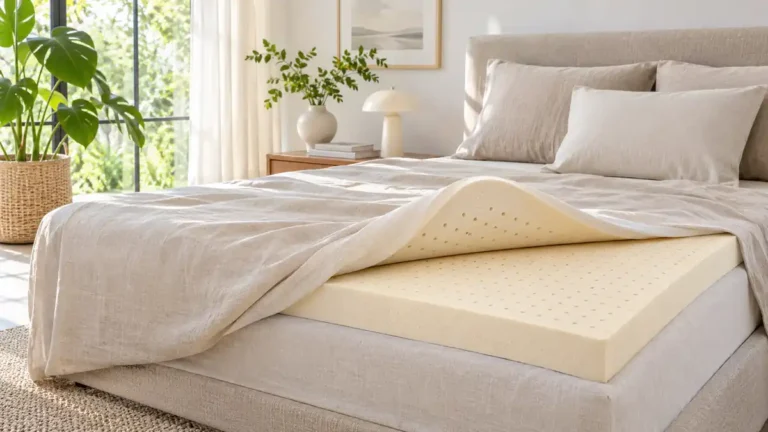
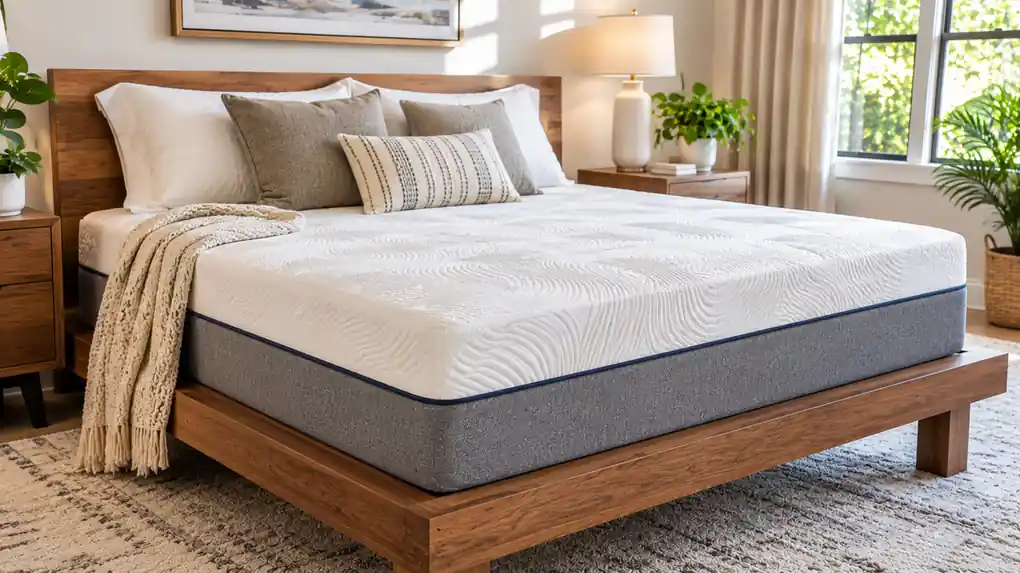
Memory foam is a viscoelastic polyurethane foam that softens with body heat and pressure and slowly returns to shape. It was developed for NASA-related research (general knowledge). Modern mattresses use layers: a soft memory foam comfort layer on a firmer support foam base. All-foam mattresses differ from hybrids, which add coils. See the best cooling mattress guide for hybrids.
Density vs Firmness
These are different.
Density is the weight of foam per cubic foot (PCF). One guide says density mainly tracks durability, while firmness describes how the bed feels. Firmness is how hard or soft the mattress feels. A guide notes that two foams can have identical density but completely different firmness ratings (IFD).
Higher-density foam tends to last longer and suits heavier bodies. One source says it retains more heat and can feel “sinky” at very high levels, above 6.0 to 6.5 PCF. Another suggests premium models use 2.5 to 3.0 PCF memory foam, which I consider a marketing claim and not an established standard.
Firmness by Sleep Position
Guides suggest picking firmness by sleep position and weight.
| Sleep position | General firmness suggestion |
|---|---|
| Side sleepers | Softer to medium, to cushion shoulders and hips |
| Back sleepers | Medium to medium-firm |
| Stomach sleepers | Firmer, to keep hips from sinking |
| Combination sleepers | Medium |
This table is general guidance and not from one source. Heavier people usually want firmer support, and lighter people may find the same mattress too hard. Test in person if you can.
Thickness
One guide says most people do well with a 10 to 12 inch mattress. Thicker options are worth considering if you weigh over 200 pounds or want an especially plush surface. Thinner mattresses (6 to 8 inches) suit kids, bunk beds or guest rooms. Remember that thickness affects bedding: deep pockets may be needed. See the fitted sheet guide and the full size loft bed guide for mattress height limits.
Certifications
CertiPUR-US. A third-party certification for foam content, emissions and durability. One source says the foam has been tested by an independent laboratory and certified to be free from ozone depleters and low in volatile organic compounds (VOCs), under 0.5 parts per million. Sources treat it as a baseline, and one warns that if a brand cannot tell you whether their foam is certified, that is a red flag. GREENGUARD Gold. Another low-emissions label. OEKO-TEX. For textiles, like the cover.
Verify certifications on the certifier’s site or with the maker.
Heat: The Main Trade-Off
Heat retention is the main drawback. Higher-density foam holds more heat. One guide suggests that if you choose a high-density core, make sure the comfort layer uses gel, open-cell or channel foam to compensate. Other cooling features include phase-change materials and gel infusions.
Tips for hot sleepers: choose open-cell or gel-infused foam; use a breathable cover; use breathable sheets; consider a hybrid. See the best cooling mattress guide; keep the room cool.
Off-Gassing
New foam may smell at first. This is common. Let the mattress air out in a ventilated room for a few days. If the smell is strong or you feel unwell, stop using it and contact the maker. Certified foams are tested for emissions.
Edge Support and Motion
Edge support. All-foam mattresses can have softer edges. Check reviews if you sit on the edge or share a small bed. Motion isolation. Memory foam absorbs motion well. This helps couples. Pressure relief. Contouring helps many side sleepers. Ask a doctor about specific conditions.
Sleep Trial and Warranty
One source recommends a sleep trial of at least 100 nights and reading the trial and warranty terms before buying. Your body needs time to adjust, often a few weeks. Check: return fees; whether you must keep the original packaging; what counts as a sagging defect in the warranty; whether the warranty requires a certain base. See the king box spring guide.
Mattress in a Box
Many memory foam mattresses are shipped compressed in a box. They expand over 24 to 72 hours. Unbox in the room where you will use it. Make sure the stairs and doors fit the box.
Base and Foundation
Memory foam needs firm, flat support. Slats should be close together, and many makers specify a gap size. A platform or foundation works. A box spring with springs may not be right. Check the maker’s guide.
What are the main strengths and weaknesses?
On the plus side: contouring and pressure relief; good motion isolation; quiet; many price points. On the downside: can sleep warm; may have an odor at first; slower response; edge support can be weak; low-quality foam softens quickly.
How to Choose the Best Memory Foam Mattress
Identify your sleep position and weight. Choose a firmness to match. Choose thickness: 10 to 12 inches for most. Check density and layer details. Check certifications. Check heat features. Check base requirements. Check the trial period (100 nights or more) and warranty. Check size and delivery. Read reviews from people of similar weight and position.
What mistakes should you avoid?
A few common mistakes are worth avoiding: choosing by density alone; ignoring heat; skipping the sleep trial; buying a mattress too thin for your weight; using the wrong base; trusting marketing density claims.
Further reading: the Sleep Foundation mattress information hub.
Frequently Asked Questions
What density is best for memory foam?
Higher density lasts longer, but it holds more heat. Premium claims of 2.5 to 3.0 PCF are marketing, not standards.
How thick should a memory foam mattress be?
10 to 12 inches suits most people, and thicker if you weigh over 200 pounds.
What is CertiPUR-US?
A third-party certification for foam content, emissions and durability.
Do memory foam mattresses sleep hot?
They can. Look for gel, open-cell or channel foam, or consider a hybrid.
How long is a good sleep trial?
At least 100 nights, per one guide.
Does memory foam smell?
New foam may have an odor. Air it out for a few days.
Conclusion
The best memory foam mattress is the one that fits your body, sleeps at a comfortable temperature and comes with an honest trial. Focus on firmness, thickness, certified foam and heat management. Treat density numbers with care.
Take advantage of the sleep trial, use the right base and ask a doctor about specific health concerns.
Related guides
 Memory Foam Mattress: Density, Firmness, Heat and How to ChooseA memory foam mattress hugs your body. It softens under your weight and heat, then springs back slowly when you…Read more →
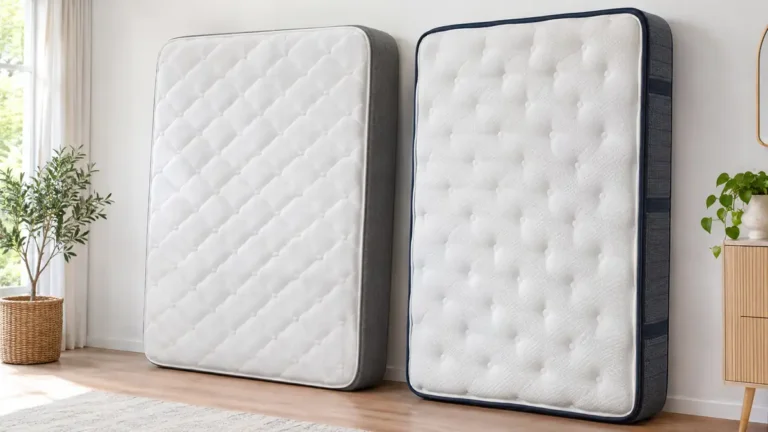 Memory Foam vs Hybrid Mattress: Comparison Table and How to ChooseMemory foam and hybrid are two of the most popular mattress types. They can look similar from the outside, but…Read more →
 Folding Mattress: Tri-Fold Foam Thickness, Sizes, Density and Who It SuitsA folding mattress is a foam mattress that folds into thirds so you can store it in a closet or carry it.…Read more →
 Memory Foam Pillows Guide: Solid vs Shredded vs Contour, Loft, Heat and CareA good pillow keeps your head and neck in a comfortable position all night. Memory foam pillows are popular…Read more →