Shoe Rack Guide: Types, Sizes, Capacity and Where to Place One
Shoes pile up quickly. A few pairs by the door become a heap that people trip over, and the floor of the closet turns into a puzzle of mismatched pairs. A shoe rack solves this by giving each pair a place, keeping floors clear and helping shoes dry and air out. The right rack depends on how many pairs you own and where you want to store them.
A shoe rack is a stand, shelf or cabinet that holds shoes in an organized way. Racks come as simple tiered stands, closed cabinets, benches with storage, over-the-door pockets and wall-mounted shelves. Each suits a different space and style.
This guide explains how to count and measure, how to choose between styles and materials, where to place a rack and how to keep shoes fresh. You will also find tips for tall boots, kids shoes and small entryways.
How many pairs do you need to store?
Count your shoes before you shop. Many households have between 10 and 30 pairs per adult, including sandals, boots, sneakers and dress shoes. Separate everyday shoes from seasonal ones, since only the pairs you use often need to be near the door.
Plan for growth. If you have 12 pairs, a rack that holds 12 will be full on day one. Choose a rack with some spare capacity, around 20 to 30 percent more than you own, so new shoes have a home. Also count how many people share the space and whether guests leave shoes at the door.
Different shoe types need different amounts of space. A pair of flats takes up much less room than a pair of hiking boots. Think about the biggest pairs you own and make sure the rack can hold them.
What types of shoe racks are there?
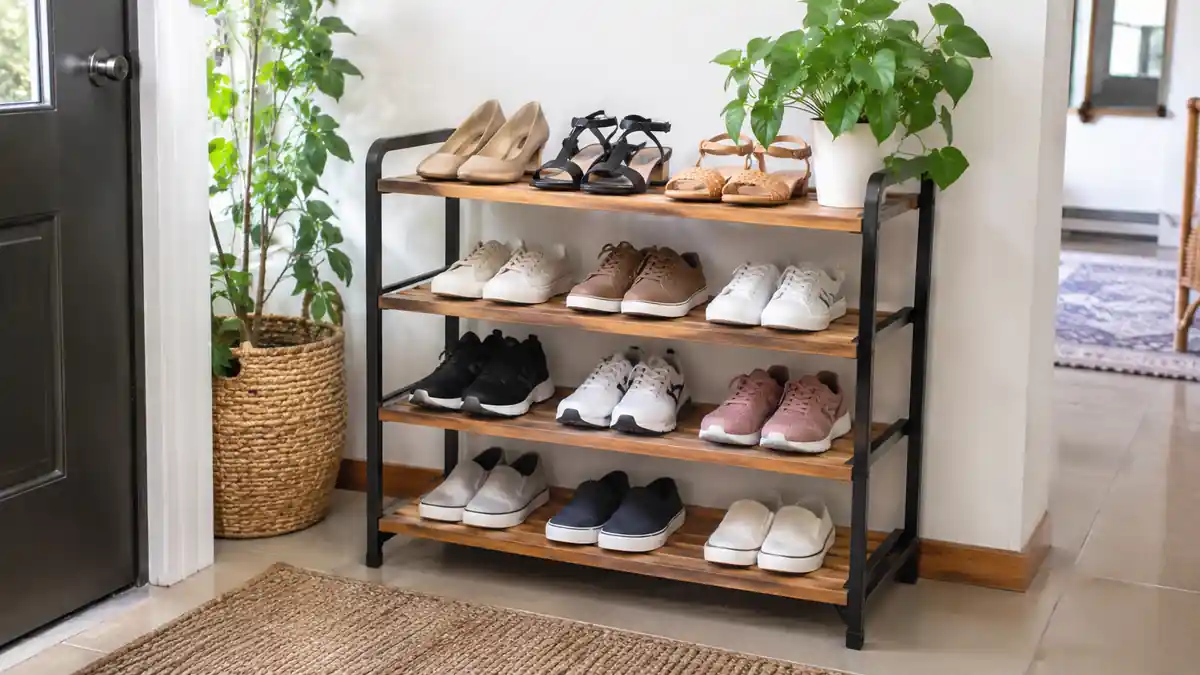
A tiered open rack is the classic choice. Several shelves hold pairs side by side, and the open design lets shoes air out. It is inexpensive and easy to move, but shoes are visible, which can look messy if the rack is full.
A shoe cabinet has doors or flip-down drawers, so shoes are hidden. It looks tidier and keeps dust off, and slim versions fit a narrow hallway. A bench with shoe storage gives you a seat to put on shoes, with a shelf or cubbies below. It is useful in a small entryway.
An over-the-door organizer hangs pockets or racks on the back of a door, which uses no floor space. A wall-mounted shelf or ledge holds shoes at an angle, saving room. A rotating tower rack stores many pairs in a small footprint and spins to reach each one. A stackable cube system lets you build the size you need.
Which materials work best?
Metal racks, such as steel and aluminum, are strong, easy to wipe clean and suit damp entryways. Wire shelves let air circulate but can mark delicate soles, so some people add a liner. Wood and bamboo look warm and natural. They are sturdy, but they can swell or stain if they are often wet, so choose a sealed finish for entryways.
Plastic racks are light and affordable. They are easy to clean, but cheap ones can bend under heavy boots. Fabric and canvas organizers are flexible and good for closets or kids rooms, but they do not hold much weight and can sag.
Check the weight rating for each shelf. A pair of leather boots can weigh several pounds, and a loaded rack should not tip. Look for anti-slip feet and a stable base, especially if you have children or pets.
How big should the rack be?
Measure the space first. A standard tiered rack is about 24 to 36 inches wide, 10 to 12 inches deep and 20 to 40 inches tall. A shoe cabinet is often 8 to 12 inches deep, and slim versions fit a narrow hallway. Make sure you can open doors and drawers without hitting the wall or the front door.
Check shelf height. Standard shelves are about 5 to 7 inches high, enough for sneakers and flats but too short for boots and heels. Adjustable shelves help, since you can raise them for tall pairs. For tall boots, choose a rack with a taller section or use boot shapers and store boots upright in a corner.
Allow extra depth for large sizes. Men’s shoes and big sneakers can be 12 inches or more in length, so check the shelf depth against your biggest pair. A shelf that is too shallow lets heels hang over the edge.
Where should you put a shoe rack?
The entryway is the usual spot. A rack by the door means shoes come off where you arrive, and mud and water stay near the entrance. Place a mat or tray under the rack to catch drips, and choose a water-resistant material.
In a closet, a rack on the floor or on a shelf keeps shoes out of sight. Check airflow, since a closed closet can hold moisture and odors. A bedroom corner or the side of a wardrobe also works, though dressing shoes near the bed means you may track dirt into the room.
Keep the rack away from heat sources and direct sun, which can warp leather and fade color. In a small apartment, consider a bench or a narrow cabinet that doubles as a seat or a console table.
How do you keep shoes clean and fresh?
Let shoes dry before you put them in a closed space. Wet or sweaty shoes in a cabinet can develop odors and mold. Use an open rack or a tray by the door for shoes that are damp, and move them to the cabinet when dry.
Wipe the shelves from time to time, and brush dirt off shoes before storing them. Cedar inserts, baking soda sachets or activated charcoal bags can absorb odor, and shoe trees help leather shoes keep their shape. Rotate pairs so that none sit in the same position for months.
Keep delicate shoes, such as suede or fabric, in dust bags or boxes if they are rarely worn. Label boxes or use clear containers so you can see what is inside.
What about boots, heels and kids shoes?
Tall boots need vertical space. Use boot hangers, a boot rack with tall dividers or a bench with a deep compartment. Heels can go on a slanted shelf or a rack with hooks that holds them by the heel, which saves space.
For kids, use low shelves or bins that children can reach. A basket at their height teaches them to put shoes away. Because kids outgrow shoes quickly, an adjustable rack is helpful, and fabric or plastic options are inexpensive to replace.
Sandals and flip-flops can go in small bins or hanging pockets. Keep a separate area for athletic shoes, which often need more airing.
What mistakes should you avoid?
The most common mistake is buying a rack that holds exactly the number of shoes you own, leaving no room to grow. Another is ignoring the shelf height, which makes boots and heels a problem. A third is choosing a closed cabinet for wet shoes, which causes smell.
Others include buying a flimsy rack that tips when loaded, forgetting the clearance for doors and placing a rack where people must step around it. Measure carefully, plan for extra pairs and pick materials that suit your entry.
Frequently Asked Questions
What is the best shoe rack for a small entryway?
A slim shoe cabinet, a wall-mounted shelf or a bench with storage works well in a small entryway.
How many pairs can a shoe rack hold?
A typical tiered rack holds 8 to 16 pairs. Cabinets and towers can hold 20 or more.
Should shoes be stored in a closed cabinet?
Only if they are dry. Wet shoes should air out on an open rack first.
How do I store tall boots?
Use boot shapers and a tall shelf, a boot rack or hangers. Store them upright to prevent creases.
How do I stop shoe racks from smelling?
Let shoes dry, ventilate the rack and use odor absorbers like baking soda or cedar.
Conclusion
A good shoe rack matches your number of pairs, the shoe sizes you own and the space you have. Choose an open rack for airing, a cabinet for a tidy look or a bench for a small entry, and check the material for moisture.
Leave room for new shoes, keep the rack stable and clean it regularly. With a place for every pair, your entryway and closet stay clear and your shoes last longer.
Related guides
 Laundry Hamper Guide: Sizes, Materials, Lids and How to ChooseA laundry hamper looks like a simple purchase, but the wrong one becomes a daily annoyance. A basket that is…Read more →
 Closet Organizers Guide: Systems, Shelves, Rods and How to Plan YoursMost closets waste space. One rod, one shelf and a pile on the floor mean you use perhaps half of the room you…Read more →
 Storage Baskets and Bins Guide: Sizes, Materials, Lids and Smart UsesBaskets and bins are the most flexible organizing tools in the home. They corral toys, hide cables, hold…Read more →