
Standing Mirror Guide: Size, Placement, Frames and How to Stop It Tipping Over
Quick answer: a standing mirror is a tall mirror that rests on the floor, either on its own stand or leaning against a wall. Choose one tall enough to see your whole body, put it where it catches light without glare and anchor the top to a wall stud with an anti-tip strap or L-bracket, because tall mirrors can tip and break.
This article is part of our home decor accessories guide, where you can compare related options.
A standing mirror is one of the most useful pieces in a bedroom or dressing area. It lets you check your whole outfit, makes a small room feel brighter and looks like a piece of furniture. But a tall glass mirror is also heavy and can fall over if bumped by a child, a pet or a vacuum. This guide explains the types of standing mirrors, how to size one, where to put it, which frames and finishes to consider and how to secure it safely. It overlaps with the floor mirror guide, so this one focuses on freestanding styles and tip-over safety.
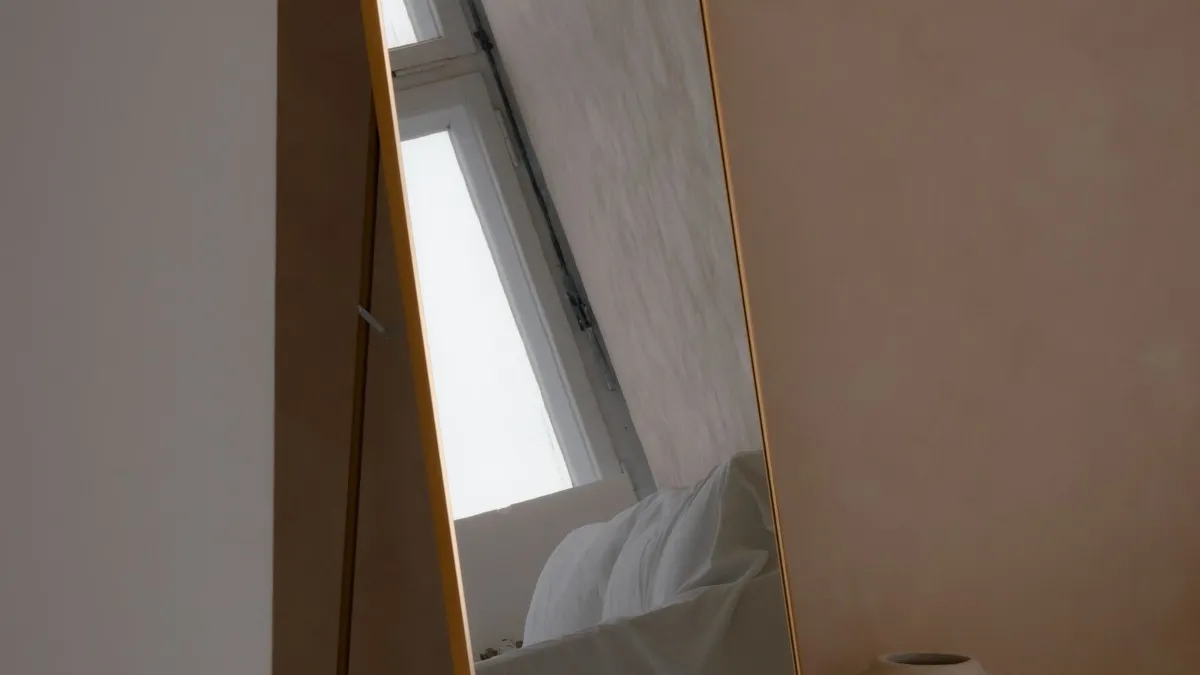
Types of Standing Mirrors
Leaning mirror: rests against the wall at an angle, with no mounting needed (but it should be secured). Freestanding mirror on a stand: a frame with feet or a stand that holds the mirror upright on its own. Swivel (cheval) mirror: a mirror in a frame that tilts or pivots on two uprights. Mirror on a stand with storage: includes jewelry cabinet behind the glass. Oversized or arched mirror: a tall, dramatic piece. One retail listing shows a 76 by 34 inch arch mirror for standing or leaning. Round mirror on a stand: smaller, decorative. Tabletop standing mirror: for dressers and vanities. See the vanity table and dresser with mirror guides.
How Big Should It Be?
For a full-body view, the mirror needs to be tall enough. One low-quality page claimed a rule of thumb that the mirror should be at least half the tallest user’s height, but I could not verify it, so treat it as a starting point only. A better approach is practical:
- Stand where you will use the mirror.
- Hold a tape measure or a piece of paper to see how much of you you want to see.
- Choose a height that covers head to feet or at least head to knees.
Other size guidance: scale the mirror to the wall and the room. A very large mirror can overwhelm a small room. A narrow mirror suits a tight corner. Check the total height and width of both the frame and the stand, and measure doorways for delivery.
Where to Place It
I found no specific rules for distances from walls, furniture or doorways. General design guidance: Near natural light. A mirror opposite or beside a window bounces light around the room. Avoid placing it directly opposite a very bright window, which can create glare. In a bedroom or dressing area. Near the closet or dresser where you get dressed. In an entryway. For a last check before leaving. Away from the bed. Some people dislike seeing a mirror from the bed. This is personal. Away from traffic. Keep it out of busy walkways where it can be bumped. Away from heat and humidity. Avoid bathrooms and kitchens unless the mirror is rated for it. Away from direct sun, which can fade frames.
See the small bedroom ideas guide for mirrors that make small rooms feel larger.
Frames and Finishes
Wood. Warm, classic. See the solid wood dresser guide for how to check real wood. Metal. Slim and modern. Check for rust-resistant coatings. Rattan and cane. Casual and textured. Frameless. Minimalist. Gold, black and brushed finishes. Match to your room’s hardware. See the bathroom accessories guide on matching finishes. Antique and distressed. Add character.
Check the mirror glass for clarity. Cheap mirrors may have wavy reflections. Read reviews and ask for safety backing if available.
Why Standing Mirrors Tip
A tall mirror’s weight is high up, and the base or the lean angle may be narrow. A bump from a child, a pet or a vacuum can push it over. Glass can shatter and cause injury. On the fix: secure the mirror.
How to Anchor a Standing Mirror
The search turned up consistent advice.
Anti-tip straps or L-brackets. An installer source says to attach them near the top third of the frame and screw into wall studs. Manufacturer instructions. Floor mirror assembly sheets include a tip-over restraint and warn that restraints may reduce, but not eliminate, the risk. Leaning mirrors. A retailer guide says to secure the top of a leaning mirror to the wall with anti-tip straps or wall anchors so children, pets or bumps cannot knock it over. No-screw options. One guide covers securing a leaning mirror without screws, for renters. These use rubber stoppers, non-slip feet or removable adhesives. They may be less secure than a stud anchor, so use them with care.
Steps for a stud anchor:
- Find a stud with a stud finder.
- Hold the mirror in place and mark the strap or bracket point near the top third.
- Attach the bracket to the mirror frame’s back, only to strong wood or metal, not thin backing.
- Screw into the stud.
- Test by gently pulling.
- Re-check every few months.
If you are unsure, ask a handyperson. This is general guidance, not a safety certification. Always follow the maker’s assembly instructions.
Other Safety Habits
Keep children and pets from leaning or climbing on the mirror. Place the mirror where it will not be hit by doors. Do not lean a very heavy mirror against drywall without anchoring. Use felt or rubber pads on the bottom edge so it does not slip. Wear gloves when moving large glass. Replace a cracked mirror. Think about shatter-resistant backing if there are small children.
Standing Mirror vs Wall Mirror
| Feature | Standing mirror | Wall-mounted mirror |
|---|---|---|
| Installation | Move easily | Needs mounting into studs |
| Flexibility | Reposition anytime | Fixed |
| Safety | Needs tip-over anchoring | Needs strong mounting |
| Renters | Often easier | May need approval |
A wall-mounted mirror also needs strong anchors into studs. See the dresser with mirror guide.
Styling
Lean it next to a dresser or chair. Place a plant or lamp beside it. Hang a robe or scarf on the frame sparingly. Pair it with decorative pillows or a bench. See the decorative pillows guide. Use it to reflect art or a window. Group it with a floor lamp for evening light.
What are the main strengths and weaknesses?
On the plus side: full-length view; easy to move; no drilling needed (but anchoring recommended); makes a room feel bigger and brighter. On the downside: can tip if not secured; heavy and fragile; takes floor space; cheap glass may distort.
How to Choose a Standing Mirror
Decide where it will go. Measure the space and the doorway. Choose a height that shows what you want to see. Choose leaning or freestanding. Check the frame and glass quality. Plan the anchor into a stud. Check light and glare. Match your room’s finish. Check the return policy for glass damage in shipping. Read reviews for distortion.
What mistakes should you avoid?
A few common mistakes are worth avoiding: not anchoring a tall mirror; placing it where doors or traffic hit it; facing a bright window; attaching the strap to thin backing; relying on spam-quality claims; ignoring wobble.
Frequently Asked Questions
What is a standing mirror?
A tall mirror that stands or leans on the floor, with or without a stand.
How tall should a standing mirror be?
Tall enough to show what you want to see. Measure at your usual spot.
Do standing mirrors need to be anchored?
Yes. Use anti-tip straps or L-brackets into wall studs.
Where should I put a standing mirror?
Near light, but not directly opposite a bright window, and away from traffic.
Can I secure a mirror without screws?
Some no-screw options exist, but they may be less secure.
Is a leaning mirror safe?
Only if the top is secured to the wall.
Conclusion
A standing mirror brings light, space and function to a room. Choose a size that suits you, place it carefully and anchor it to a wall stud. Follow the manufacturer’s instructions for assembly.
A secured mirror is a safe mirror, and a safe mirror can be enjoyed for years.
Related guides
 Rattan Mirror: Sizes, Hanging Tips and Whether It Belongs in a BathroomA rattan mirror is a mirror with a woven rattan frame. It brings a natural, boho or coastal look to a wall.…Read more →
 Floor Mirror Guide: Sizes, Leaning vs Freestanding, Placement and Anti-Tip SafetyA floor mirror is a tall mirror that stands on the floor, usually leaning against a wall. It lets you check…Read more →
 Woven Basket: Seagrass, Rattan and Water Hyacinth Compared, Plus Care and UsesA woven basket is a storage container made by weaving natural fibers, most often seagrass, rattan or water…Read more →




One Comment