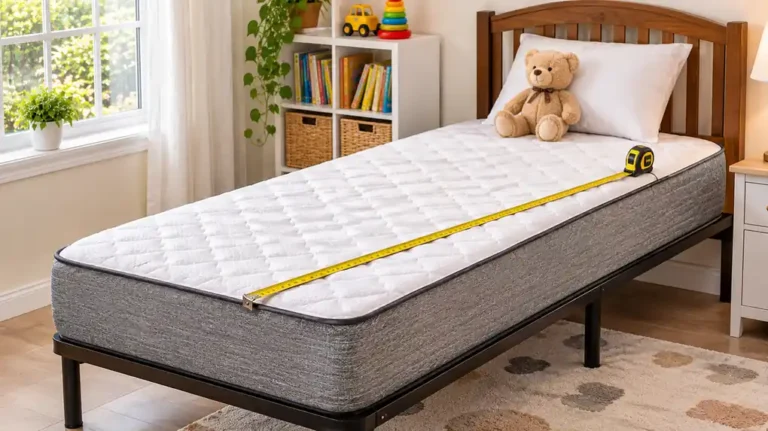
Twin vs Full Bed: Size (38 vs 54 Inches), Room Needed, Who Each Suits and Cost
Quick answer: a twin bed is 38 inches wide and 75 inches long. A full bed is 54 inches wide and 75 inches long. They share the same length, so the full is 16 inches wider. Choose a twin for kids, small rooms and tight budgets, and a full for teens and single adults who want room to stretch.
This article is part of our bed sizes chart, where you can compare related options.
Twin and full are the two smaller standard mattress sizes. They look similar on a spec sheet because the length matches, but the extra 16 inches of width changes how the bed feels, how much room it takes and what bedding you need. This guide compares sizes, room needs, sleepers, bedding, frames and cost, and helps you decide. The sizes come from mattress retailer guides already checked in other guides in this series. I did not verify price gaps, so I only describe what usually costs more.

Size Comparison
| Measure | Twin | Full |
|---|---|---|
| Width | 38 inches | 54 inches |
| Length | 75 inches | 75 inches |
| Width in feet | About 3.2 feet | 4.5 feet |
| Length in feet | About 6.25 feet | 6.25 feet |
| Sleeping surface | About 2,850 square inches | About 4,050 square inches |
The surface areas are my multiplication of width and length. A full bed has about 42 percent more sleeping surface than a twin. See the twin mattress dimensions and full size bed dimensions in feet guides for more detail, and the how wide is a twin bed guide for twin width and frames.
Room Size
Twin. Fits very small rooms, dorms and shared rooms. It leaves space for a desk or dresser. Full. A minimum room of about 9 by 9.5 feet, with 10 by 10 feet a common minimum and 10 by 12 feet better with a dresser. Casper recommends at least 10 by 11 feet to move around comfortably.
If your room is smaller than 9 by 9 feet, a twin is usually the safer pick. If you have 10 by 10 feet or more, a full is realistic.
Who Should Choose a Twin?
Children moving out of a crib or toddler bed. Kids in shared rooms or bunk beds. Twin mattresses are used in bunks, trundles and daybeds. See the day beds and full size loft bed guides. Single adults of average height (5 feet 11 inches or shorter) in small rooms. Guest rooms with limited space. College dorms, where twin XL is also common. Budget buyers.
Who Should Choose a Full?
Teenagers who need more room. Single adults who like to sprawl. Small guest rooms where one person sleeps at a time. People moving up from a twin who do not have room for a queen. Occasionally, two people who sleep very close (not recommended for most couples, since each person gets about 27 inches of width).
For couples, a queen or king is usually better. See the king vs queen guide.
Sheets and Bedding
Twin sheets do not fit full beds, and full sheets are too big for twins. Both use 75-inch lengths, but the widths differ. See the fitted sheet guide. Comforters, bed skirts and mattress toppers also come in matching sizes. See the bed skirt guide for box spring dimensions.
Tip: A full comforter on a twin bed hangs low and looks full. A twin comforter on a full bed leaves the sides uncovered.
Frames and Foundations
Twin frames are smaller and lighter. Twin beds also fit many bunk, loft and daybed frames. Full frames are larger. Casper notes a full frame typically runs 56 to 60 inches wide and 76 to 80 inches long. Full frames may need center support legs. Foundations: twin and full box springs are single pieces. Split box springs are mainly a queen and king thing. See the king box spring guide.
Many loft beds and bunk beds come in both twin and full. Full lofts need more ceiling height and a stronger frame. See the full size loft bed guide.
Moving and Delivery
Both are easy to move compared to queen and king beds. A twin is the easiest. A full is a bit heavier but fits through most doors and stairwells.
Cost
I did not verify price differences, so I only note the pattern: a full mattress, frame and bedding usually cost more than twin ones, because they use more materials. Compare current prices from retailers, and check delivery and assembly fees.
Sleep and Comfort
A twin offers less space to move. Taller or restless sleepers may feel confined. A full lets you roll over and change positions. It still lacks the width of a queen. Both can use any mattress type: memory foam, hybrid, latex or innerspring. See the best memory foam mattress, best firm mattress and best cooling mattress guides. Two adults on a full may feel crowded.
Height Matters Too
Both sizes are 75 inches long. If you are taller than about six feet, neither is ideal. Consider a twin XL (80 inches) or a queen. See the twin vs twin XL guide.
What are the main strengths and weaknesses?
On the plus side: fits small rooms; lowest cost; easy to move; works with bunks and trundles; more room than a twin; fits many bedrooms; good for teens and single adults. On the downside: narrow for adults; short for tall people; not for couples; tight for two adults; short for tall people; takes more space and bedding.
How to Choose
Measure your room and list the other furniture. Count the sleepers. Check the sleeper’s height. Check the frame you plan to use. Think about growth: a child may outgrow a twin. Set a budget for mattress, frame and bedding. Check delivery access. Try the sizes in a store.
What mistakes should you avoid?
A few common mistakes are worth avoiding: buying a full for a room that is too small; using twin sheets on a full; expecting two adults to sleep well on a full; forgetting the frame adds size; choosing a twin for a growing teen; ignoring bed length for tall sleepers.
Frequently Asked Questions
What is the difference between a twin and full bed?
A full is 16 inches wider (54 vs 38 inches). Both are 75 inches long.
Is a full bed big enough for two people?
It is tight. Each person gets about 27 inches of width.
How big a room do I need for a full bed?
At least about 9 by 9.5 feet, and 10 by 10 or more is more comfortable.
Do twin sheets fit a full bed?
No. You need full-size sheets.
Which is better for kids?
A twin is common for younger kids. Teens may prefer a full.
Is a full the same as a double?
In the US, yes.
Conclusion
Twin vs full comes down to width, room and who sleeps in the bed. A twin is 38 inches wide and suits kids and small rooms. A full is 54 inches wide and suits teens and single adults with enough space.
Measure your room, check your frame and match your sheets. Then you will choose the right size once.
Related guides
 How Wide Is a Twin Bed? 38 Inches Wide, Frame Width, Room Space and Twin vs Twin XL vs FullQuick answer: a twin mattress is 38 inches wide, which is about 3.2 feet or 97 centimeters. It is 75 inches…Read more →
 Full Size Bed Dimensions in Feet: 4.5 x 6.25 Feet, Frame Size and Room Size NeededQuick answer: a full size bed (also called a double) is 54 inches wide and 75 inches long, which is 4.5 feet by…Read more →
 Twin vs Twin XL: Size Difference, Who Should Buy Each and What to CheckAt first glance, a twin and a twin XL mattress look almost identical. They are the same width, and they sit on…Read more →
 Twin Bed: Sizes, Types and How to Choose the Right OneA twin bed is the classic choice for kids rooms, guest rooms and small spaces. It takes up little floor space,…Read more →