Twin Bed: Sizes, Types and How to Choose the Right One
A twin bed is the classic choice for kids’ rooms, guest rooms and small spaces. It takes up little floor space, costs less than bigger beds and is easy to move. But twin beds come in many shapes, from simple platform frames to bunk and loft designs, so it helps to know what you’re buying.
This article is part of our bed frame guide, where you can compare related options.
A twin bed is a bed built for one sleeper. It uses a twin mattress, which measures about 38 inches wide and 75 inches long. The word “twin” refers to the size, not to a pair of beds, although twin beds are often sold or placed in pairs.
This guide explains twin bed sizes, the main types, how to pick a frame and what to check for kids, teens and adults. You’ll also find a comparison table, a buying checklist and answers to common questions.

Twin Bed Size and Dimensions
A standard twin mattress is about 38 inches wide by 75 inches long. The frame is a little bigger, usually a few inches wider and longer. A twin XL mattress has the same width but is about 80 inches long. It’s popular with tall teens and in college dorms.
Measure the room before you shop. A twin bed leaves plenty of space for a desk, a dresser and a play area. Leave walking space around the bed, and check that doors and closets still open.
Remember that bed frames add to the size. Headboards, footboards and storage drawers can add length or width. If your room is tight, compare the frame’s total dimensions, not just the mattress size.
Types of Twin Beds
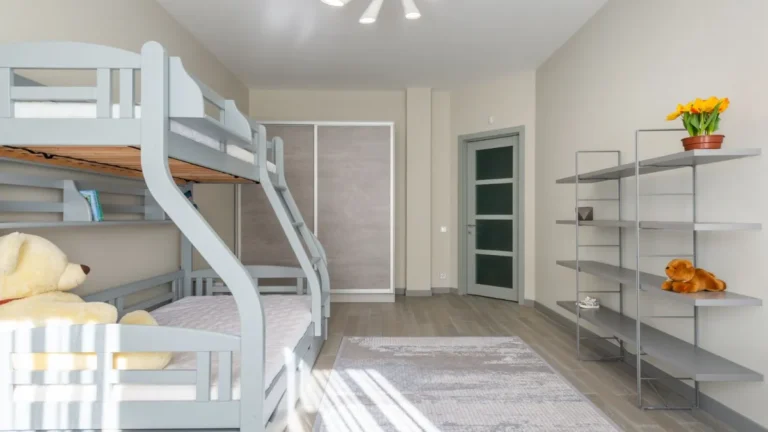
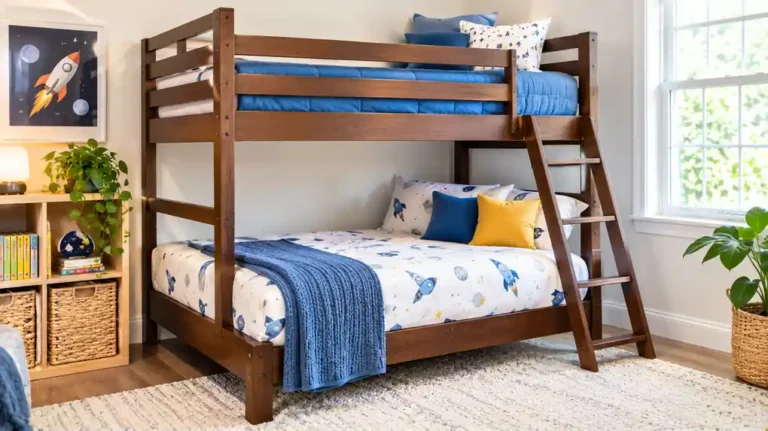
Standard bed frame: a simple frame with a headboard and side rails. It’s often paired with a box spring or a foundation. This is the most traditional choice. Platform bed: a platform bed has a built-in support deck, so no box spring is needed. It sits lower and looks clean and modern. It’s a good pick for foam mattresses. Storage bed: storage twin beds have drawers or a lift-up base. They suit small rooms where closet space is short. Loft bed: a loft bed lifts the mattress high off the floor, leaving space below for a desk, a play area or a sofa. Junior or low lofts suit younger kids. Bunk bed: two beds stacked on top of each other. Twin over twin is common, and twin over full is also available. Bunks save floor space and are popular for shared rooms. Trundle bed: a second mattress slides out from under the main bed. It’s handy for sleepovers and guests. Daybed: part sofa and part bed. Most day beds use a twin mattress. Canopy or poster bed: a bed with tall posts that suits a decorative look.
| Type | Best for | Needs box spring? | Watch out for |
|---|---|---|---|
| Standard frame | Traditional rooms | Often | Check support type |
| Platform | Modern look, foam mattresses | No | Slat spacing |
| Storage | Small rooms | Usually no | Weight of drawers |
| Loft | Saving floor space | No | Ceiling height, safety |
| Bunk | Shared rooms | No | Safety rails, ceiling height |
| Trundle | Guests, sleepovers | No | Trundle mattress thickness |
| Daybed | Seating and sleeping | No | Deep seat |
Heights, Weight Limits and Safety
Heights vary a lot. Low platform beds can sit only a few inches off the floor. Bunk beds can be under 50 inches tall in low-profile models, and others are 60 inches or more. A loft bed raises the mattress even higher. Check your ceiling height, especially for bunks and lofts. A low ceiling makes the top bunk uncomfortable for a child.
Weight limits differ by model. Kids’ twin lofts are often rated around 150 to 200 pounds, while teen or adult-rated metal models can be 250 pounds or more. For bunks, each bed has its own rating. A twin-over-full bunk, for example, may list about 250 pounds for the top bed and about 400 pounds for the bottom. Metal frames generally hold more than particleboard ones. Always use the maker’s stated rating for your specific model, since figures vary.
For safety, look for guardrails on lofts and top bunks, sturdy ladders and a thickness limit for the mattress, so the rail stays tall enough. Check the maker’s manual or a consumer-safety source for details. Keep young children off high beds unless the model is designed for their age.
How to Choose a Twin Bed
Decide who it’s for. A young child, a teen, an adult and a guest all have different needs. Measure the room. Include doorways, windows and closet doors. Check the ceiling height. This matters for bunks and lofts. Pick the type. Storage for small rooms, bunk for shared rooms, platform for a clean look. Choose the support. A slatted or solid platform works with most mattresses. Check the mattress maker’s slat rules. Pick the material. Solid wood lasts longest. Metal is strong and light. Engineered wood costs less. Check the weight rating. It should cover the sleeper, the mattress and bedding. Plan for the mattress. Check if the frame needs a thin mattress. Think about growth. A twin XL frame or a bed that converts later can last longer for a growing teen.
Twin Beds for Kids, Teens and Adults
Kids: a twin is a natural step up from a toddler bed. Choose a low frame with rails for younger children, and make sure the mattress is firm and supportive. Teens: teens grow quickly, so a twin XL may be a better long-term choice. Storage beds and lofts with desks help in small bedrooms. Adults: a twin works for single sleepers under about 6 feet tall, small guest rooms and studio apartments. If you’re taller, a twin XL gives more length. Guests: a twin with a trundle or a daybed gives you flexible sleeping space without taking up much room.
Twin Bed Bedding Tips
Twin sheets, comforters and protectors are widely available and usually cost less than larger sizes. Make sure the sheets fit your mattress depth. Deep pockets are better for thick mattresses. Don’t mix twin and twin XL sheets, since twin sheets are too short for a twin XL.
Frequently Asked Questions
What size is a twin bed?
A twin mattress is about 38 by 75 inches. The frame is a little larger, depending on the style.
What’s the difference between a twin bed and a twin XL bed?
Both are about 38 inches wide, but a twin XL is about 80 inches long, five inches longer than a standard twin. Taller sleepers often prefer it.
Is a twin bed big enough for an adult?
For one person under about 6 feet tall, yes. Taller adults may prefer a twin XL or a full.
Do twin beds need a box spring?
Not always. Platform beds and slatted frames usually don’t need one. Check your frame and mattress guidance.
What is the weight limit of a twin bed?
It varies by model. Kids’ lofts are often rated around 150 to 200 pounds, and some adult-rated metal frames reach 250 pounds or more. Check the maker’s rating.
Are bunk beds safe?
They can be safe when built to standards and used correctly. Look for guardrails, a sturdy ladder and a mattress that fits the frame. Follow the age and weight guidance from the maker.
Conclusion
A twin bed is a flexible, space-saving choice for kids, teens, guests and solo sleepers. Pick a type that fits your room, from a simple platform frame to a storage, loft or bunk bed, and check the size, ceiling height and weight rating.
Measure first, read the maker’s safety guidance and think about how the bed will be used over the next few years. With the right frame and mattress, a twin bed can serve well for a long time.
Related guides
 Twin Loft Bed Guide: Dimensions, Ceiling Height, Guardrail Height, Mattress Thickness and Weight LimitsQuick answer: a twin loft bed holds a twin mattress (about 38 by 75 inches) on a raised frame with open space…Read more →
 Twin Bed Frame: Types, Size, Support and How to ChooseA twin bed frame holds up your mattress and shapes the look of the room. The right frame is sturdy, quiet and a…Read more →
 Twin Over Full Bunk Bed Guide: Dimensions, Weight Limits, Guardrails and Safety ChecksQuick answer: a twin over full bunk bed has a twin mattress (38 by 75 inches) on top and a wider full mattress…Read more →
 Twin vs Full Bed: Size (38 vs 54 Inches), Room Needed, Who Each Suits and CostQuick answer: a twin bed is 38 inches wide and 75 inches long. A full bed is 54 inches wide and 75 inches long.…Read more →