
Floor Chair Guide: Legless Chairs, Back Support, Cushion Thickness and Who Should Avoid Them
Quick answer: a floor chair sits on the floor and gives you a seat and back support without legs. Legless models often have a metal frame with multi-angle gear joints for adjustable recline. Look for a cushion about 10 to 15 centimeters thick, adjustable back support and padded frame edges, and know that floor-level seating can be tough on joints when getting up.
This article is part of our accent chairs, recliners and seating guide, where you can compare related options.
Floor chairs suit small apartments, gaming rooms, meditation corners, kids’ rooms and homes that favor floor seating. They save space, they are easy to move and they make lounging comfortable. But they do not suit everyone, especially people with back or joint problems. This guide explains the types, how to check back support, cushion thickness, frame and recline, who should be careful, use cases and how to choose. This is not medical advice. If you have chronic back pain, ask a doctor.

Types of Floor Chairs
Legless Floor Chairs (Zaisu)
Legless floor chairs, often inspired by traditional Japanese tatami seating, have become popular in compact apartments due to their space-saving designs. These chairs feature an internal metal frame equipped with multi-angle gear joints, letting you adjust the recline. Some fold flat.
Floor Sofa Chairs and Lazy Chairs
Thick-cushioned seats with a back and sometimes armrests. Lazada publishes comparisons of floor sofa chairs and foldable lazy chairs for comfort and back support.
Ottoman-Style Floor Seats
These lack back support, making them best suited to shorter sitting periods. See the pouf ottoman guide.
Gaming Floor Chairs
Legless or low-profile chairs with headrests and speakers in some models.
Meditation and Cushion Seats
Zafu cushions and low benches.
Backless Stools and Kneeling Chairs
Backless ergonomic seats for desks. Not the same as legless chairs.
Saucer and Moon Chairs
Bowl-shaped floor-level chairs. See the saucer chair guide.
Back Support
Back support is the key difference.
Check the reclining mechanism and frame. For foldable chairs, the foundation of any foldable lazy chair is its frame and reclining mechanism. These internal components dictate how the chair moves, how much weight it can support and the type of back support it provides. If you require consistent lumbar support to prevent lower back strain, a frameless design may not be suitable for extended sitting. One guide recommends an adjustable legless recliner equipped with high-density foam and a multi-angle gear system for gaming, reading or TV. A general ergonomic checklist suggests a backrest that supports your lower and upper back and is adjustable to support the natural curve of your lower back.
Cushion Thickness
The thickness of the foam affects how well it supports a user’s weight. One guide suggests a seat cushion thickness of at least 10 to 15 centimeters, with well-padded frame edges so the frame does not dig into you. High-density foam holds its shape better than low-density foam. A thin cushion lets you feel the floor or the frame.
Frame and Adjustability
Key points: gear joints let you choose a recline angle; steel frames are strong. Check welds and finish; folding frames save space. Check that locks hold; headrests support the neck for gaming and TV; armrests help you get up; weight capacity varies. Check it.
Getting In and Out
Legless designs have a trade-off. One source notes they provide firm, highly adjustable backing directly at floor level, making them excellent for compact living but demanding on your joints during entry and exit. If you have knee, hip or balance issues, a floor chair may be hard to use. Choose a model with armrests or consider a regular chair.
Who Should Be Careful?
If you suffer from chronic back pain, herniated discs or other diagnosed spinal conditions, standard floor sofa chairs may not provide the specialized orthopedic support you need. Ask a doctor or physical therapist. Pregnant people, older adults and anyone with mobility issues should also be careful.
Use Cases
Gaming. Pair with a low table. Take breaks. Reading and TV. A recliner-style floor chair is comfortable. Meditation. A moderate cushion on a firmer base is a reasonable combination in general, but check with an instructor. Kids’ rooms. Soft and low. See the kids couch guide. Dorms and small apartments. Japanese-style rooms. With tatami or rugs. See the japanese floor mattress guide.
Materials and Care
Key points: fabric: linen, cotton or microfiber. Removable covers help; faux leather: wipes clean; faux fur and sherpa: cozy but needs care; foam: high-density; frame: steel with a powder coat.
Vacuum regularly, spot clean and check bolts.
Floor Protection
Use a rug or mat under the frame to protect floors. Add rubber feet.
What are the main strengths and weaknesses?
On the plus side: space-saving; comfortable for lounging; easy to move; adjustable recline in many models. On the downside: hard to get up from; not for everyone with back or joint problems; backless types do not support long sitting; capacity varies.
How to Choose a Floor Chair
Decide the use and sitting time. Check back support and adjustability. Check cushion thickness (10 to 15 centimeters or more). Check frame and gear joints. Check weight capacity. Check armrests and headrest. Check folding and storage. Consider your joints and ask a doctor if unsure. Read reviews. Check the return policy.
What mistakes should you avoid?
A few common mistakes are worth avoiding: choosing a backless seat for long sitting; ignoring entry and exit difficulty; buying a thin cushion; skipping the weight rating; using it for hours without breaks; expecting orthopedic support from a basic chair.
Frequently Asked Questions
What is a legless floor chair?
A chair with a back and seat but no legs, often with an adjustable metal frame.
Is a floor chair good for your back?
It depends. Check lumbar support, and ask a doctor if you have back pain.
How thick should the cushion be?
One guide suggests at least 10 to 15 centimeters.
Are floor chairs hard to get out of?
They can be demanding on joints during entry and exit.
Can I use a floor chair for gaming?
Yes, with good back support and breaks.
Do floor chairs fold?
Many do. Check the lock.
Conclusion
A floor chair is a space-saving, relaxed seat, but it needs good back support and a thick cushion. Check the frame and adjustability, consider your joints and use it in moderation.
If you have back problems, ask a doctor. The right chair makes floor-level living comfortable.
Related guides
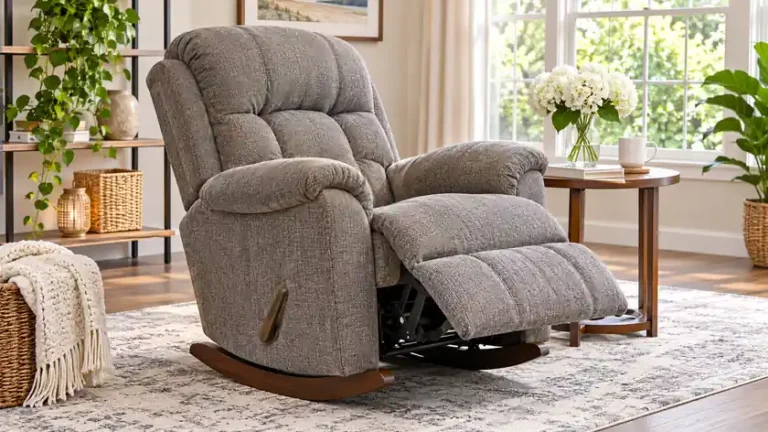 Club Chair: What It Is, Typical Sizes, Leather Styles and Club Chair vs ArmchairA club chair is a deep, low-backed, heavily upholstered lounge chair, traditionally covered in leather. One…Read more →
 Barrel Chair: Dimensions, Styles, Swivel Options and How to Place OneA barrel chair is an upholstered armchair with a rounded, curved back that wraps around the sitter like the…Read more →
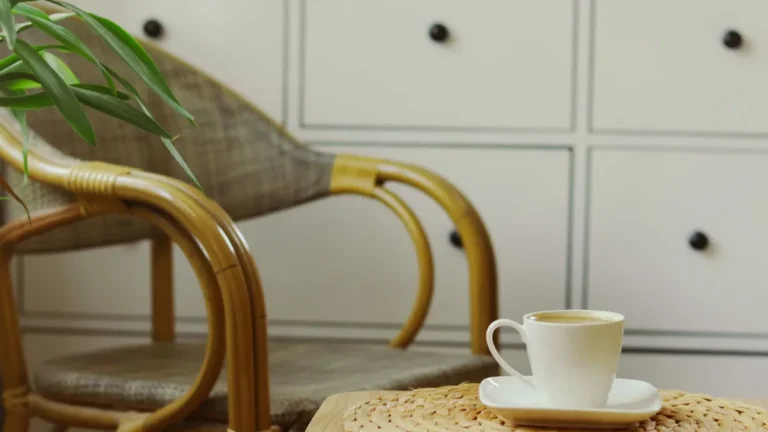 Saucer Chair Guide: Size, Seat Height, Weight Capacity, Folding Models and Where to Use OneQuick answer: a saucer chair, also called a moon chair, is a wide, round, bowl-shaped seat with a padded…Read more →
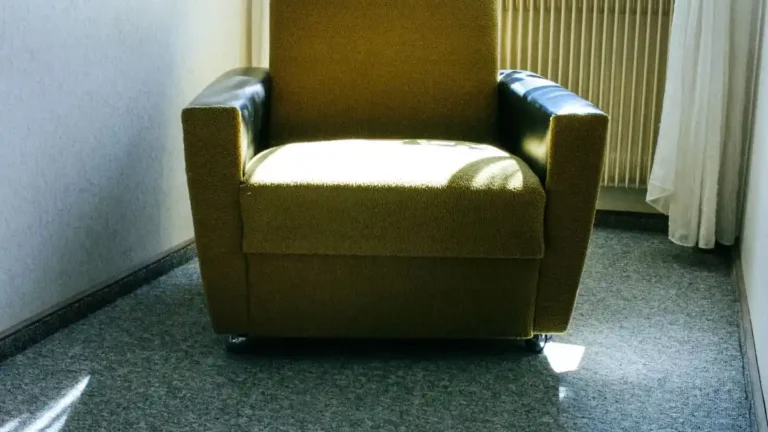 Sleeper Chair Guide: Sizes, Comfort, Sleeper Chair vs Sofa Bed and How to ChooseA sleeper chair is a chair by day and a small bed by night. It fits in rooms where a sofa bed would be too big:Read more →





2 Comments