Small Sectional Guide: Apartment Sizes, Chaise Length, How to Measure and Delivery Checks
Quick answer: a small sectional is an apartment-sized L-shaped sofa. A true apartment sectional is typically 78 to 90 inches wide with a chaise 55 to 65 inches long. Measure the room, leave 30 to 36 inches of walkway, confirm whether the chaise is reversible and check doors and hallways before delivery.
This article is part of our sofa and couch buying guide, where you can compare related options.
A small sectional gives you the comfort of a corner couch without swallowing the room. It seats a family, supports a lounging chaise and often beats two separate pieces for space. But “small” is relative, and many sectionals marketed that way are still big. This guide explains typical small sectional dimensions, how to measure your room and the sofa, why “reversible” is not always what it seems, how to place one and what to check before you buy.
What Counts as a Small Sectional?
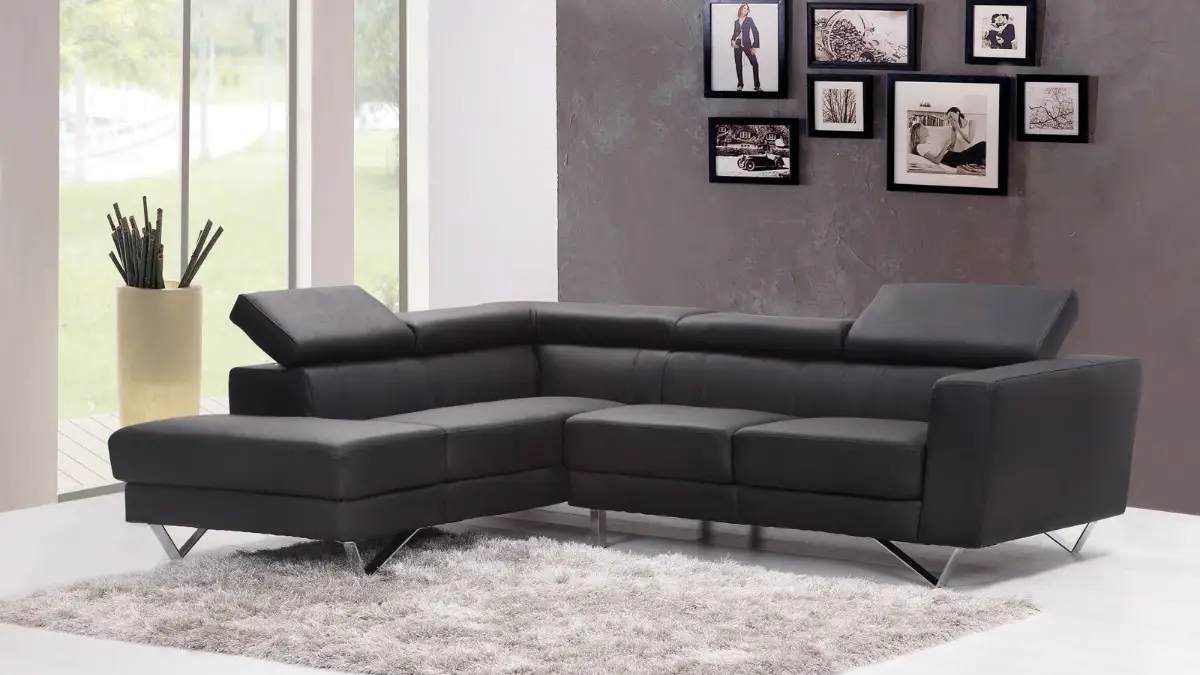
A true apartment-sized sectional typically measures 78 to 90 inches in width, with chaise lengths of 55 to 65 inches. For a studio, one guide suggests a sofa that measures between 50 and 60 inches might be necessary to conserve space. Types: l-shaped sectional with a chaise. The most common; reversible chaise sectional. The chaise can be on either side; loveseat sectional. Even smaller; modular sectional. Pieces rearranged; sectional sofa bed or storage chaise. See the sectional sleeper sofa guide; corner sectional; convertible sectional. A Walsunny 73.6 inch convertible sectional is aimed at small living rooms.
Examples from listings: a Poundex 87 inch sectional is listed as 87 by 59 by 36 inches overall, with a reversible chaise of 32 by 59 by 36 inches and a sofa of 55 by 34 by 36 inches. A Segmart sofa bed sectional is listed at 82 by 60.35 inches.
Understanding the Dimensions
Sectional listings give several numbers. The Poundex example shows overall length, chaise length and sofa length as separate figures, so compare the right one to your wall. Key numbers: overall width and depth. The footprint of the whole unit; chaise length. How far the chaise extends; seat depth. Comfort for sitting; back height. Visual weight in the room; arm width. Wide arms eat into seating.
To find a sectional’s specific overall width, read the product’s weights and dimensions tab.
How to Measure Your Room
Guides suggest:
- Measure the room’s length, width and height as a baseline.
- Measure wall lengths, and note windows, doors and radiators.
- Plan walkway space of 30 to 36 inches.
- Measure the sofa footprint: width, depth and chaise length.
- Trace the footprint on the floor with painter’s tape. For a curved sectional, trace a rectangle around it, then measure that rectangle’s depth and width.
- Check the coffee table space. See the oval coffee table and ottoman coffee table guides.
Wayfair publishes a guide on how to measure for a sectional sofa.
Delivery and Access
Check the width, height and diagonal depth of doorways, hallways and stairwells against the largest piece. Many sectionals ship in pieces, but each piece can still be large. Elevators and tight turns matter in apartments. Ask about white-glove delivery and assembly.
“Reversible” Claims
Listings can be inconsistent. One roundup lists a sofa as “Reversible? No, but available with chaise on left or right.” So confirm on the product page whether the chaise can be moved after purchase or must be chosen at order. Left and right are usually defined as you face the sofa. Choose the side that suits your walls, doors and traffic. It is the same type of decision as choosing a left or right return on an L shape desk. See the L shape desk guide.
Layout Ideas
Corner placement. Fits the sectional into a corner. Room divider. In open plans, place the back of the sectional between living and dining areas. Float it. In larger rooms, leave space behind, but only with a finished back. Facing the TV. Mind the viewing distance. See the TV console table guide. With accent chairs. A swivel chair closes the conversation circle. See the swivel accent chair guide. With a pouf or ottoman. Flexible seating. See the pouf ottoman guide.
Materials and Comfort
Key points: fabric: performance fabric is best for families and pets. See the couch covers for dogs guide; leather or faux leather: wipes clean; frame: hardwood is stronger than particleboard; foam: high-density foam holds shape; cushions: removable and reversible cushions are easy to refresh; legs: raised legs make a room feel lighter.
Small Sectional vs Sofa and Loveseat
A small sectional gives more seating and a chaise for stretching out. A sofa and loveseat pair gives flexible arrangement. Compare footprints, because an L shape can waste floor if the chaise sits in a walkway.
What are the main strengths and weaknesses?
On the plus side: lots of seating in a compact space; chaise for lounging; defines a living area; many styles. On the downside: hard to rearrange; delivery challenges; chaise can block walkways; “Small” can still be big.
How to Choose a Small Sectional
Measure the room and plan walkways. Mark the footprint on the floor. Choose overall width (78 to 90 inches is typical). Check chaise length (55 to 65 inches typical). Choose the chaise side or check it is reversible. Check delivery access. Choose fabric and frame. Check seat depth and comfort. Check the return policy. Read reviews.
What mistakes should you avoid?
A few common mistakes are worth avoiding: not measuring doorways; comparing the wrong dimension to the wall; assuming it is reversible; blocking walkways; buying a very deep seat for a short person; ignoring fabric durability.
Frequently Asked Questions
How big is a small sectional?
Typically 78 to 90 inches wide with a chaise of 55 to 65 inches.
How much walkway space do I need?
About 30 to 36 inches.
Are all small sectionals reversible?
No. Some can be ordered with the chaise on the left or right. Check the listing.
How do I measure for a sectional?
Measure the room, mark the footprint on the floor and check doors and stairs.
Is a small sectional good for a studio?
Possibly. For a studio, a sofa of 50 to 60 inches may be needed.
What fabric is best?
Performance fabric or leather for easy cleaning.
Conclusion
A small sectional can give an apartment real comfort. Measure your room, mark the footprint, choose a chaise side and check doors and halls before delivery.
Read dimensions carefully, because overall, chaise and sofa lengths differ. With a good fit, a small sectional becomes the heart of your living room.
Related guides
 Small Sofa Guide: Loveseat and Apartment Sofa Sizes (48 to 84 Inches), Arms, Depth and Fit for Small RoomsQuick answer: a small sofa can be a compact loveseat (about 48 to 58 inches wide and 30 to 34 inches deep) or…Read more →
 Sleeper Sectional Guide: Pull-Out Mechanisms, Mattress Comfort, Sizes, Storage and FitA sleeper sectional is a sectional sofa with a hidden bed. By day it is a big, comfortable seating area for the…Read more →
 Small Couch Guide: Apartment Sofa Sizes, Fitting Through Doors and ChoosingA small couch can make a small room work. It seats people without crowding the floor, fits through narrow doors…Read more →
 Small Bookshelf Guide: Sizes, Materials, Anchoring and Ideas for Tight SpacesA small bookshelf can do a lot in a small home. It holds your favorite books, fills an awkward corner and adds…Read more →