Oversized Chair: Chair and a Half, Seat Depth, Size and Weight Capacity
An oversized chair is big enough to curl up in. It’s wider and deeper than a standard armchair, with plush cushions and room to stretch. For tall people, anyone who likes to sit cross-legged and couples who want to share a chair, it can be the most-used seat in the house.
This article is part of our accent chairs, recliners and seating guide, where you can compare related options.
An oversized chair is a large armchair with a wider seat, a deeper seat or both. The most common type is the chair and a half, which sits between an armchair and a loveseat. One guide puts a chair and a half at 48 inches wide or more. Another describes an oversized armchair as typically offering a seat width of 30 inches or more, a deeper-than-average seat and plush cushioning.
This guide explains the types of oversized chairs, how to read seat depth and width, how to check room fit and weight capacity, and what to look for in construction. You’ll also find a comparison table, a checklist and answers to common questions.
Types of Oversized Chairs
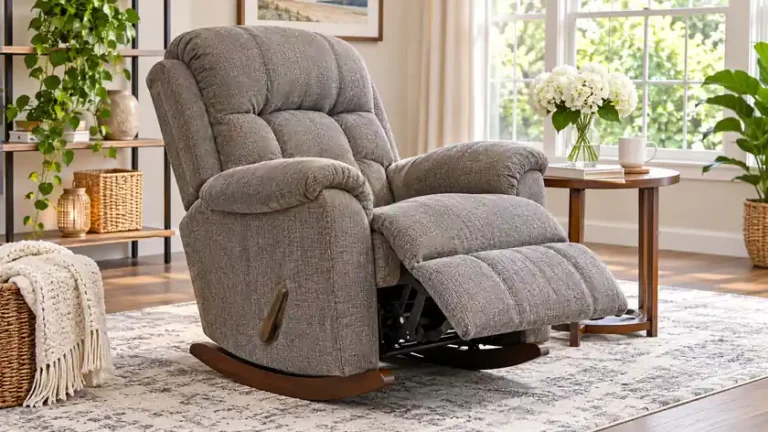
Chair and a half: sits between an armchair and a loveseat. It has room for one person to sprawl or two to squeeze in. Cuddler chair: a chair and a half designed for snuggling. Oversized armchair: a large single chair with deep cushions. Oversized recliner: a recliner with a wider seat. One guide notes a chair and a half recliner is larger than a standard recliner but smaller than a sofa. Oversized swivel chair: a big chair that turns. See the swivel chair guide. Oversized wingback: a formal, high-backed chair with extra width. Oversized lounge chair or papasan: casual, round or bowl-shaped seats. Oversized chair with ottoman: a set with a matching footrest.
| Type | Best for | Watch out for |
|---|---|---|
| Chair and a half | Curling up, sharing | Footprint |
| Oversized armchair | Tall people | Seat depth |
| Oversized recliner | Relaxing | Reclined depth |
| Oversized swivel | Flexible rooms | Clearance |
| Chair with ottoman | Lounging | Extra space |
Seat Depth vs Width
Depth matters more than overall width for lounging. One guide notes that buyers who focus on overall width can end up with a chair that looks big but doesn’t let you curl up sideways.
One guide suggests 22 to 24 inches of seat depth is the sweet spot, and anything more than that requires a “slouchy” sitting style. That is one opinion, not a standard. Some models offer adjustable depth. A sofa guide notes that a household with different sitting habits may benefit more from adjustable depth than from a permanently extra-deep seat.
Check the spec sheet for “interior seat depth” rather than relying on the overall dimensions. A chair can have thick arms that make the interior seat narrower than it looks.
For width, chair-and-a-half models run 48 inches or more, according to one guide. A true oversized armchair may have a seat width of 30 inches or more.
Does It Fit in Your Room?
Measure the footprint, including recline. An oversized reclining chair occupies a significantly larger footprint than its upright counterpart, and failing to account for reclined depth can obstruct walkways.
One rule of thumb in the results gives about 2 feet wide and 3 feet deep, but that figure seems to describe a smaller chair than most in the results. Use the actual dimensions of the chair you’re considering.
Steps:
- Measure the space. Width, depth and height.
- Tape the outline on the floor.
- Leave walking space of about 30 inches where people pass.
- Check the door and hall. Oversized chairs can be hard to deliver.
- Check the swing of nearby doors.
- Add the ottoman, if you plan to. One guide suggests an ottoman about 2 feet square pairs well.
For small spaces, one source calls the chair and a half a strong choice for small apartments, since it can replace a loveseat. But it still needs room.
Weight Capacity
Listed capacities vary widely. In one roundup, a 2026 pick lists a 600-pound weight capacity, and a guide’s top pick lists a 550-pound capacity per chair. A third model is listed at 450 pounds.
Reclining models need stronger mechanisms, since the mechanism must support greater weight and withstand increased stress due to the wider seat. Check whether the stated capacity applies per seat or per chair, and whether it is the static rating or a stress test.
If two people will sit together, add their weights. Ask the maker for the rating.
Construction and Comfort
Frame. Kiln-dried hardwood or reinforced plywood is better than thin particleboard. Springs. One guide suggests looking for spring-based support, since spring-based supports tend to keep cushions from sagging. Cushions. High-density foam holds shape. Down and feather feel soft but need fluffing. Arms. Wide arms are comfortable, but narrow the seat. Back. A high back supports your head. A low back feels more casual. Fabric. Performance fabric or microfiber suits busy homes. Leather wipes clean. Legs. Strong legs or a solid base. Warranty. Look for coverage on the frame.
Try the chair, if you can. Sit in your usual posture: legs up, cross-legged or reading. A chair that looks great but doesn’t fit your habits won’t get used.
How to Choose an Oversized Chair
Decide how you’ll sit. Curl up, sprawl, share or recline? Measure the room and delivery path. Check the interior seat depth and width. Check the weight capacity. Pick the type. Chair and a half, recliner or swivel. Check the frame and springs. Choose the fabric. Plan an ottoman. Check the warranty and returns. Read reviews for notes on sagging and comfort.
What mistakes should you avoid?
A few common mistakes are worth avoiding: choosing by width alone (depth and interior size matter); ignoring recline space (the footrest and back need room); not measuring the doorway (large chairs get stuck); overlooking weight limits (two people add up); buying a chair that’s too big for the room (it overwhelms the space); skipping the frame check (a weak frame sags).
Frequently Asked Questions
What is an oversized chair?
A large armchair with a wider seat, a deeper seat or both. The chair and a half is a common type.
How big is a chair and a half?
One guide puts it at 48 inches wide or more. Sizes vary by brand.
What seat depth is best for an oversized chair?
One guide suggests 22 to 24 inches as a sweet spot. Check the interior seat depth.
How much weight can an oversized chair hold?
Listings range from about 450 to 600 pounds. Check the maker’s rating.
Will an oversized chair fit in a small room?
It can, if you measure and leave walking room. A chair and a half can replace a loveseat in a small apartment.
Do oversized chairs need an ottoman?
Not required, but an ottoman adds comfort. One guide suggests about 2 feet square.
Conclusion
An oversized chair gives you room to relax in a way a standard armchair can’t. Pay attention to seat depth, the interior width, weight capacity and room fit, and look for a strong frame with supportive springs.
Measure the space and the delivery path, think about how you sit and check the warranty. With the right oversized chair, you’ll have a favorite spot in your living room.
Related guides
 Club Chair: What It Is, Typical Sizes, Leather Styles and Club Chair vs ArmchairA club chair is a deep, low-backed, heavily upholstered lounge chair, traditionally covered in leather. One…Read more →
 Barrel Chair: Dimensions, Styles, Swivel Options and How to Place OneA barrel chair is an upholstered armchair with a rounded, curved back that wraps around the sitter like the…Read more →
 Floor Chair Guide: Legless Chairs, Back Support, Cushion Thickness and Who Should Avoid ThemQuick answer: a floor chair sits on the floor and gives you a seat and back support without legs. Legless…Read more →
 Sleeper Chair Guide: Sizes, Comfort, Sleeper Chair vs Sofa Bed and How to ChooseA sleeper chair is a chair by day and a small bed by night. It fits in rooms where a sofa bed would be too big:Read more →