Anti Fatigue Mats Guide: Foam vs Gel vs Rubber, Thickness for Standing Desks and Kitchens, Size and Lifespan
Quick answer: an anti fatigue mat cushions your feet when you stand for long periods, at a kitchen counter, standing desk or workbench. Roughly 12 to 20 millimeters for standing workstations. Gel mats cost more but feel premium and last longer than foam, quality rubber lasts longest and thicker is not automatically better because dense material resists compression best.
This article is part of our home office desk guide, where you can compare related options.
If you stand at a counter or standing desk for hours, a hard floor can make your feet, legs and back tired. An anti fatigue mat adds gentle cushioning that encourages tiny movements. But the market is full of claims, and a mat that is too thin, too soft or the wrong material can be useless. This guide explains materials, thickness, size, kitchen vs desk use, safety, lifespan and how to choose. This is not medical or ergonomic advice. If you have foot, back or circulation problems, ask a professional.
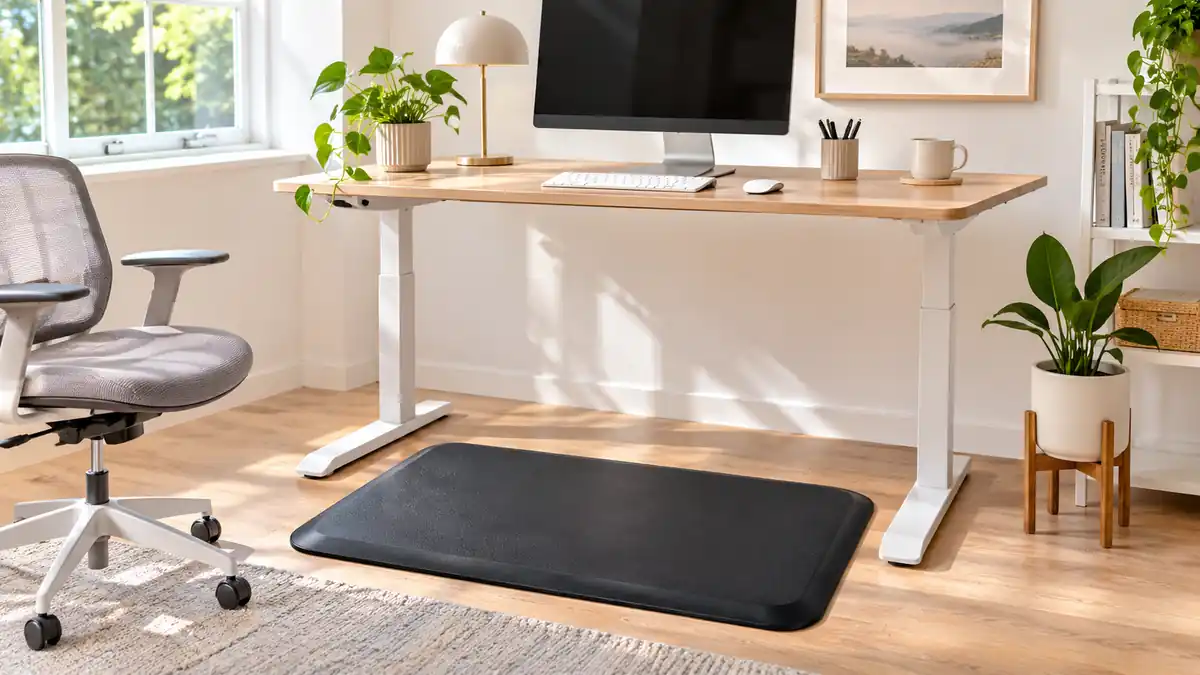
What Is an Anti Fatigue Mat?
It is a cushioned mat designed for standing. It is firmer than a rug pad and softer than a bare floor. Mats are used in kitchens, offices, garages, workshops, laundry rooms and retail areas. See the small laundry room ideas guide for laundry room comfort and the L shaped standing desk guide for desk setups.
Materials
Foam. The cheapest, light and soft. Foam is the cheapest but wears fastest. One vendor puts foam mats at 2 to 4 years. Gel. One guide says gel mats are more expensive than foam but offer better durability and a premium feel underfoot. Another claims gel-infused polyurethane foam demonstrates superior shock absorption compared with standard rubber, but that page is a low-quality source. Rubber. Rubber is generally the pick for hard floors and wet or greasy areas, since PVC foam mats absorb grease and are a poor choice. One vendor puts quality rubber at 5 to 10 years. Polyurethane. Memory foam. Soft but can bottom out. Wood or cork (less common).
| Material | Pros | Cons |
|---|---|---|
| Foam | Cheap, soft | Wears fast, 2 to 4 years |
| Gel | Premium feel, durable | Costs more |
| Rubber | Durable, wet-friendly | Heavier, can smell at first |
| PVC foam | Cheap | Absorbs grease, poor for kitchens |
Lifespan figures come from vendors.
Thickness
Roughly 12 to 20 millimeters for standing workstations. One guide gives home standing desk on carpet at 12 to 16 millimeters, and on hard floor at 13 to 19 millimeters. Thicker is not automatically better.
Material compression under sustained pressure can reduce the effective thickness, and denser materials tend to resist compression better than lower-density alternatives. At 25 millimeters, ensure the mat edges are beveled or ramped to prevent trip hazards. A 9 millimeter foam mat will compress flat and provide no benefit under a wheeled load, per one guide, so do not roll an office chair over a thin foam mat. Replace when permanent compression exceeds 10 percent of original mat thickness, per one source.
Size and Shape
Sizing guidance is thin in the results. One UK guide cites typical standard sizes of 600 by 900 millimeters, 900 by 1500 millimeters or rolls cut to length. Match the mat to your footprint and the area you stand in: Kitchen sink or counter. A runner about 20 by 72 inches, such as the GelPro Elite kitchen mat shown in the search, or a smaller rectangle. Standing desk. A mat about 2 by 3 feet gives room to shift your feet. Ergodriven’s Topo mat is a popular choice, per one guide. Workbench or garage. A larger rubber mat. Laundry area.
Leave room to shift your feet and move around.
Kitchen vs Standing Desk Mats
Kitchen mats often prioritize comfort and style, and must handle spills, grease and cleaning. Rubber or sealed gel mats are easier to wipe. Desk mats focus on movement and stability. Some have angled or textured surfaces to encourage foot movement. Workshop mats need chemical and oil resistance.
Safety
Key points: edges. Beveled edges reduce trips; non-slip underside. Prevents sliding; wheelchairs and rolling chairs. Avoid mats that trap wheels; wet areas. Choose slip-resistant surfaces; kids and older adults. Watch for trip hazards; pets. Some chew foam. Choose sturdier materials.
Does It Work?
Evidence is mixed in the general literature (general knowledge). The search results were seller-heavy. Standing too long, even on a mat, can be tiring. Alternate sitting, standing and moving, and wear supportive shoes. If you have pain, ask a doctor or physical therapist. Rubberco, a UK seller, publishes a guide asking whether anti fatigue mats really work, but seller claims deserve caution.
Care
Key points: wipe with mild soap and water; dry before storage; avoid harsh solvents that damage foam; rotate the mat; keep out of direct sun; replace when compressed, cracked or curled.
What are the main strengths and weaknesses?
On the plus side: cushions hard floors; encourages movement; protects floors; many sizes and styles. On the downside: cheap ones wear fast; can be a trip hazard; may trap debris; evidence for health benefits is limited.
How to Choose an Anti Fatigue Mat
Decide the use: kitchen, desk or workshop. Choose material: rubber for wet areas, gel for premium comfort, foam for budget. Choose thickness: about 12 to 20 millimeters for standing desks. Check density, not just thickness. Check size for your footprint. Check edges and non-slip backing. Check cleaning needs. Read independent reviews. Check the warranty.
What mistakes should you avoid?
A few common mistakes are worth avoiding: buying the thickest mat only; using thin foam under a rolling chair; choosing PVC foam for a greasy kitchen; ignoring edges; trusting unverified percentage claims; never replacing a compressed mat.
Frequently Asked Questions
How thick should an anti fatigue mat be?
About 12 to 20 millimeters for standing workstations, per sources.
Is gel better than foam?
Gel costs more and lasts longer, per one guide.
How long do mats last?
One vendor says foam lasts 2 to 4 years and rubber 5 to 10.
What is best for a kitchen?
Rubber is generally the pick for wet or greasy areas.
Do anti fatigue mats really work?
Evidence is mixed and seller claims deserve caution. Vary your posture.
When should I replace one?
When permanent compression exceeds 10 percent of the original thickness.
Conclusion
An anti fatigue mat can make standing more comfortable if you choose the right material and thickness. Aim for about 12 to 20 millimeters for desks, choose rubber for wet areas and pick gel for a premium feel.
Check edges and replace compressed mats. Combine a mat with movement and good shoes for the best comfort.
Related guides
 Chair Mat: Carpet vs Hard Floor, Sizes, Grippers and MaterialsA chair mat protects your floor from rolling office chairs and helps the chair move smoothly. Carpet mats have…Read more →
 Small Desk for Bedroom: Depth, Width, Floating Desks and ErgonomicsA small bedroom desk can work well if the depth fits your gear. Design guides suggest about 16 inches for a…Read more →
 Monitor Stand for Desk: How to Choose the Right Height, Size and Weight RatingA monitor stand lifts your screen off the desk so you don t spend the day looking down. The best one holds your…Read more →