
Small Desk Guide: Space-Saving Types, Wall-Mounted Desks, Stability and Setup
A small desk can turn a corner, a closet or a wall into a workspace. It’s the answer for studio apartments, shared rooms and homes where a full office isn’t possible. The challenge is choosing a desk that fits the room and still lets you work comfortably.
This article is part of our home office desk guide, where you can compare related options.
A small desk is a compact desk that takes up little floor space. It may be a narrow writing desk, a wall-mounted fold-down desk, a corner desk, a console desk or a small desk with built-in shelves. Many are designed for a laptop and a few supplies.
This guide explains the types of small desks, what to check about stability and mounting, how to think about size and what to consider for comfort. My sources didn’t give ergonomic height or depth guidance for small desks, so see the computer desk guide for that. You’ll also find a comparison table, a checklist and answers to common questions. It also helps if you search for a “white desk,” since color is a styling choice.

Types of Small Desks
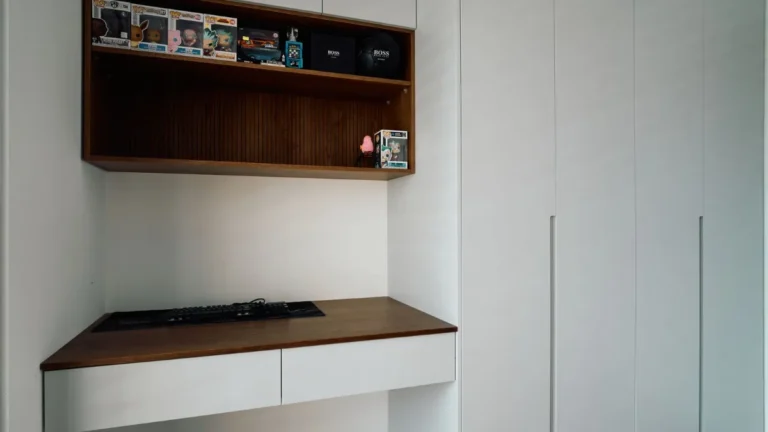
Wall-mounted fold-down desk: folds flat against the wall when not in use. One listing is 30 inches wide, 21.5 inches deep and 21.5 inches high when open, and another fold-out folds down to just 3.54 inches. A teleschopic model extends from 3 to 17 inches, which shows depth varies a lot between designs. Compact writing desk: a slim desk with a small drawer. Good for a laptop and a notebook. Corner desk: uses a corner. See the corner desk guide. Console desk: a narrow table that doubles as a console in a hallway. See the console table guide. Desk with shelves or hutch: builds upward to save floor space. Secretary desk: a desk with a fold-down front and small compartments. Floating desk: a shelf-like desk mounted at working height. Ladder desk: a leaning shelf unit with a built-in desk surface. Desk with drawers: adds storage. See the desk with drawers guide. Standing desk (small): compact adjustable desks.
| Type | Floor space | Best for | Watch out for |
|---|---|---|---|
| Wall-mounted fold-down | None when closed | Occasional work | Needs wall mounting |
| Compact writing desk | Small | Laptop use | Little storage |
| Corner desk | Uses corner | More surface | Legroom |
| Console desk | Narrow | Hallways | Shallow depth |
| Hutch desk | Small footprint | Storage | Height |
A guide advises that a fold-down desk suits occasional workspaces, while a built-in design suits a permanent high-use area.
Stability and Mounting
For wall-mounted desks, stability matters. One guide says well-made wall-mounted fold-down desks with appropriate supports are perfectly adequate for daily laptop use. For heavier equipment, reinforce the mounts and opt for sturdy hinges. Another listing emphasizes reinforced iron brackets and a stud-mounting system.
Check: The rated load. How much weight can the desk hold? Whether the mount requires studs. Many do. The hinges and brackets. They should be sturdy. The wall. Drywall alone may not hold a loaded desk. The locking mechanism. For fold-down models, the desk should lock open.
Never put a heavy monitor or computer tower on a desk that isn’t rated for it.
Size
Most wall-mounted fold-downs are narrower than your 36 to 48 inch target, but depth varies a lot. Compact desks vary from about 30 inches to 48 inches wide. Check the width, depth and height of each model.
Think about what you’ll put on the desk: a laptop; an external monitor; a keyboard and mouse; a lamp; notebooks and a mug.
If you use a full monitor setup, you need more depth. See the monitor stand guide. If you only use a laptop, a shallower desk may be fine. Leave room for your elbows and a place for your wrists.
Measure the space, and add room for your chair. A small desk is no good if your chair doesn’t fit.
Comfort and Ergonomics
For standard seated-work dimensions, see the computer desk guide, which discusses height near elbow level and depth for monitors. General tips: choose a chair that fits the desk; position the screen at a comfortable height. A laptop stand and an external keyboard help; make sure your knees fit under the desk; take breaks and stretch; add task lighting.
If the desk is too small to be comfortable, consider a different layout.
Storage in a Small Desk
Many small desks come with built-in shelving to store books, supplies and tech gear. Other tips: use wall shelves above the desk; add a small drawer organizer; use a vertical file holder; keep cables tidy with clips; use baskets under the desk; choose a desk with a hutch for extra storage.
Keep the surface clear. A small desk with clutter feels even smaller.
Style and Color
A white desk makes a small room feel brighter and lighter. White shows dust and marks, so choose a durable finish. Natural wood adds warmth. Black or dark finishes feel modern but can make a small room feel heavier. Glass looks airy but shows fingerprints. Match the desk to your room.
Raised legs and open designs make a room feel bigger. See the bathroom decor guide for general decor ideas.
How to Choose a Small Desk
Measure the space, including your chair. Decide on the use. Occasional or daily? Choose the type. Fold-down, compact, corner or console. Check the size for your equipment. Check stability and mounting. Studs and load rating. Check the storage you need. Think about comfort. Chair, lighting and screen height. Choose the finish. White, wood or black. Plan cable management. Read reviews for notes on wobble.
What mistakes should you avoid?
A few common mistakes are worth avoiding: choosing a desk that’s too small for your equipment (you’ll feel cramped); forgetting the chair (it may not fit); mounting into drywall only (the desk can pull out); overloading a fold-down desk (check the rating); ignoring ergonomics (neck and back strain); cluttering the surface (keep it clear).
Frequently Asked Questions
What is the best desk for a small room?
A wall-mounted fold-down desk, a compact writing desk or a corner desk are common choices.
Are wall-mounted fold-down desks sturdy?
Well-made ones with appropriate supports are adequate for daily laptop use. For heavier equipment, reinforce the mounts.
How wide should a small desk be?
It varies. Many compact desks are about 30 to 48 inches. Check your equipment and space.
Do wall-mounted desks need studs?
Many do. Check the mounting instructions and use the right hardware.
Can I use a small desk for a monitor?
Yes, if the depth and load rating allow. See the monitor stand guide.
Is a white desk a good choice?
It brightens a small room, but shows dust and marks. Choose a durable finish.
Conclusion
A small desk lets you work in almost any room. Choose a type that fits your space and your habits, such as a fold-down desk for occasional use or a compact desk for daily work, and check the stability and mounting carefully.
Make sure the desk fits your equipment and your chair, keep the surface clear and set up good lighting. With a smart choice, even a tiny corner can become a productive workspace.
Related guides
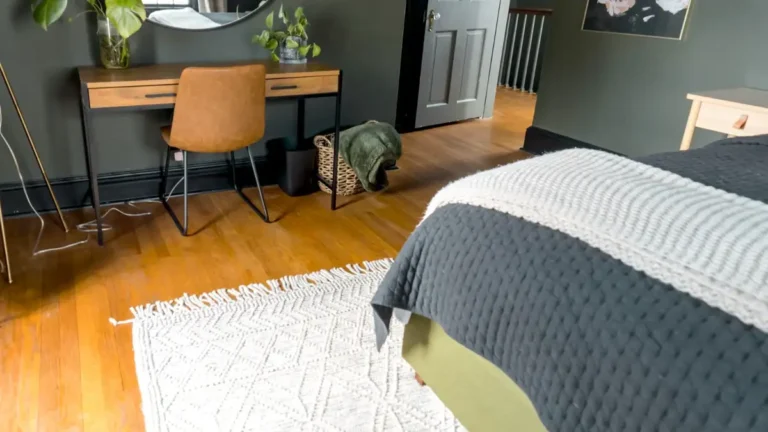 Small Desk for Bedroom: Depth, Width, Floating Desks and ErgonomicsA small bedroom desk can work well if the depth fits your gear. Design guides suggest about 16 inches for a…Read more →
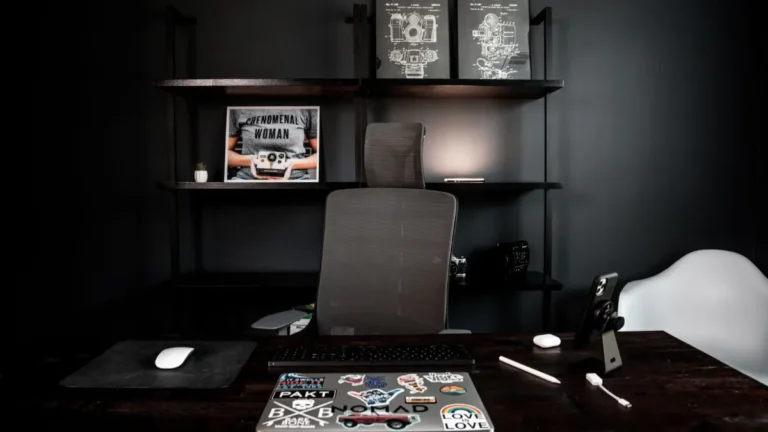 Desk Shelf Guide: Clamp-On Shelves, Risers, Hutches, Sizes and Weight CapacityQuick answer: a desk shelf adds a second level to your desk for a monitor, books or supplies. Main types are…Read more →
 Wood Desk Guide: Solid Wood vs Veneer, Weight, Repairability, Size and CareQuick answer: a wood desk can be solid wood or a thin layer of real wood (veneer) over a cheaper core. Solid…Read more →



One Comment