Small Desk for Bedroom: Depth, Width, Floating Desks and Ergonomics
A small bedroom desk can work well if the depth fits your gear. Design guides suggest about 16 inches for a laptop alone, 20 inches with an external monitor and 24 inches for dual monitors or sketching. For bedroom nooks, one guide suggests 36 to 48 inches wide and 16 to 20 inches deep. A floating desk saves floor space if it’s mounted into studs.
This article is part of our home office desk guide, where you can compare related options.
More people work or study in the bedroom, and floor space is tight. A desk has to fit between the bed, dresser and window, and it has to leave room for a chair. The right size and a few ergonomic basics make the difference between a useful nook and a neck ache.
A small desk for a bedroom is a compact work surface, such as a narrow desk, a corner desk or a wall-mounted floating desk. This guide explains sizes, floating and fold-down options, ergonomics, sleep considerations and how to choose. The figures come from vendors, not a standards body, so this isn’t ergonomic or medical advice.

How deep should a small desk be?
It depends on your equipment. One guide suggests a depth of 30 to 40 cm (about 12 to 16 inches) for laptop use or writing, and 50 to 60 cm (about 20 to 24 inches) for a full keyboard and mouse setup. A vendor guide gives similar figures in inches: 16 inches for a laptop alone, 20 inches if you use an external monitor, since the monitor needs setback distance for comfortable viewing, and 24 inches for dual monitors or if you write or sketch at the desk.
Dual monitors generally don’t fit a narrow desk. If space is tight, consider stacking monitors vertically or using a single ultrawide screen. Our monitor stand guide covers height and weight.
How wide should it be?
For bedroom nooks, one guide suggests 36 to 48 inches wide and 16 to 20 inches deep. Another describes wall-mounted desks as narrow as 20 to 30 cm, which frees legroom. Choose the width based on what you’ll put on the desk: a laptop and notebook need less than a laptop, monitor and lamp. Leave room for your elbows.
Are floating desks a good idea?
Floating desks create extra floor space and visually open the room, provided they’re secured to studs and kept within safe dimensions. One guide says you must verify that your wall can support the weight of the desk and your equipment. Ashdeco publishes guides on floating desks and a size, height and load guide for wall-mounted floating desks. Our floating wall shelves guide explains studs and anchors.
For very narrow rooms, a fold-down or drop-leaf floating desk is an option. It folds flat against the wall when your workday ends.
What about ergonomics?
A common guideline is to set the top of the monitor at or slightly below eye level, about an arm’s length away. One source cites OSHA’s workstation guidance for this, but I didn’t read the OSHA page directly. Desk height matters less than the chair and monitor position. Consider an adjustable chair, a monitor riser and a footrest if needed.
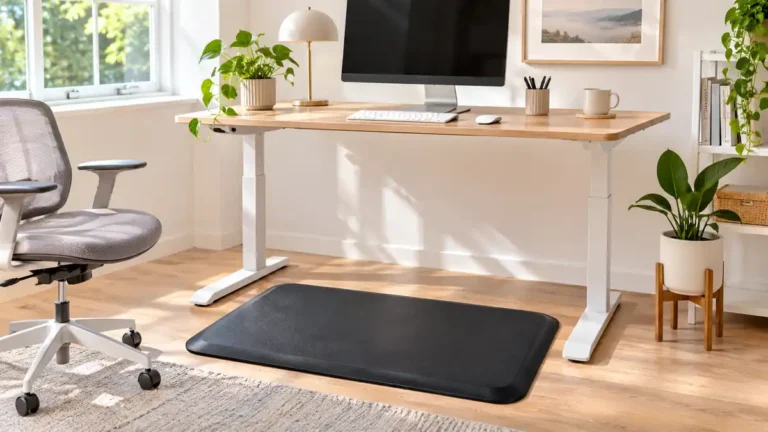
If you use a rolling chair on carpet or a hard floor, a chair mat protects the floor, as our chair mat guide explains. If you stand part of the day, an anti-fatigue mat helps, as our anti fatigue mats guide shows. These are general tips, not medical advice. If you have pain, ask a professional.
Should I work in the bedroom at all?
The National Sleep Foundation advises minimizing work-related activities in the bedroom to enhance sleep quality, according to one relayed source. If you must work in your bedroom, try to separate the desk area from the bed, shut the laptop at the end of the day and cover or fold away the desk. A fold-down desk or a screen can help.
What storage helps?
Small desks need tidy storage. Look for built-in shelves, a drawer or wall shelves above. Use cable clips and a power strip. A lamp with a small footprint saves space. Baskets can hold supplies. Our woven basket guide covers storage options.
How do I choose a small desk for a bedroom?
Measure the available wall and the door swing. Decide on depth based on your equipment. Choose a floating, folding or standard desk. Pick a chair that tucks away. Check the weight rating and mounting needs. Think about storage and cable management. Read reviews for stability.
What are the best layouts for a bedroom desk?
Place the desk against a wall, under a window or in a corner. A corner desk can use two walls and keep the middle free. A desk at the foot of the bed is possible in long, narrow rooms. Keep the screen away from glare, and leave room to pull out the chair. If you have a closet with doors, a slim desk inside it can hide the workspace at night.
What mistakes should I avoid?
Don’t pick a desk that’s too deep for your gear, or you’ll crowd your wrists. Don’t mount a floating desk without finding studs. Don’t forget the chair, since a desk with no room for a chair is useless. And don’t skip cable management, which keeps a small desk tidy.
What lighting helps a bedroom desk?
Use a task lamp that lights the work surface without glare on the screen. Place natural light to the side, not behind the monitor. A warm lamp in the evening helps the room feel like a bedroom again. Keep cords tidy so you don’t trip.
Frequently Asked Questions
How deep should a small desk be?
About 16 inches for a laptop, 20 inches with a monitor and 24 inches for dual monitors, per one vendor guide.
How wide should a bedroom desk be?
One guide suggests 36 to 48 inches for bedroom nooks.
Are floating desks sturdy?
They can be, if mounted into studs and used within the weight rating.
Where should the monitor go?
At or slightly below eye level, about an arm’s length away.
Should I work in my bedroom?
One relayed source advises minimizing work in the bedroom to protect sleep.
Conclusion
A small desk can turn a corner of the bedroom into a workspace. Size the depth to your gear, consider a floating or fold-down desk and keep the monitor near eye level.
Because the figures are vendor guidance, check your own comfort and the wall’s strength. A well-planned small desk makes a bedroom more useful.
Related guides
 Small Desk Guide: Space-Saving Types, Wall-Mounted Desks, Stability and SetupA small desk can turn a corner, a closet or a wall into a workspace. It s the answer for studio apartments,…Read more →
 Desk Shelf Guide: Clamp-On Shelves, Risers, Hutches, Sizes and Weight CapacityQuick answer: a desk shelf adds a second level to your desk for a monitor, books or supplies. Main types are…Read more →
 Wood Desk Guide: Solid Wood vs Veneer, Weight, Repairability, Size and CareQuick answer: a wood desk can be solid wood or a thin layer of real wood (veneer) over a cheaper core. Solid…Read more →