
Balcony Garden Ideas: Plants, Containers, Light and Weight Limits
A balcony can hold a surprisingly good garden. With a few pots, a bit of planning and plants that suit your light, even a narrow space can feel green and calm. The key is to match the plants to the sun and wind you get, and to stay inside the limits of the building.
Balcony garden ideas are ways to use a small, raised outdoor space for plants, flowers, herbs or vegetables. Most use containers, hanging planters and vertical supports, since there is no soil to dig. The right setup depends on how much sun the balcony gets, how windy it is and how much weight it can safely hold.
This guide explains how to read your balcony’s light and wind, check the weight limit, choose containers and plants, build a vertical layout and care for the garden through the seasons. You’ll also find tips for renters and common mistakes.
How do you check light, wind and weight first?
Start by watching how much sun the balcony gets. Note how many hours of direct sun it receives during the day. As a rough guide, full sun means about six or more hours, part sun about three to six hours and shade less than three. South-facing and west-facing balconies in the northern hemisphere tend to get more sun, and north-facing ones get less, though buildings and trees change this.
Check the wind. Higher floors can be very windy, and wind dries soil fast and can knock over tall plants. If the balcony is exposed, choose sturdy plants and heavy pots, and use windbreaks like a screen or a trellis.
Check weight and rules. A balcony can only hold so much, and wet soil and large containers are heavy. Ask your landlord or building manager about the weight limit and any rules on planters, hanging pots, water runoff and railings. Never hang heavy items from railings unless the rules allow it and the railing can safely hold them.
Which containers work best?
Choose containers that are light, durable and have drainage holes. Plastic and fiberglass pots are lighter than clay or ceramic, which helps with weight limits. Terracotta breathes well but is heavy and dries faster. Fabric grow bags are light and drain well, though they dry out quickly in sun.
Size matters. Bigger containers hold more soil and moisture, so plants stay healthier and need less frequent watering. As a guide, herbs do well in pots about 6 to 8 inches wide, while tomatoes and peppers need at least about 5 gallons, or a pot roughly 12 to 14 inches across.
Place saucers or trays under pots to catch water, and check that the water doesn’t drip on neighbors below. Use potting mix, not garden soil, since it’s lighter and drains better. A pot with a built-in reservoir can reduce watering in hot weather.
What plants suit a sunny balcony?
For full sun, try herbs like basil, rosemary, thyme and oregano, which handle heat and often prefer drier soil. Vegetables such as cherry tomatoes, peppers, lettuce and bush beans grow well in containers. Flowers like geraniums, marigolds, petunias and lavender add color.
Succulents and many drought-tolerant plants suit hot, windy balconies, since they store water. Choose compact or dwarf varieties of vegetables, which are bred for small spaces.
Water more often in full sun, especially in summer. Check the soil with your finger, and water when the top inch or two feels dry. Mulch with a thin layer of bark or gravel to slow evaporation.
What plants suit a shady balcony?
In shade, choose plants that handle low light. Ferns, hostas, begonias, impatiens and coleus do well in many shady spots. Herbs like mint, parsley and chives tolerate part shade, and leafy greens such as lettuce and spinach can grow with less sun.
Shade often means damper conditions, so check drainage and don’t overwater. Good air flow helps prevent mold and pests. If the balcony is dim, use light-colored pots or reflective surfaces to bounce light.
Foliage plants give a lush look even without flowers. Mix different leaf shapes and colors, like glossy green, variegated and deep purple, for variety.
How do you use vertical space?
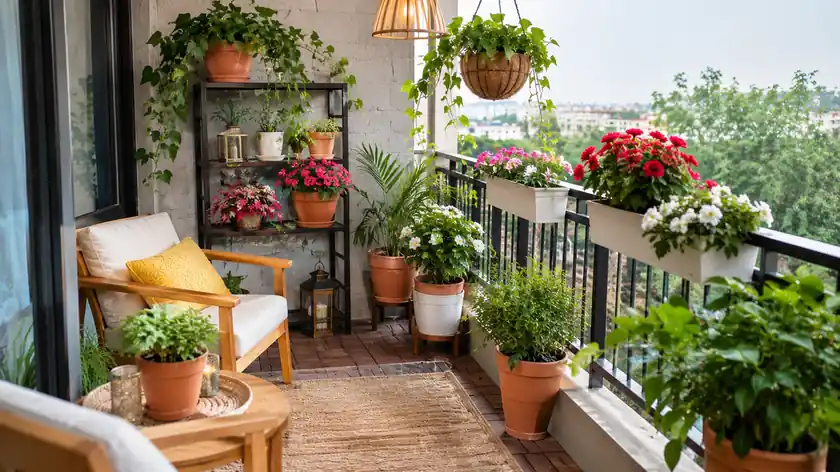
Vertical gardening saves floor space and adds depth. Trellises and wall-mounted planters hold climbers like peas, beans and sweet peas. A tiered plant stand holds several pots in a small footprint. Hanging baskets add a layer at eye level.
Use shelves or a ladder-style rack for pots, and keep heavier pots at the bottom. Check that wall-mounted items are fixed securely and that you have permission to drill. If you rent, use freestanding racks and clip-on rail planters that suit the railing, and check the rules first.
Leave a clear path and space to sit. A small bistro table and a chair can turn the balcony into a place to enjoy, not only a place to grow plants. Don’t block exits or fire escape routes.
How do you care for balcony plants?
Water regularly, and group plants with similar needs. Pots dry faster than ground soil, so in hot or windy weather you may need to water daily. Water in the morning or evening, and let water reach the roots, not only the leaves.
Feed plants with a balanced fertilizer made for containers, following the label. Remove dead leaves and spent flowers to keep plants healthy and tidy. Check for pests such as aphids, and treat early with gentle methods like a hose spray or insecticidal soap.
In cold weather, move tender plants indoors or protect them with covers. Check that containers can handle freezing, since some pots crack when frozen. In winter, reduce watering and clear snow or debris from drains.
What are the best ideas for renters and small balconies?
Use freestanding pieces that you can take with you, like pots, racks and folding tables. Rail planters that hook over the railing are an option if the rules allow them and the railing is strong, though you should avoid heavy loads.
Choose a simple theme, such as an herb garden, a pollinator mix or a cozy reading corner with a few plants. Use outdoor rugs and lights to add comfort without needing to modify the balcony. Solar string lights need no wiring.
Think about privacy. Tall plants in sturdy pots, bamboo screens and outdoor curtains can give some privacy and block wind. Choose weather-resistant materials, and fasten screens so they don’t blow away.
How do you start a small balcony herb garden?
Herbs are one of the easiest starts. Pick three or four you use in cooking, such as basil, parsley, chives and mint. Plant mint in its own pot, since it spreads fast and can take over a shared container.
Use a light potting mix and pots with drainage holes. Place the pots where they get the most sun, and water when the top inch of soil is dry. Pinch back the tips of basil and other leafy herbs so they grow bushy, and harvest often, since regular cutting keeps them productive. Within a few weeks you’ll have fresh leaves for meals, and a good idea of what your balcony’s light can grow.
What mistakes should you avoid?
The first mistake is ignoring weight, which can be unsafe. Another is picking plants that don’t match the light, which leads to leggy or scorched plants. A third is using pots without drainage, which causes root rot.
Others include forgetting wind, which dries and topples plants, and overcrowding the balcony. Another is watering too little in summer. Start small, learn what thrives and add more over time.
Frequently Asked Questions
What are the easiest plants for a balcony?
Herbs like basil, rosemary and mint, plus geraniums, marigolds, succulents and cherry tomatoes are good starters.
How much weight can a balcony hold?
It depends on the building. Check with your landlord, manager or an engineer. Wet soil and large pots are heavy.
How do I stop wind from damaging plants?
Use heavy pots, sturdy plants and a windbreak like a trellis or a screen. Keep tall plants low or staked.
Can I grow vegetables on a balcony?
Yes. Choose compact varieties and large enough containers. Cherry tomatoes, peppers and lettuce work well.
Do balcony plants need drainage holes?
Yes. Drainage prevents root rot. Use saucers to catch water.
Conclusion
A balcony garden works when plants match the light and wind and containers stay within weight limits. Start with a few pots, choose lightweight containers with drainage and use vertical space to add more.
Check your building’s rules and the balcony’s capacity, then build slowly. With a little care, even a small balcony can become a green corner you enjoy all year.
Related guides
 Patio Furniture Sets: Sizes, Materials, Cushions and How to ChooseA good patio set turns a bare deck or a few square feet of concrete into a place you actually want to sit. The…Read more →
 Fire Pit Safety Distance: How Far From the House, Seating and TreesA fire pit makes a backyard feel like a gathering place, but it also brings real risks. Sparks, heat and smoke…Read more →
 Outdoor Rug Materials: Polypropylene, Polyester, Jute and More ComparedAn outdoor rug can turn a bare deck or patio into an outdoor room. It softens the floor, defines the seating…Read more →
 Outdoor String Lights: Types, Bulbs, Spacing, Power and Hanging TipsOutdoor string lights give a patio, deck or yard a warm glow in the evening. They re easy to add, and they make…Read more →

One Comment