Outdoor Rug Materials: Polypropylene, Polyester, Jute and More Compared
An outdoor rug can turn a bare deck or patio into an outdoor room. It softens the floor, defines the seating area and hides small marks. But not every rug that looks good outside is built for it, because sun, rain and dirt are hard on the wrong fibers. Choosing the right material matters more than the pattern.
Outdoor rug materials are the fibers a rug is made of, such as polypropylene, polyester, nylon, jute or recycled plastic. The fiber decides how well the rug resists fading, water, mold and wear, and how it feels underfoot. Backing, weave and dye method also matter, but the fiber is the first thing to check.
This guide compares the common outdoor rug materials, explains how they handle sun and moisture, and shows how to choose by use. You’ll also find tips on size, drying, cleaning and the mistakes that lead to faded, moldy rugs.
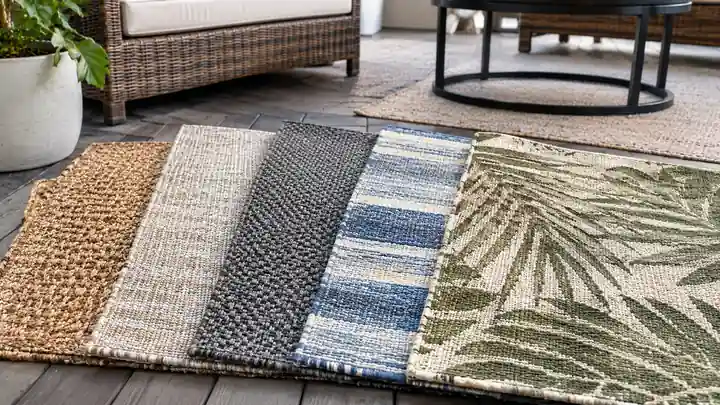
What makes a rug suitable for outdoor use?
An outdoor rug needs to resist moisture, fading and mildew, and to stay together when wet. Look for fibers that don’t soak up water, a weave that lets water drain and dyes that don’t fade fast in sun. A rug labeled “indoor/outdoor” is made with these in mind, though quality varies.
Check the label for UV resistance, which tells you the fibers and dyes are meant to handle sunlight. Also look at the backing. Rubber or foam backing can trap moisture against the floor, so many outdoor rugs have no backing or a breathable one.
Think about where the rug will sit. A rug under a roof stays drier than one in open rain. A rug on a wooden deck needs good drainage so the wood doesn’t stay wet. A rug on concrete dries faster and may need a pad to stay in place.
Which fibers are common, and how do they compare?
Polypropylene is one of the most popular outdoor rug fibers. It resists water, stains, mold and fading, dries quickly and costs less than many alternatives. It can feel a little plasticky, and heavy furniture or high heat can flatten it, but it’s a practical all-round choice.
Polyester is soft and holds color well, and it comes in many patterns. It resists stains and fading, though it can hold oil and may be less durable under heavy traffic than some fibers. Nylon is strong and bounces back from wear, but it can be more costly and, in some forms, may absorb moisture and fade without the right treatment.
Recycled plastic, such as rugs woven from recycled bottles or plastic strands, is sturdy, water resistant and easy to hose off. It’s often flat-woven, so it feels firmer than a soft rug. Acrylic looks like wool and resists sun well, but it can pill and cost more.
What about natural fibers like jute and sisal?
Jute, sisal, seagrass and cotton look beautiful and feel natural, but they aren’t truly weatherproof. They absorb water, and wet natural fibers can mildew, rot and stain. Jute, in particular, is a poor choice for rain, though some people use it in covered porches.
If you love the look, choose a covered area that stays dry, and bring the rug indoors in bad weather. Some rugs mix natural-look fibers with synthetic ones, like polypropylene woven to look like jute. These give the look without the moisture problems.
Cotton rugs may be washable and fine for a covered, dry patio, but they fade and can mildew if they stay damp. Read the label and the maker’s advice before you leave one outside.
Which material suits which situation?
For a deck or patio in full sun and rain, polypropylene or recycled plastic is usually the best fit. They dry fast, resist mildew and are easy to clean. For a covered porch or a sunroom, polyester or acrylic can add softness and color.
For a pool area, choose a fast-drying, mildew-resistant fiber, and avoid backings that hold water. A rug with a loose, open weave drains well. For a balcony or a small outdoor spot, a thin flat-weave rug is light, easy to roll up and simple to clean.
For high traffic, such as a path or an entryway, choose a tight, flat weave in a durable fiber like polypropylene or nylon. For a place where you walk barefoot, a softer polyester or a plush-looking polypropylene rug may feel nicer.
How do you choose the right size?
Measure your furniture and leave a border. For a dining set, the rug should extend about 24 to 30 inches beyond the table on all sides, so chairs stay on the rug when people pull them out. For a seating area, at least the front legs of the sofa and chairs should sit on the rug.
Common sizes include 5 by 8 feet, 8 by 10 feet and 9 by 12 feet. A rug that is too small makes the area look cut up, and one that is too big can look crowded. Leave a few inches of floor visible around the rug if you can.
Round rugs suit small tables and bistro sets, and runners suit narrow walkways. Check the edges, too. Bound or serged edges resist fraying better than raw edges.
How do you care for an outdoor rug?
Sweep or shake the rug often to remove dirt and leaves. Hose it down and use mild soap with a soft brush for stains, then rinse well. Let it dry fully, preferably lifted on a rail or an angled surface, so the underside dries too.
Lift the rug from time to time, and clean the floor underneath. Trapped moisture and dirt can stain the deck or concrete, and can grow mold. If the rug stays wet for a long time after rain, hang it up or turn it over to speed drying.
Store rugs in the off season. Roll them with the pile outward, so they lie flat when unrolled, and keep them in a dry place. Avoid folding, which can crack the fibers.
What patterns and colors work best outside?
Patterns hide dirt, leaves and small stains better than solid colors. Geometric prints, stripes and mixed tones keep a rug looking tidy between cleanings. Very light solid colors show every mark, and very dark ones can get hot in strong sun and show dust.
Choose colors that suit your house and furniture. Neutral rugs let cushions and plants stand out, and bold ones can become the focus of the space. Check how the pattern looks from a seated height, since a design that looks good in a photo may be less striking when you’re sitting on a chair.
What mistakes should you avoid?
The most common mistake is using an indoor rug outside, which can mold and fade. Another is choosing a rug with a solid, waterproof backing that traps water. A third is buying too small a rug.
Others include ignoring the care label, leaving the rug wet for days and placing a dark rug in strong sun, where it can heat up and fade. Also check that the rug doesn’t create a trip hazard, and use a non-slip pad if edges curl.
Before you buy, check the material, the UV rating, the drying time and the return policy. A photo can’t show how a rug feels or how it handles weather.
Frequently Asked Questions
What is the best material for an outdoor rug?
Polypropylene is a popular all-round choice. Recycled plastic and polyester are also good options.
Can I use a jute rug outside?
Only in a covered, dry area. Jute absorbs water and can mildew.
How do I clean an outdoor rug?
Sweep it, hose it down and scrub with mild soap and a soft brush, then rinse and dry completely.
How big should an outdoor rug be?
Large enough that the front legs of seating, or all dining chairs, stay on it. Add about 24 to 30 inches beyond a dining table.
Do outdoor rugs need a pad?
A breathable, non-slip pad can help keep the rug in place and protect the floor. Avoid solid rubber that traps water.
Conclusion
The right outdoor rug material depends on the weather, the use and the look you want. Polypropylene and recycled plastic are strong all-round choices, polyester adds softness, and natural fibers belong in covered, dry spots.
Check the UV rating, the backing and the care label. With a good choice and regular cleaning, an outdoor rug can make your patio more comfortable for years.
Related guides
 Patio Furniture Sets: Sizes, Materials, Cushions and How to ChooseA good patio set turns a bare deck or a few square feet of concrete into a place you actually want to sit. The…Read more →
 Fire Pit Safety Distance: How Far From the House, Seating and TreesA fire pit makes a backyard feel like a gathering place, but it also brings real risks. Sparks, heat and smoke…Read more →
 Balcony Garden Ideas: Plants, Containers, Light and Weight LimitsA balcony can hold a surprisingly good garden. With a few pots, a bit of planning and plants that suit your…Read more →
 Outdoor String Lights: Types, Bulbs, Spacing, Power and Hanging TipsOutdoor string lights give a patio, deck or yard a warm glow in the evening. They re easy to add, and they make…Read more →