
Outdoor String Lights: Types, Bulbs, Spacing, Power and Hanging Tips
Outdoor string lights give a patio, deck or yard a warm glow in the evening. They’re easy to add, and they make a space feel inviting without a lot of work. The right set depends on how long the string needs to be, what bulbs it uses, where it plugs in and how it will hold up outside.
Outdoor string lights are strands of bulbs made for use outside. They can be plug-in, solar or battery powered, and they come with different bulb shapes, colors and spacing. A good set is rated for weather, and the bulbs, wire and plugs are built to handle rain and temperature changes.
This guide explains the main types, how to measure and space your lights, how to choose bulbs and power, how to hang them safely and how to care for them. You’ll also find common mistakes and tips for safe use.
What types of outdoor string lights are there?
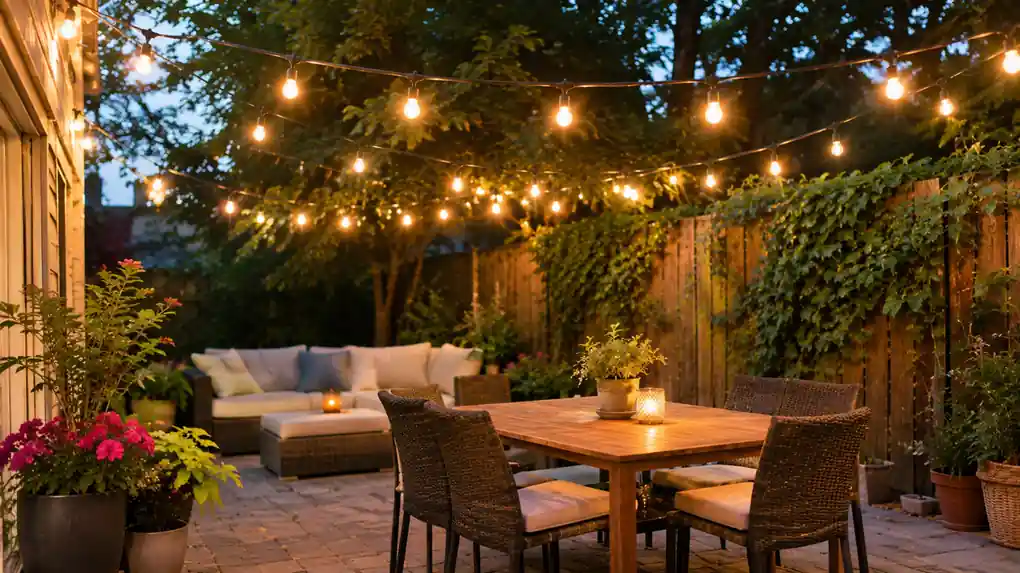
Globe lights have round bulbs and give a classic party look. Edison-style lights have clear, vintage-looking bulbs with visible filaments. Fairy lights are tiny bulbs on thin wire and suit trees, railings and plants. Café lights are a larger version for patios and dining areas.
Light strings can be commercial grade, with heavier wire and sockets, or light duty for home use. Commercial-grade strings are sturdier and often have replaceable bulbs. Light-duty sets are cheaper and easier to hang but may not last as long.
Think about the look you want. Warm white gives a cozy feel, cool white feels brighter and colored lights are fun for holidays. Choose a style that suits your space and your furniture.
How long should the string be?
Measure the area first. For a straight run between two points, measure the distance and add extra for sag and for reaching the power source. A string should droop slightly, not be pulled tight, which puts stress on the wire and the hooks.
For a patio, many people hang lights in a crisscross or a perimeter pattern. To plan a crisscross, measure each line from corner to corner. A common guideline is to plan for about one string per 10 to 15 feet of width, but the right number depends on bulb spacing and the look you want.
Check the spacing between bulbs. Close spacing, like 12 inches, gives a brighter, fuller look. Wider spacing, like 24 to 36 inches, gives a softer, more spread out look. Check the maximum length that can be connected end to end, since each set has a limit.
Which bulbs and brightness should you choose?
LED bulbs are the usual choice. They use less power, stay cooler and last a long time. Many LED sets are rated for tens of thousands of hours. Incandescent bulbs give a warm glow but use more power and burn out faster.
Check the color temperature. About 2700K gives a warm, golden look that suits seating areas, while 3000K or higher looks whiter. Look at the brightness, usually listed in lumens or watts. String lights are mostly decorative, so you may need other lighting for tasks like cooking or reading.
Look for shatterproof or plastic bulbs if kids or pets are around, or if wind could knock the string. Replaceable bulbs are useful, since a single dead bulb doesn’t ruin the whole string.
How are outdoor string lights powered?
Plug-in lights are the brightest and most reliable, but they need an outdoor outlet and a weatherproof extension cord if the outlet is far. Use cords and plugs rated for outdoor use, and keep connections off the ground and out of puddles. Check the load limit of the string and the cord.
Solar lights have a panel that charges a battery in the day, then power the lights at night. They’re easy to install, though they may be dimmer and need good sun to charge. Place the panel where it gets direct light for most of the day.
Battery lights work in places without power or sun, but you must replace or recharge the batteries. A timer or a remote control helps save power. If you’re hardwiring anything or adding an outlet, hire a licensed electrician.
What weather rating do you need?
Look for a weather rating on the packaging. Many outdoor products use an IP rating, which tells how well they resist dust and water. A higher second number means better water protection. A rating like IP44 resists splashing water, and IP65 resists water jets, though you should check the product’s details.
Even weatherproof lights can wear out in harsh weather. Strong sun, freezing temperatures and salt air can shorten their life. If your lights will stay up all year, choose commercial-grade strings with sealed sockets. If not, take them down in winter and store them.
Check the plug and connections too. Cover plug connections with a weatherproof box or cover, and don’t leave connections in standing water. Use a GFCI outlet if your outdoor outlet has one, since it cuts power when it detects a fault.
How do you hang string lights safely?
Plan the layout before you start. Mark the points where the lights will attach, and check that they can carry the weight. Use hooks, cup hooks, screw-in eyelets or clips made for lights, and avoid nails or staples that can pierce the wire.
For a long span, use a support wire or guide wire, such as a taut steel cable, and attach the string to it. This keeps the string from sagging or being pulled apart by wind. Fix the anchors into solid wood, posts or masonry with proper fasteners, not into thin trim.
Don’t hang lights from gutters or shingles in a way that can cause damage, and don’t hang lights near power lines. Use a stable ladder, and ask for help if the work is high. Turn off power before you handle connections.
How do you care for and store them?
Check the string each season for cracked sockets, frayed wire and loose bulbs. Replace damaged strings, since a damaged one can be a shock or fire risk. Don’t run lights through doors or windows in a way that pinches the cord.
At the end of the season, take them down gently and coil them around a spool or a piece of cardboard. Store them in a dry bin away from heat. Label each string so you can find it next year.
If lights are left up, check them after storms. Wipe the bulbs clean, and trim any plants that grow around them.
What mistakes should you avoid?
The most common mistake is buying indoor lights for outside. Another is pulling the string tight. A third is overloading a plug or extension cord. Others include hanging lights without a support wire for a long span, forgetting about a timer and skipping the weather rating.
Plan power early, since long extension cords can be a trip hazard. Keep cords out of walkways, and use cord covers if needed.
Frequently Asked Questions
What are the best outdoor string lights?
LED globe or Edison-style strings with a good weather rating are popular. Choose a length and spacing that suits your space.
How many string lights do I need for a patio?
It depends on size and bulb spacing. Measure each run and add extra for sag. Check the maximum connectable length.
Can I leave string lights up all year?
Only if they’re built for it. Commercial-grade strings with sealed sockets last longer, but take down lights in harsh weather if you can.
Are solar string lights bright enough?
They’re usually dimmer than plug-in lights. They suit accent lighting and need good sun to charge.
How do I hang string lights without a tree?
Use posts, hooks on walls or a support wire between anchors. Fix them into solid wood or masonry.
Conclusion
Outdoor string lights work best when the length, bulbs and power match your space. Choose weather-rated LED lights, plan the layout and use a support wire for long spans. Keep cords safe and out of the way.
Follow the maker’s instructions and local electrical rules, and call an electrician for hardwired work. With careful hanging and some seasonal care, string lights can make your outdoor space glow for years.
Related guides
 Patio Furniture Sets: Sizes, Materials, Cushions and How to ChooseA good patio set turns a bare deck or a few square feet of concrete into a place you actually want to sit. The…Read more →
 Fire Pit Safety Distance: How Far From the House, Seating and TreesA fire pit makes a backyard feel like a gathering place, but it also brings real risks. Sparks, heat and smoke…Read more →
 Outdoor Rug Materials: Polypropylene, Polyester, Jute and More ComparedAn outdoor rug can turn a bare deck or patio into an outdoor room. It softens the floor, defines the seating…Read more →
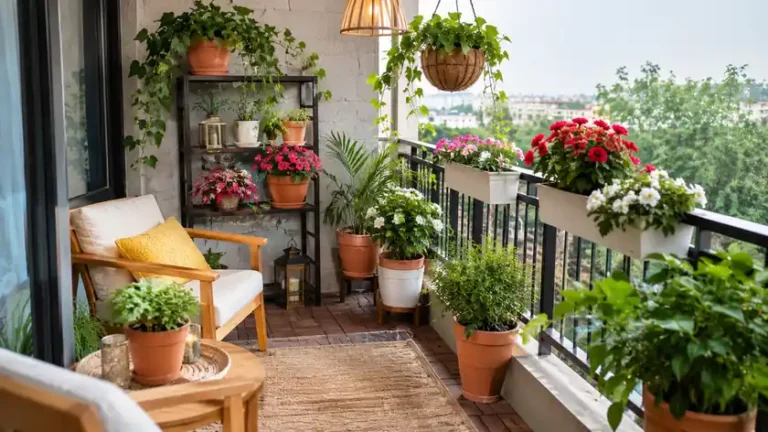 Balcony Garden Ideas: Plants, Containers, Light and Weight LimitsA balcony can hold a surprisingly good garden. With a few pots, a bit of planning and plants that suit your…Read more →

One Comment