
Patio Furniture Sets: Sizes, Materials, Cushions and How to Choose
A good patio set turns a bare deck or a few square feet of concrete into a place you actually want to sit. The wrong set looks small, rusts in a season or leaves you with flat, soggy cushions. A few checks on size, material and care will help you buy a set that lasts.
A patio furniture set is a group of outdoor pieces sold together, such as a table with chairs, a sofa with armchairs and a coffee table, or a bistro table with two chairs. Sets are built to handle sun, rain and temperature changes better than indoor furniture, though the level of weather resistance varies by material and maker.
This guide explains the main types of patio sets, how to measure your space, which frame materials last, how to choose cushions and how to protect furniture through the year. You’ll also find the mistakes that cause fading, rust and wobble.
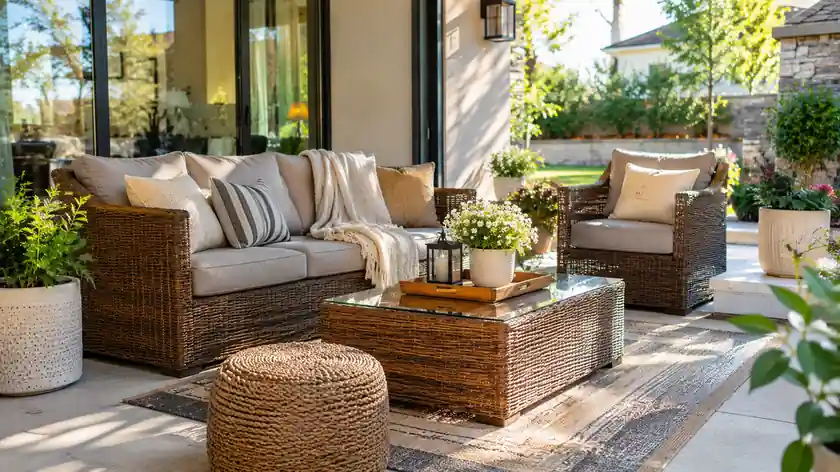
What types of patio sets are there?
The main types are dining sets, conversation sets and bistro sets. A dining set has a table and four to eight chairs, and it suits meals outdoors. A conversation set has a sofa, chairs and a low table, and it’s built for relaxing and talking. A bistro set is a small table with two chairs, made for balconies and tight corners.
There are also sectional sets, which are modular sofas you can arrange in different shapes, and fire pit sets, which combine seating with a fire table. Sectionals are flexible, but they need more space, and a fire pit needs extra safety space around it.
Choose the type by how you use the area. If you eat outside often, a dining set is best. If you mainly relax with drinks, a conversation set is better. If space is tight, start with a bistro set and add pieces later.
How do you size a set to your space?
Measure your patio, deck or balcony, then mark the layout with tape. A common guideline is to leave about 36 inches behind chairs for people to move, and more if walkways pass by. For a dining set, allow about 24 inches of table edge per person.
A round table of 42 to 48 inches usually seats four, and a rectangular table about 60 to 72 inches long seats six. A table of 84 inches or more can seat eight. Check the listed dimensions, since the footprint also depends on chair size.
For a conversation set, leave a clear path around the seating and about 14 to 18 inches between the sofa and the coffee table. Don’t forget doors, steps, grills and planters. Furniture that blocks a door or a step is a safety problem.
Which frame material lasts longest?
Aluminum is light, doesn’t rust and is easy to move, which makes it a popular choice. Cast aluminum is heavier and sturdier. Powder-coated finishes resist weather, though chips can expose bare metal over time.
Steel is strong and often cheaper, but it can rust if the coating is damaged. Wrought iron is very heavy and stable, and it needs touch-ups to prevent rust. Teak and other hardwoods are naturally rich in oils and can last many years, but they cost more and weather to a silvery gray unless you treat them.
Synthetic wicker, also called resin wicker, is woven over an aluminum or steel frame and handles weather well. Natural wicker is meant for covered spaces. Plastic and resin furniture is light and low in cost, though it can fade and crack in strong sun. HDPE and similar recycled plastics last longer.
How do you choose cushions?
Look for cushions with weather-resistant fabric, such as solution-dyed acrylic or outdoor polyester, which resist fading and mildew better than ordinary cotton. A removable cover makes cleaning easier. Check that the zipper and seams are strong.
The fill matters too. Quick-dry foam lets water drain and helps prevent mildew, while dense foam feels firm and lasts longer. Some cushions have a vented base so water can drain. If your climate is wet, choose quick-dry cushions and store them when it rains.
Thickness affects comfort. Cushions about 3 to 5 inches thick are common, and deeper ones feel more like indoor seating. Don’t forget ties or straps, which keep cushions from sliding or blowing away in wind.
How do you protect the set through the year?
Cover furniture or store it when you’re not using it, especially in winter. Breathable covers keep off rain, leaves and dirt without trapping moisture. Move cushions indoors or into a deck box during heavy rain and in the off season.
Clean the frame with mild soap and water, and rinse well. Check for chips in the finish and touch them up to stop rust. Tighten loose bolts at the start of the season, because outdoor furniture shifts with temperature changes.
Wood furniture may need sealing or oiling once or twice a year, depending on the type. Plastic and resin pieces benefit from shade when they’re not in use. Follow the maker’s care instructions to keep your warranty valid.
What should you check before you buy?
Check the weight rating of chairs and sofas, the quality of welds and joints, and the finish. Look at the warranty, since outdoor furniture often includes separate coverage for the frame and the cushions. Read the care instructions to see whether covers can be washed.
Consider wind. Light chairs can blow over, and a table with an umbrella needs a heavy base. If your patio is windy or high up, choose heavier pieces or fasten them in place where it’s safe to do so.
Think about assembly and delivery. Many sets arrive flat-packed, so check the instructions, the hardware and the return policy. A set that fits in your car or on your doorstep may be easier than one that needs a truck.
How can you add shade and comfort to the set?
Shade makes a patio usable on hot days. A market umbrella, a pergola with a fabric cover or a retractable awning can cool the area. If you choose an umbrella, check the pole size and the base weight, since wind can lift a light base. Many guides suggest a base of about 50 pounds or more for a standard market umbrella, though you should follow the maker’s advice.
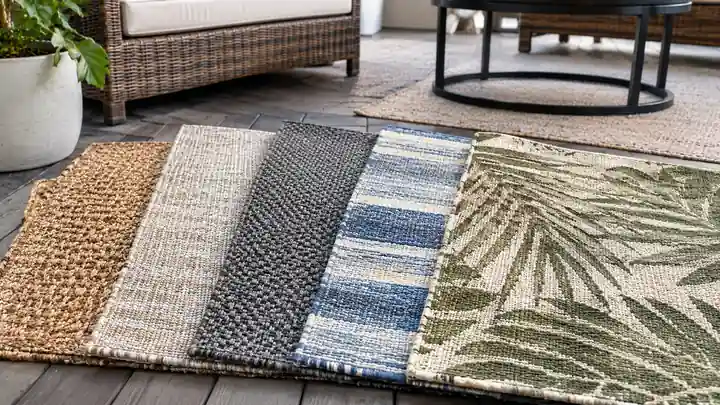
Add outdoor throw pillows and a small side table so people have somewhere to rest a drink. Use weather-resistant fabrics, and bring soft items inside when rain is coming. A simple outdoor rug under the set makes the area feel like a room and protects the floor.
What mistakes should you avoid?
The most common mistake is buying a set that is too big for the space and blocks walkways. Another is picking indoor-style cushions that soak up water. A third is ignoring the frame finish, which leads to rust in humid or coastal areas.
Others include leaving furniture uncovered all winter, forgetting to check the weight rating and choosing dark colors for a sunny spot, since dark metal can get hot. Think about how the set will look in your yard, and choose colors that suit your house.
Frequently Asked Questions
What is the best material for patio furniture?
Aluminum, teak and synthetic wicker on an aluminum frame are popular for lasting in weather. The best choice depends on your climate and budget.
How big should a patio table be?
A 42 to 48 inch round table seats about four, and a 60 to 72 inch rectangular table seats about six.
How do I stop patio cushions from getting moldy?
Choose quick-dry cushions and mildew-resistant fabric, and store them when it rains or in the off season.
Should I cover patio furniture?
Yes, in the off season or during bad weather. Use breathable covers so moisture doesn’t get trapped.
How much space do I need around a patio set?
About 36 inches behind chairs, and enough room to open doors and walk around the furniture.
Conclusion
A good patio set matches your space, your climate and how you use the area. Measure first, choose a frame that suits your weather and look for cushions that dry quickly and resist fading. Cover or store the set in bad weather.
Check the warranty, the weight rating and the care instructions before you buy. With a little maintenance, a well-chosen set will serve you through many seasons.
Related guides
 Fire Pit Safety Distance: How Far From the House, Seating and TreesA fire pit makes a backyard feel like a gathering place, but it also brings real risks. Sparks, heat and smoke…Read more →
 Outdoor Rug Materials: Polypropylene, Polyester, Jute and More ComparedAn outdoor rug can turn a bare deck or patio into an outdoor room. It softens the floor, defines the seating…Read more →
 Balcony Garden Ideas: Plants, Containers, Light and Weight LimitsA balcony can hold a surprisingly good garden. With a few pots, a bit of planning and plants that suit your…Read more →
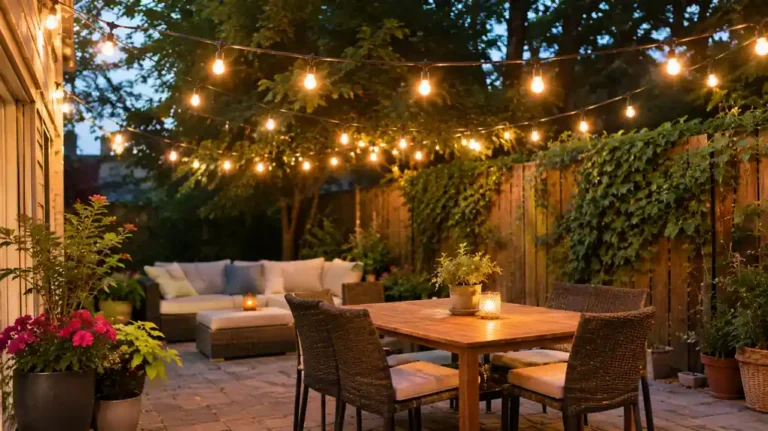 Outdoor String Lights: Types, Bulbs, Spacing, Power and Hanging TipsOutdoor string lights give a patio, deck or yard a warm glow in the evening. They re easy to add, and they make…Read more →

One Comment