Bed in a Box: How It Works, Expansion Time, Off-Gassing and Sleep Trials
A bed in a box is a mattress that arrives rolled up in a box. You carry it into your room, cut off the plastic and watch it expand. It changed how people buy mattresses, because you can order online, skip the store and try the bed at home for months.
This article is part of our mattress buying guide, where you can compare related options.
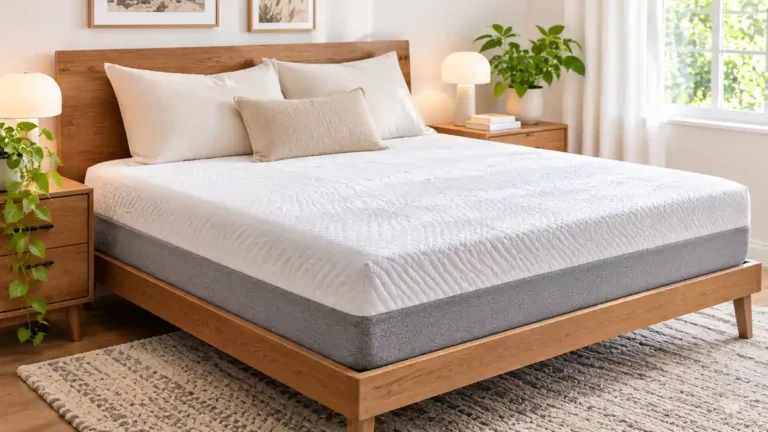
A bed in a box, also called a mattress in a box, is a mattress that’s compressed, rolled and shipped in a box. Foam and hybrid mattresses can be compressed this way. Once you open the wrapping, the mattress expands to its full size over several hours.
This guide explains how a bed in a box works, how long it takes to expand, what off-gassing means, how sleep trials work and how to choose one. You’ll also find a comparison table, a setup checklist and answers to common questions.

How Does a Bed in a Box Work?
The mattress is made like any other, with layers of foam, and sometimes coils. A machine compresses it and rolls it into a tight cylinder, then seals it in plastic. This makes the mattress smaller and easier to ship and carry up stairs.
When you cut the plastic, air rushes back in and the mattress expands. Most of the expansion happens in the first hour. It can take longer to reach full height and firmness. After that, it behaves like a regular mattress.
Hybrid beds in a box use individually wrapped coils, which compress well for shipping. One guide suggests looking for a hybrid that uses individually wrapped coils, since they compress well but keep their structure better over time. That came from a site with low apparent credibility, so verify it.
How Long Does a Bed in a Box Take to Expand?
A boxed mattress needs about a day to fully expand. One guide says most mattresses in a box fully expand within 24 to 48 hours, and another gives 24 to 72 hours.
Brands disagree on whether you can sleep on it right away. Casper and Simba say their mattresses are ready immediately, while Purple and Emma recommend waiting over 24 hours. Check your maker’s instructions.
Cold rooms slow expansion significantly. Keep the room at a normal temperature, and open the box in the room where you’ll use it.
What Is Off-Gassing?
Off-gassing is the temporary smell released when a new mattress is unpacked. It comes from new foams and adhesives. One source says off-gassing from a correctly manufactured mattress is not a health hazard. Memory foam tends to smell the most, and it can linger well into the next day. Natural latex is different: one latex retailer says that for natural latex, off-gassing is minimal.
To help: Open a window, and let fresh air in. One source suggests that opening a window for the first three days speeds the process. Let the mattress air out before you put sheets on. Keep the room ventilated. Wait if you’re sensitive to smells.
If you have concerns about chemicals, look for certifications. One source notes that OEKO-TEX Standard 100 and GOLS certifications both include testing for VOC emissions. CertiPUR-US is another label for foam.
Sleep Trials
Trials are one of the biggest perks. One source says most beds in a box come with a sleep trial of at least 100 nights, excluding the super budget choices. Some brands go further, such as one listing a 365-day trial. Most companies offer at-home trial periods of 100 nights or more.
Tips for using your trial: Sleep on the new bed for at least 30 consecutive nights, as one expert advises, since your body needs time to adjust. Don’t leave the mattress boxed too long. It eats into the trial window. Read the return terms. Some require you to keep the mattress for a minimum period before returning it. Some charge fees or ask you to donate the mattress. Keep the packaging if the terms need it. Use a mattress protector if the terms allow it.
Verify trial lengths and warranty terms on the manufacturer’s website.
What are the main strengths and weaknesses?
On the plus side: easy delivery and carrying, even up stairs; long sleep trials, often 100 nights or more; shop from home; often lower prices than store mattresses; many types and firmness options. On the downside: a wait for expansion; temporary smell; setup is one-way, and you can’t easily re-compress it once it’s open. One Canadian retailer makes this point; heavy to move; you can’t try before you buy; returns can be a hassle.
How to Set Up a Bed in a Box
- Prepare the room. Clear space and choose a good spot. Make sure the bed frame or base is ready.
- Check the base. Use a solid or closely slatted base. Elevating the mattress off the floor or using a slatted bed frame improves air circulation.
- Move the box into the room. Boxes can be heavy, so get help.
- Unwrap carefully. Don’t use sharp knives on the mattress. Cut the outer plastic with scissors or a box cutter, carefully.
- Place the roll on the bed, then cut the inner plastic.
- Let it expand. Give it time, as the maker advises.
- Air it out. Open windows and run a fan.
- Add a protector and sheets once the smell fades.
- Start your trial.
One expert warns that a mattress left boxed too long may smell strongly of off-gassing, may have bulging coils if it’s a hybrid mattress or may be misshapen with an uneven sleep surface. Open it soon after delivery.
How to Choose a Bed in a Box
Pick the type. Memory foam, hybrid or latex. Choose firmness. Based on sleep position and weight. Check construction. Layers, foam density and coil type. Look at foam density. One source explains that density, measured in pounds per cubic foot, dictates the foam’s resilience, support and expansion rate. Check certifications. CertiPUR-US, OEKO-TEX or GOLS. Read the trial and return terms. Check the warranty. Sagging limits and foundation rules. Choose the size. Make sure it fits your frame. Check the weight. Some are heavy to carry. Read reviews from long-term owners.
What mistakes should you avoid?
A few common mistakes are worth avoiding: leaving it in the box (it eats into the trial and can harm the mattress); using a poor base (wide slat gaps can cause sagging); skipping airing out (the smell lingers longer); not testing long enough (give your body 30 nights); ignoring return terms (fees and rules vary); cutting the mattress with a sharp blade (you can damage it).
Frequently Asked Questions
What is a bed in a box?
A mattress compressed, rolled and shipped in a box. It expands after you open it.
How long does a bed in a box take to expand?
Most need about 24 to 72 hours to fully expand, though much of it happens in the first hour.
Can I sleep on a bed in a box right away?
Some brands say yes, and others say wait over 24 hours. Check the instructions.
Does a bed in a box smell?
It can have a temporary smell from off-gassing. Ventilation helps. It is not considered a health hazard for a correctly made mattress.
How long are bed in a box sleep trials?
Often 100 nights or more. Some brands offer up to a year.
Can I return a bed in a box?
Often yes, during the trial, but terms vary. Read the policy.
Can I re-box a mattress?
Not easily. Once opened, a mattress is hard to compress again.
Conclusion
A bed in a box makes buying a mattress easy. It arrives in a box, expands in a day and comes with a long trial. Give it time to expand and air out, use a good base and test it for at least 30 nights.
Read the return terms, check the certifications and open the box soon after delivery. With a little care, a bed in a box can be a convenient way to get a comfortable mattress.
Related guides
 Box Spring: What It Is, Box Spring vs Foundation and Whether You Need OneBox springs used to be standard under every mattress. Today, many people use platform beds and slatted bases…Read more →
 Grounding Mat for Bed: What Grounding Sheets Are, What the Evidence Says, Safety and How to Use OneGrounding mats and sheets, also called earthing products, are sold with big promises: better sleep, less pain,…Read more →
 Twin Box Spring Guide: Size (38 x 75 Inches), Low Profile vs Standard Height, Split Options and When You Need OneQuick answer: a standard twin box spring is 38 inches wide by 75 inches long, the same as a twin mattress.…Read more →
 Bunk Beds: Types, Safety Rules and How to Choose the Right OneBunk beds save floor space and give kids a fun place to sleep. They re a classic choice for shared rooms,…Read more →