Box Spring: What It Is, Box Spring vs Foundation and Whether You Need One
Box springs used to be standard under every mattress. Today, many people use platform beds and slatted bases instead, and mattress warranties add to the confusion. If you’re wondering whether to buy a box spring, the answer depends on your mattress and your frame.
This article is part of our mattress buying guide, where you can compare related options.
A box spring is a wooden frame covered in fabric that sits under a mattress. Traditional versions contain metal springs that absorb shock and add a little bounce. Modern “box springs” often have no springs at all, and they’re closer to a solid or slatted foundation.
This guide explains what a box spring is, how it differs from a foundation and a platform bed, which mattresses need one, how tall and costly they are, and how to choose. You’ll also find a comparison table and answers to common questions.

What does a box spring do?
A box spring supports the mattress, lifts it to a comfortable height and, in traditional designs, absorbs some shock. It also gives the mattress a flat, even surface. For innerspring mattresses, it was long the standard base.
Today the term is used loosely. A box spring and a foundation are the same thing in today’s market. Others separate them: a foundation can be solid or made of wooden slats, and it works much like a box spring, but it has no springs.
How does a box spring differ from a foundation or platform bed?
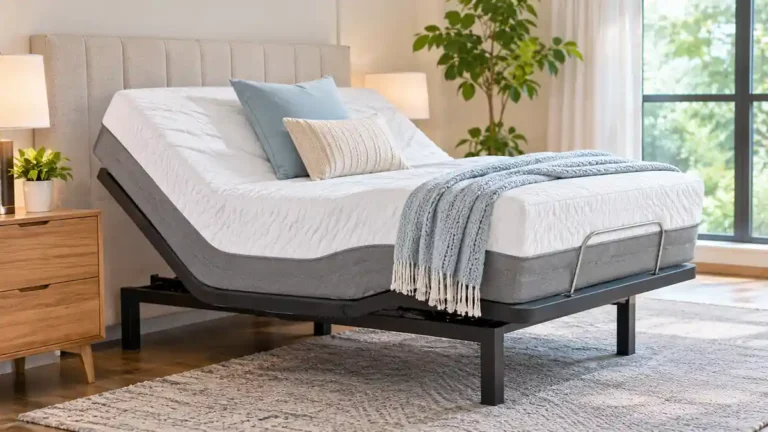
A traditional box spring is a wood frame with metal springs that adds height and bounce. A foundation is a solid or slatted wood frame with no springs, and it gives firm, even support. A platform bed has a built-in deck or slats, so the mattress sits directly on it. A slatted frame uses spaced slats, and the gap between them matters. An adjustable base is motorized and bends, so it needs a flexible mattress.
| Base | What it is | Needs box spring? | Notes |
|---|---|---|---|
| Traditional box spring | Wood frame with metal springs | Not applicable | Adds height and bounce |
| Foundation | Wood frame, solid or slatted, no springs | No | Firm, even support |
| Platform bed | Frame with built-in slats or solid deck | No | Mattress sits directly |
| Slatted frame | Frame with spaced slats | No | Slat gap matters |
| Adjustable base | Motorized, bending base | No | Needs flexible mattress |
If you use a platform bed, a metal frame with slats or an adjustable bed frame, you probably don’t need a box spring. If your frame has only side rails, you do need something to support the mattress, such as a box spring or foundation.
Do you need a box spring?
It depends on three things: your mattress, your frame and your warranty. Sleep Foundation advises reading your bed maker’s recommendations, because warranties can depend on the foundation you use. Most innerspring mattresses are made to go on a box spring or foundation, and sources say box springs are mainly suited to innerspring mattresses. Hybrids with coils typically need only a foundation or platform base.
Memory foam and latex are less clear. A memory foam mattress generally doesn’t pair well with a traditional box spring, according to one source. Another source says box springs work with different mattress types, including memory foam and hybrid. Platform and slatted beds usually don’t need a box spring, but check that the slats sit close together.
Height matters too. If you want a taller bed or extra shock absorption, a box spring can help, and if your frame is already high, you may not need one. One comparison lists an average bed height of about 18 inches for a platform bed and about 25 inches for a box spring setup. Measure before you buy.
How tall are box springs, and what sizes do they come in?
Box springs come in standard mattress sizes: twin, twin XL, full, queen, king and California king. Large sizes often come in two halves, called a split box spring, for easier handling and for tight stairs or corners.
Height varies. Standard heights are often around 5 to 9 inches, and low-profile versions are shorter, often 4 to 5 inches. Combine the box spring height with the frame and mattress thickness to find the final bed height. A tall box spring plus a thick mattress can make the bed hard to get into.
How much does a box spring cost?
Costs vary by size and quality. Saatva puts a traditional box spring foundation at about $200 to $500 for a queen. Leesa says platform beds are also generally less expensive than box springs. Add delivery and the cost of a frame if you need one.
What are the strengths and weaknesses of a box spring?
A box spring adds height, gives a firm, even base for innerspring mattresses and absorbs some shock in traditional designs. It works with many metal frames and often matches mattress warranties for innerspring beds. On the other side, it adds cost and weight, can be bulky to move and may not suit memory foam or latex mattresses. It can sag or squeak over time, and it takes space in a low-ceiling room.
How do you choose a base for your mattress?
Start with your mattress warranty, since it says what base is allowed. Then check your frame: does it have slats, is it a platform or does it have only rails? Decide on the height by measuring from the floor to where you want the mattress top, and pick a size that matches your mattress. A split version helps with tight stairs. Check the weight rating so the base can carry the mattress and the sleepers, think about noise from springs and loose parts and set a budget that compares a box spring, a foundation and a platform frame.
The most common mistakes are buying a box spring for a platform bed, using the wrong base for foam, ignoring the final bed height, skipping the warranty and forgetting delivery. Rigid box springs are hard to move around corners, so a split version can save a lot of trouble.
Frequently Asked Questions
What is a box spring?
A fabric-covered wooden frame, often with metal springs, that sits under a mattress to support it and add height.
Do I need a box spring with a new mattress?
It depends on the mattress and the frame. Check the warranty. Innerspring mattresses often use one, and foam mattresses usually do better on a platform or slatted base.
What is the difference between a box spring and a foundation?
A traditional box spring has springs. A foundation is a solid or slatted frame with no springs. Some sources treat the two as the same.
Can I use a box spring with a platform bed?
You usually don’t need to. A platform bed has its own support. Adding a box spring raises the bed and may not be necessary.
How much does a box spring cost?
One source puts a traditional box spring foundation at about $200 to $500 for a queen. Prices vary.
Can I put a memory foam mattress on a box spring?
Follow your mattress maker’s instructions.
Conclusion
A box spring supports a mattress and adds height, but you don’t always need one. Platform beds and slatted frames provide their own support. Innerspring mattresses often pair well with a box spring or foundation, while foam mattresses usually do better on a solid or closely slatted base.
Check your mattress warranty, measure your frame and think about the final height. Choose the base that meets those needs, and you’ll protect your mattress and your sleep.
Related guides
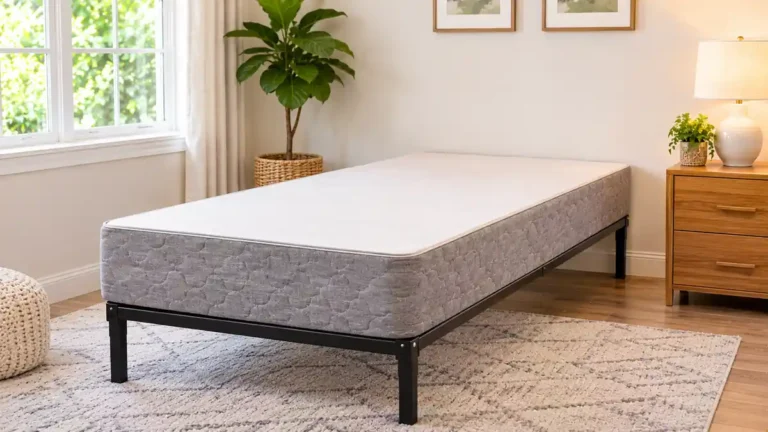 Twin Box Spring Guide: Size (38 x 75 Inches), Low Profile vs Standard Height, Split Options and When You Need OneQuick answer: a standard twin box spring is 38 inches wide by 75 inches long, the same as a twin mattress.…Read more →
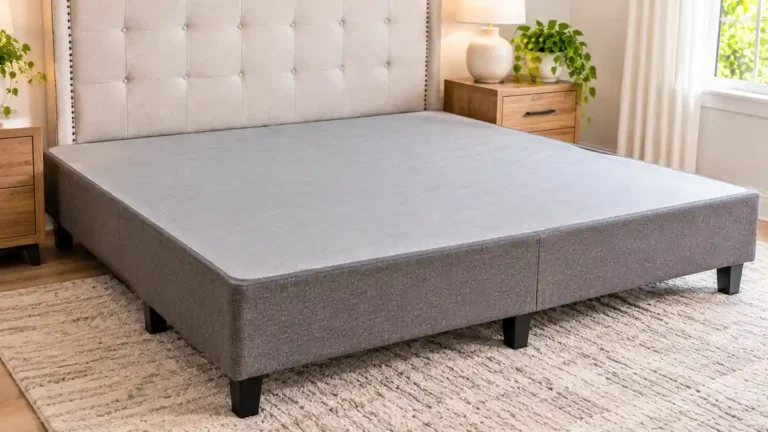 King Box Spring: Dimensions (76 x 80), Split King, Height, Do You Need One and Warranty ChecksQuick answer: a standard king box spring is 76 inches wide and 80 inches long, the same as a king mattress. A…Read more →
 Full Size Box Spring Guide: Dimensions, Low Profile vs Standard, Foundations and WarrantyA box spring sits under your mattress, between the mattress and the bed frame. It raises the bed, absorbs some…Read more →
 Floor Pillows Guide: Sizes (20 to 32 Inches), Fill Types, Meditation Cushions, Covers and CleaningQuick answer: floor pillows are large cushions for sitting on the floor. A 24 inch square suits living room…Read more →