Memory Foam Mattress: Density, Firmness, Heat and How to Choose
A memory foam mattress hugs your body. It softens under your weight and heat, then springs back slowly when you get up. People love that feeling for pressure relief and quiet motion. Others find it too warm or too sinking. Knowing a few terms helps you choose the one you’ll enjoy.
This article is part of our mattress buying guide, where you can compare related options.
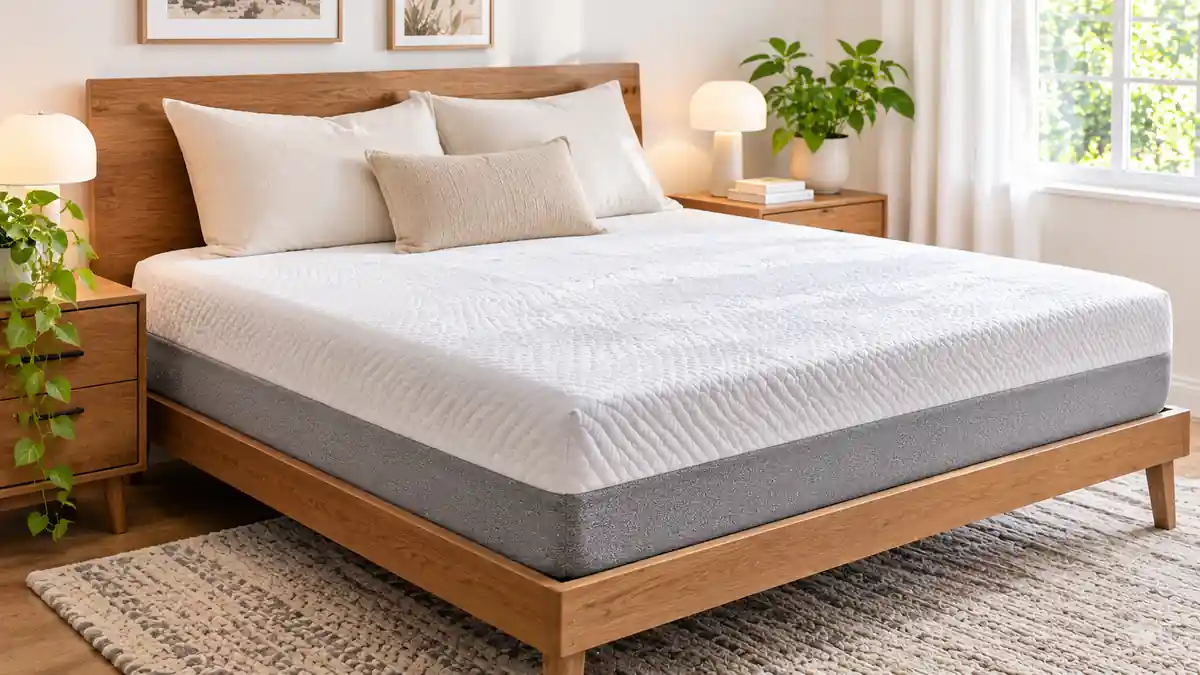
A memory foam mattress is a mattress made with layers of viscoelastic polyurethane foam. The foam responds to heat and pressure, so it contours to your shape. Some mattresses are all foam. Others pair foam with coils in a hybrid design.
This guide explains how memory foam works, what density and firmness mean, whether it sleeps hot, what off-gassing is and how to choose a mattress. It doesn’t rank brands, since a fair ranking needs hands-on testing. You’ll also find a comparison table and answers to common questions.
How does memory foam work?
Memory foam is soft when warm and firmer when cool. When you lie down, your body heat softens the foam under you, and it molds to your curves. When you move, it takes a moment to return to shape. That slow response is the “memory” part.
This contouring spreads your weight over a larger area, which can relieve pressure at the shoulders and hips. It also absorbs motion, so you’re less likely to feel a partner roll over. These are the two most praised benefits.
What is the difference between density and firmness?
These two terms are often mixed up, but they measure different things. Density is how much the foam weighs per cubic foot, given in pounds per cubic foot (PCF). Higher density foam is made of more material, so it typically lasts longer. One guide notes that a higher density doesn’t necessarily mean a firmer mattress.
Firmness is how hard or soft the foam feels. It’s often measured by ILD, which is the force needed to compress the foam to 25 percent of its thickness, and a higher ILD means a firmer foam. Brands also use a 1 to 10 firmness scale that isn’t standard across companies.
| Term | Measures | Why it matters |
|---|---|---|
| Density (PCF) | Weight of foam | Durability |
| ILD | Firmness of foam | Feel |
| Firmness scale (1-10) | Overall feel | Brand-specific |
Firmness depends on you, and there is no best firmness. The right level depends on your sleeping position, body type and preferences. Side sleepers often like medium-soft to medium-firm, back sleepers medium to firm and stomach sleepers firm. Heavier sleepers may need a firmer mattress.
Do memory foam mattresses sleep hot?
Heat is the most common complaint. Memory foam typically traps heat, and even high-end models tend to retain body heat. The foam sits close to your body, and there is less airflow than with coils.
You can reduce the problem in several ways. One retailer suggests choosing gel-infused or open-cell memory foam rather than traditional foam. A hybrid mattress adds coils for airflow. Breathable sheets and a light cover help too, and cooling covers or phase-change fabrics are worth a look if you keep your expectations realistic. Keeping the bedroom cool matters as well. If you tend to sleep very hot, think carefully before choosing all-foam, and try a long sleep trial.
What are off-gassing and CertiPUR-US?
New foam mattresses can have a smell. This is called off-gassing, and it comes from volatile organic compounds (VOCs) in the foam. One source says most mattresses lose the smell after three to seven days. Boxed foam can smell stronger because compression concentrates the emissions. To help, unbox the mattress in a well-ventilated room, open windows and let it air out before you put sheets on.
CertiPUR-US is a certification that most sources recommend looking for. According to one retailer, it sets a limit on VOCs of under 0.5 parts per million. Another source says there is no evidence that off-gassing has permanent health effects, though it can irritate people with chemical sensitivities or breathing issues. If you are sensitive, talk to a doctor and consider letting the mattress air out longer.
What are the strengths and weaknesses of memory foam?
Memory foam relieves pressure at the hips and shoulders, isolates motion, which is good for couples, and stays quiet because there are no squeaky springs. It comes in many firmness levels and is often available in a box. The weaknesses are heat retention, an initial odor and a slow response that can make it hard to move. Heavier foams can feel “stuck,” edge support can be weaker, and higher-density foams can have a longer break-in period.
How does memory foam compare with hybrid and innerspring?
A hybrid mattress adds coils under a foam comfort layer. It gives more bounce and airflow than all foam. An innerspring mattress has coils with thin padding, and it feels bouncier with less contouring. Memory foam provides the most contouring and motion isolation.
If you like to sink in and want quiet motion, memory foam may suit you. If you prefer a lively feel and cooler sleep, a hybrid or innerspring may be a better fit.
How do you choose a memory foam mattress?
Start with your sleep position and weight. Side sleepers often want more cushion, stomach sleepers want more support, and heavier people need dense, supportive foam. Then look at the build. Thicker mattresses usually have more layers, and many are 10 to 14 inches thick. Look for a supportive base foam under a comfort layer, and check density, since higher density foam generally lasts longer.
Check for cooling features such as gel, open-cell foam or breathable covers, and look for certifications like CertiPUR-US. A sleep trial of at least 30 nights with clear return terms matters because it takes weeks to adjust to a new mattress. Read the warranty for sagging limits and foundation rules, and make sure the size and delivery work for your frame and room. Avoid choosing by price alone, because low-density foam can sag sooner.
What foundation and care does it need?
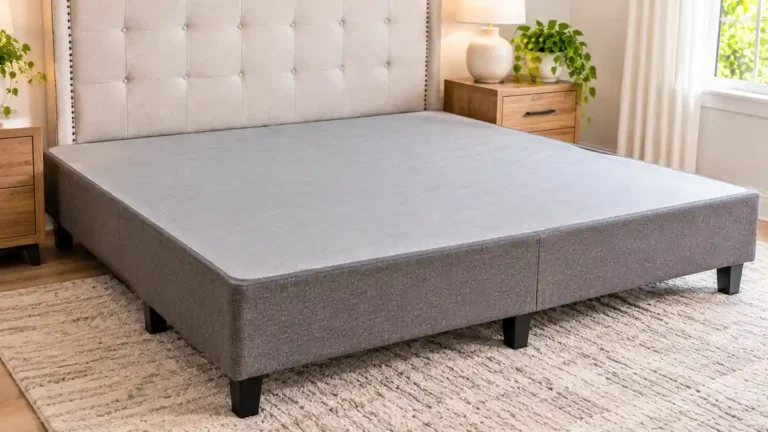
Memory foam works best on a solid or closely slatted base. Wide slat gaps can cause sagging, and many guides advise a gap of about 2.5 to 3 inches or less. A traditional box spring can void some warranties, so check your mattress maker’s rules.
Use a mattress protector. Rotate the mattress head to foot every few months if the maker allows, and don’t flip a one-sided mattress. Spot clean spills with mild soap and a damp cloth, and let it dry fully. Poor support and skipping the airing-out time are the two most common mistakes.
Frequently Asked Questions
What is a memory foam mattress?
A mattress made with layers of foam that contours to your body and responds to heat and pressure.
Do memory foam mattresses sleep hot?
They can. Gel-infused or open-cell foam, and hybrid designs, may sleep cooler.
What is the difference between density and firmness?
Density is the weight of the foam per cubic foot and relates to durability. Firmness is how hard or soft it feels. Higher density doesn’t always mean firmer.
How long does the smell last?
One source says most mattresses lose the smell after three to seven days. Air it out in a ventilated room.
What does CertiPUR-US mean?
A certification for foam that meets limits on certain chemicals and emissions. One retailer says it sets a VOC limit of under 0.5 parts per million.
Do I need a box spring with memory foam?
Usually no. A solid or closely slatted base is better. Check the warranty.
Conclusion
A memory foam mattress offers pressure relief, quiet motion and a hugging feel. Know the difference between density and firmness, watch out for heat and give a new mattress time to off-gas.
Choose a firmness that matches your sleep position and weight, look for certifications and use the sleep trial to make sure it works for you. The right memory foam mattress can be a comfortable, long-lasting choice.
Related guides
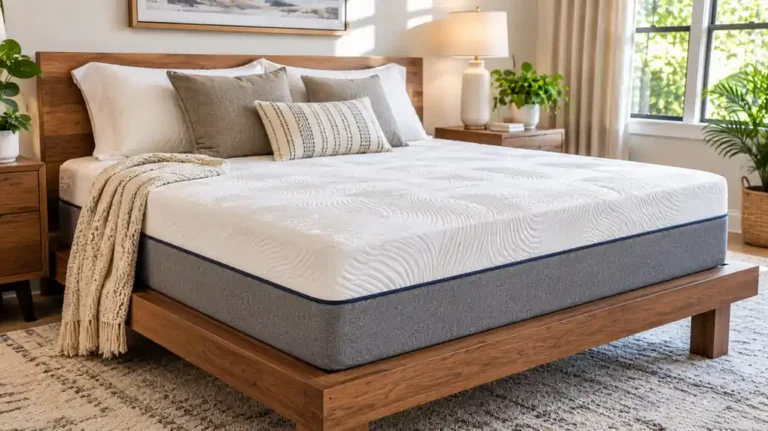 Best Memory Foam Mattress Guide: Density, Firmness, Thickness, CertiPUR-US, Heat and Sleep TrialsQuick answer: the best memory foam mattress matches your sleep position and weight, uses certified foam,…Read more →
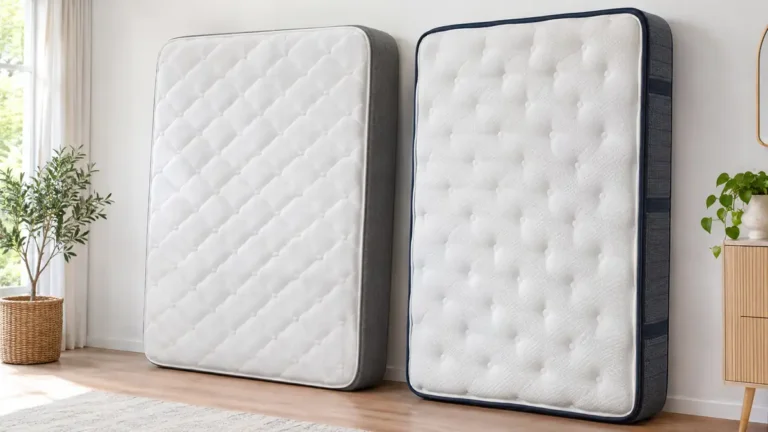 Memory Foam vs Hybrid Mattress: Comparison Table and How to ChooseMemory foam and hybrid are two of the most popular mattress types. They can look similar from the outside, but…Read more →
 Folding Mattress: Tri-Fold Foam Thickness, Sizes, Density and Who It SuitsA folding mattress is a foam mattress that folds into thirds so you can store it in a closet or carry it.…Read more →
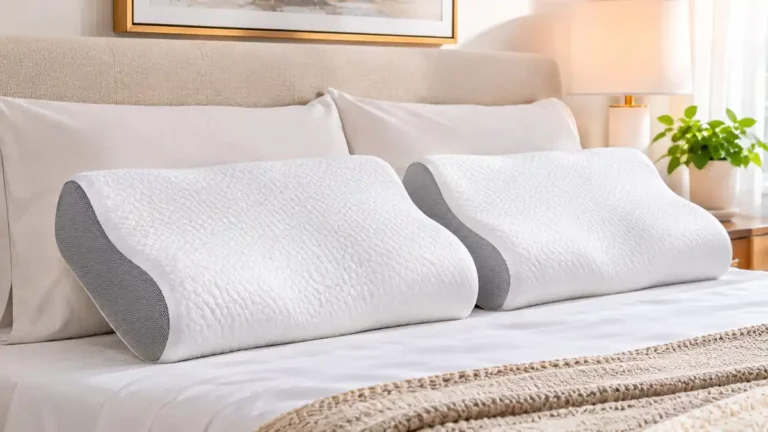 Memory Foam Pillows Guide: Solid vs Shredded vs Contour, Loft, Heat and CareA good pillow keeps your head and neck in a comfortable position all night. Memory foam pillows are popular…Read more →