Bedside Table: Height, Size, Nightstand vs Bedside Table and Storage
A bedside table is the small piece of furniture that holds your lamp, phone, glasses and book. You use it every day, so its height, size and storage matter more than you might think. A table that’s too low makes you strain to reach it, and one that’s too big crowds the bed.
This article is part of our bedroom furniture guide, where you can compare related options.
A bedside table, also called a nightstand or night table, is a small table that sits next to the bed. The terms are often used interchangeably. A nightstand usually implies storage in drawers or shelves, while a simple bedside table might just be an open surface.
This guide explains the best height, how to pick a width for your bed, how to choose storage and style and how to set up a pair. You’ll also find a size table, a checklist and answers to common questions. It also covers what people search as “night stand.”
How Tall Should a Bedside Table Be?
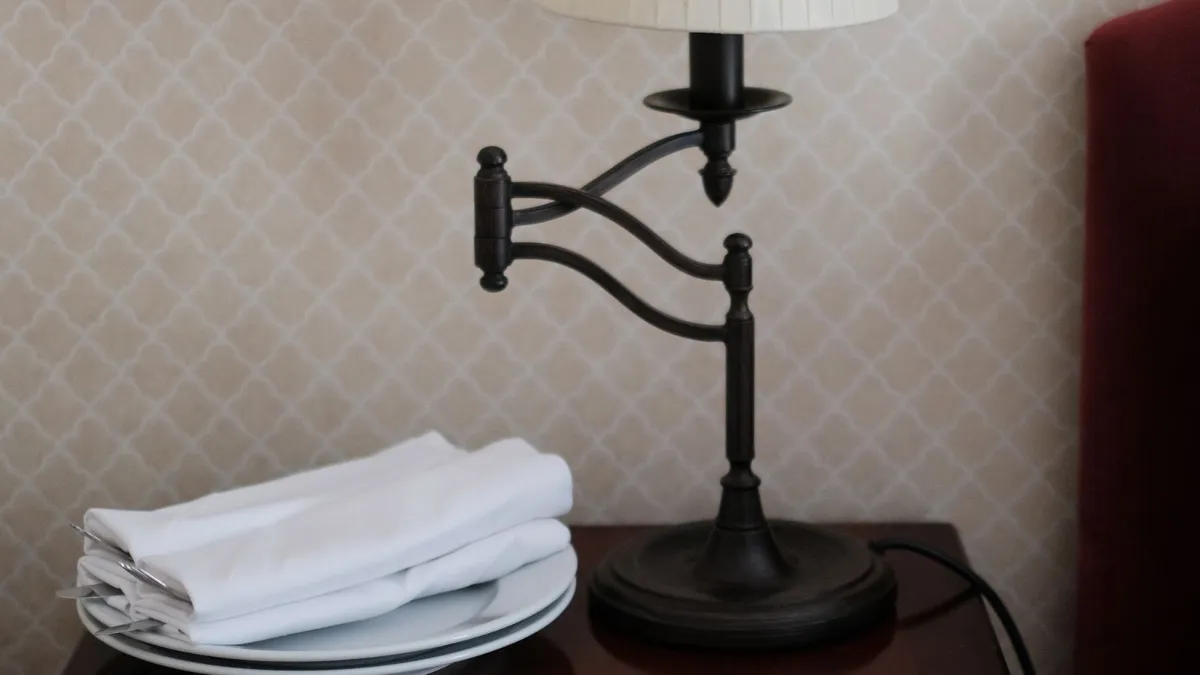
The most common rule is to keep the tabletop level with the top of the mattress, or a little above it. One source puts the ideal at 2 to 4 inches above your mattress, or level with it. Another suggests the top should be level with or 1 to 2 inches above the top of your mattress.
Measure the full bed height, not only the mattress. Toppers, pillow tops and mattress protectors add height. Box springs and frames matter too. Measure from the floor to the top of your finished mattress.
Adjust for your bed: A thin mattress or low modern bed calls for a lower table. A pillow-top mattress or tall frame may need a taller one. If you read in bed or use a large lamp, a slightly taller table can work well.
How Wide Should a Bedside Table Be?
Width should suit your bed and your room. One guide suggests nightstand widths of 18 to 21 inches for a twin, 21 to 26 inches for a full or queen and 26 inches or more for a king or California king. Another suggests one-third to one-half the width of larger beds when using a pair.
| Bed size | Suggested table width |
|---|---|
| Twin | 18 to 21 inches |
| Full/Queen | 21 to 26 inches |
| King/California king | 26 inches or more |
Check the space between the bed and the wall before buying. One guide advises confirming the gap and subtracting 2 inches for clearance. Make sure you can still open drawers and walk past.
If you use two bedside tables, one source recommends picking two that are similar in size to keep the space balanced. They don’t have to match exactly, but they should have a similar visual weight.
Bedside Table vs Nightstand
The names overlap. In practice: a nightstand usually has drawers or shelves for hiding clutter; a bedside table may be a simple open table with legs; a bedside cabinet has doors; a floating nightstand is mounted on the wall.
Choose based on what you want to keep nearby. If you only need a lamp and a glass of water, an open table works. If you keep medications, chargers, books and a few personal items, you’ll want a drawer or cabinet.
Types of Bedside Tables
Open table: a slim top with legs. Light and airy, good for small rooms. Table with drawer: one or two drawers for hidden storage. Table with shelf: an open shelf below for books or baskets. Cabinet-style: doors hide clutter. Floating (wall-mounted): saves floor space and makes cleaning easy. Needs strong wall mounting. Round or pedestal table: soft shape, good for tight spaces. Tall (tower) table: more storage in a small footprint. Bench or stool: casual and flexible. Chest or trunk: a vintage-style option. Built-in or charging table: includes outlets or USB ports.
Storage Needs
Storage should drive the choice. Think about what you keep by your bed. Common items include a phone and charger, glasses, a book, medications, tissues, a remote and a water glass.
Don’t forget drawer depths. A shallow drawer holds small items, and a deep drawer can store larger things. If you often place a lot on top, make sure the table has enough surface space. A drawer with a soft-close glide is quiet at night.
If you like a clean look, choose closed storage. If you like easy access, choose an open shelf and use baskets.
Materials and Style
Wood: warm and classic. Solid wood lasts longest. Metal: slim and modern. Often combined with glass or wood. Glass: looks light, but shows fingerprints. Upholstered: soft, but can stain. Rattan or cane: casual and textured. Stone or marble: elegant but heavy.
Match the style to the bed and other furniture. Consider the finish, hardware and legs. Round legs and tapered legs have a mid-century look. Straight, chunky legs look more traditional.
Setting Up a Pair
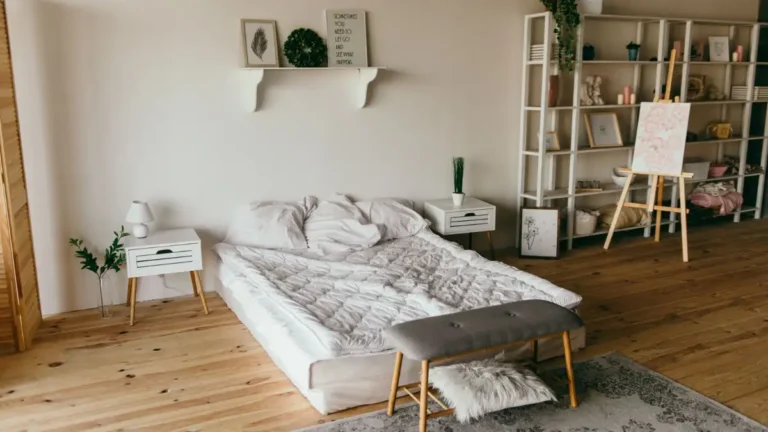
Place a table on each side of the bed, at the same height, if possible. Use lamps of similar height. Keep the surface neat. A lamp, a small tray and one decorative item are plenty. Place charging cables where they won’t tangle. Leave space between the table and the bed for easy access.
If you have one side against a wall, you can use a single table, or a table on one side and a wall shelf on the other. Mix and match for a more relaxed look.
How to Choose a Bedside Table
Measure your bed height from the floor to the mattress top, including toppers. Choose a table height level with or a little above the mattress. Check the width for your bed size and room. Measure the wall gap and leave clearance. Decide on storage. Drawers, shelf or open top. Pick a style and material. Think about lamps and chargers. Make sure there’s space and an outlet. Check stability. A tall or narrow table should be sturdy. Anchor tall units to the wall. Read reviews for assembly and quality notes. Check the return policy.
What mistakes should you avoid?
A few common mistakes are worth avoiding: choosing a table that’s too low (it makes reaching hard); choosing a table that’s too tall (it can look awkward next to the bed); ignoring the lamp size (a big lamp needs a larger surface); forgetting the clearance (you need room to walk and open drawers); buying mismatched heights (two tables at very different heights can look off); overloading the top (clutter makes the table hard to use).
Frequently Asked Questions
How tall should a bedside table be?
Level with the top of the mattress, or 1 to 4 inches above it, according to sources. Measure your bed with toppers included.
What is the difference between a bedside table and a nightstand?
The terms overlap. A nightstand usually has storage, while a bedside table may be a simple open table.
What size bedside table do I need for a queen bed?
About 21 to 26 inches wide, according to one guide.
Should bedside tables match?
They don’t have to. They should have similar size and visual weight.
Can I use one bedside table?
Yes, especially in small rooms or when one side is against a wall.
How far should a bedside table be from the bed?
Close enough to reach easily. Leave a little clearance so the table doesn’t bump the bed.
Conclusion
The right bedside table fits your bed height, your room and what you keep nearby. Aim for a top level with or just above your mattress, choose a width that suits your bed and pick the storage that matches your habits.
Measure carefully, check clearances and keep the surface tidy. A well-chosen bedside table makes bedtime and mornings easier.
Related guides
 Vanity Table Guide: Makeup Vanity Height, Size, Lighting, Mirror Placement and StorageQuick answer: a vanity table, also called a makeup vanity or dressing table, is a small desk with a mirror…Read more →
 Dresser for Bedroom: How to Choose the Right Size, Style and Safe SetupA dresser is the workhorse of the bedroom. It holds your clothes, keeps floors clear and gives you a surface…Read more →
 Jewelry Armoire: Standing vs Wall-Mounted, Locks, Felt Lining and How to ChooseA jewelry armoire is a cabinet built to store and display jewelry. Standing models hold more, with more…Read more →
 Floor Pillows Guide: Sizes (20 to 32 Inches), Fill Types, Meditation Cushions, Covers and CleaningQuick answer: floor pillows are large cushions for sitting on the floor. A 24 inch square suits living room…Read more →