Dresser for Bedroom: How to Choose the Right Size, Style and Safe Setup
A dresser is the workhorse of the bedroom. It holds your clothes, keeps floors clear and gives you a surface for a lamp, a mirror or a few favorite things. A good one fits your room, holds what you own and stays safely upright.
This article is part of our bedroom furniture guide, where you can compare related options.
A bedroom dresser is a piece of furniture with several drawers for clothing and other items. Dressers can be wide and low, with a mirror above, or narrow and tall, which are sometimes called chests of drawers. They come in many sizes, woods and finishes.
This guide helps you choose the right size, the right drawer layout and the right style. It also covers tip-over safety, which matters for every household. You’ll find a comparison table, a buying checklist and answers to common questions.
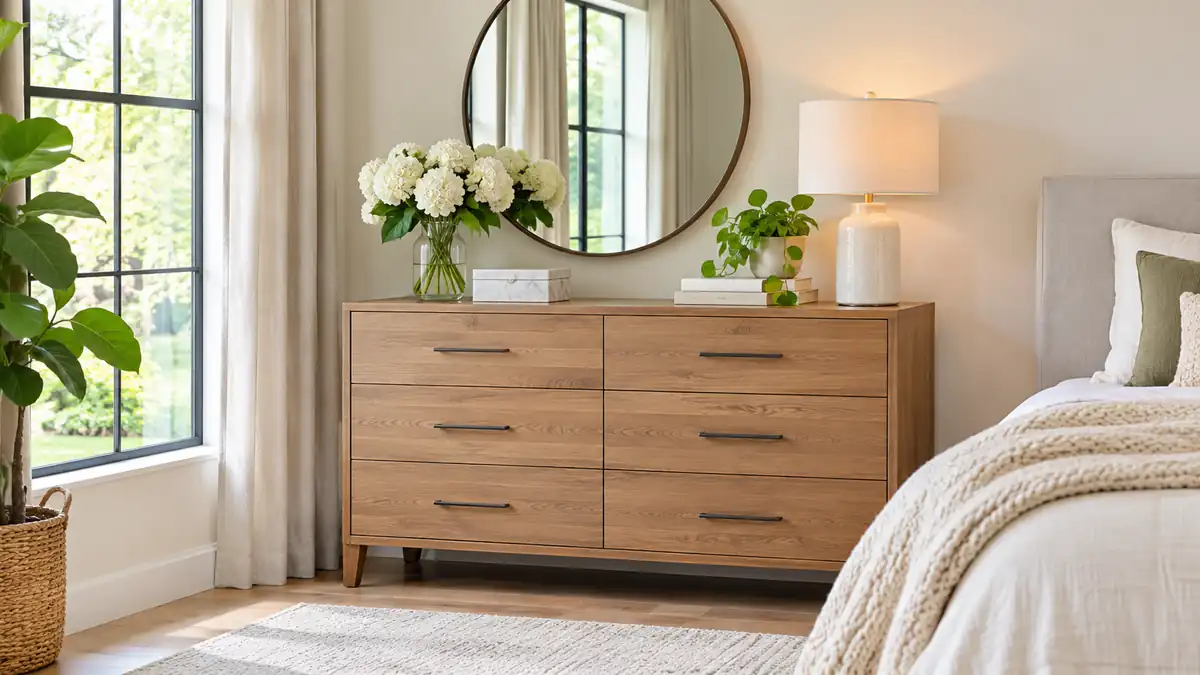
Types of Bedroom Dressers
Wide (horizontal) dresser: low and long, with two or three rows of drawers. It suits long walls and often supports a mirror or a TV. Tall dresser (chest of drawers): narrow and tall, with four to six drawers stacked up. It saves floor space. Double dresser: a wide dresser with two columns of drawers. Lingerie chest: a very tall, narrow dresser with shallow drawers. Dresser with mirror: combines storage with a dressing area. Dresser and nightstand sets: matching pieces for a coordinated look. Built-in or wardrobe-style dresser: larger pieces with doors and hanging space.
| Type | Best for | Watch out for |
|---|---|---|
| Wide dresser | Long walls, TV on top | Takes floor space |
| Tall chest | Small rooms | Must be anchored |
| Double dresser | Shared clothing storage | Heavy to move |
| Lingerie chest | Narrow wall spaces | Shallow drawers |
| Dresser with mirror | Dressing area | Needs wall clearance |
Tall vs Wide: Which Is Right?
The main factor is your room layout. A wide dresser suits a long, open wall. A tall dresser suits a narrow wall or a small room because it uses height instead of floor space. The sources I found gave no numeric rule, so measure your wall and think about how you’ll use the top.
A wide dresser has a lower center of gravity and gives you a surface for decor. A tall dresser holds more clothes in a smaller footprint, but it must be anchored to the wall.
How to Pick the Right Size
Measure the wall. Note the width and the height of the space. Check for windows, outlets, vents and doors. Check clearance. Leave room for drawers to open fully. Measure from the dresser’s front to the opposite wall or bed. Drawers need space to pull out, plus space for you to stand. Mind the doors. Make sure bedroom or closet doors can open without hitting the dresser. Think about storage. One guide notes that capacity depends on the actual drawer size, so don’t just count the drawers. Check the drawer width, depth and height. Leave room to grow. Another guide suggests choosing a larger dresser rather than a smaller one if you can, so you have space for the future. Check the delivery path. Measure doorways, halls and stairs.
Dresser Safety: Tip-Overs Are a Real Hazard
Dressers can tip over when children pull out drawers or climb on them. Even stable-looking dressers can fall forward. Consumer Reports found that furniture 30 inches or shorter can tip over and be deadly to children, so height is not a safe cutoff.
The STURDY Act (Stability Requirements for Clothing Storage Units) sets a mandatory stability standard for clothing storage units sold in the U.S. According to a Consumer Reports summary, dressers sold before the rule were not governed by a mandatory standard. For online purchases, Consumer Reports suggests looking for furniture made after September 1, 2023, and asking the seller whether the dresser meets the STURDY Act requirements. Verify the current rule and dates on the CPSC website.
No matter how old the dresser is, anchor it to the wall. Use the anchor kit that comes with the dresser, which is now required by law, according to the source. If your dresser has no kit, hardware stores sell anti-tip kits at low cost.
More safety tips: Put heavier items in lower drawers and lighter items in upper drawers. Don’t let children climb on the dresser or hang from the drawers. Don’t place TVs on dressers that were not made to hold them. Don’t put toys or remotes on top that might tempt children to climb. Use drawer stops and check that the drawers close smoothly.
Materials and Construction
Solid wood: strong, durable and can be refinished. It costs more and is heavy. Engineered wood: includes MDF and particleboard. It’s more affordable and comes in many finishes. Edges and corners can chip. Veneer: a thin layer of real wood over a core. It looks like solid wood at a lower cost. Metal and mixed materials: modern looks with slim lines.
Look at the drawers. Dovetail joints are a sign of good construction. Smooth glides, such as metal rails, make drawers easy to open. Soft-close drawers prevent slamming. Check that the drawer bottoms are solid, not thin cardboard.
Style and Finish
Choose a style that matches your bed and other furniture. Traditional dressers have detailed trim and rich wood tones. Modern dressers have clean lines and simple hardware. Farmhouse and rustic styles use distressed finishes and natural wood.
Hardware changes the look quickly. You can swap knobs and pulls to update an older dresser. Light colors make a small room feel brighter, and dark colors add depth.
How to Choose a Dresser for Your Bedroom
Measure the space. Wall, drawer clearance and door swings. Decide how much storage you need. Think about clothes, linens and extras. Pick tall or wide. Based on your wall and room layout. Check safety. Look for stability compliance and an anchor kit. Check the build. Joints, glides, and drawer bottoms. Pick the material. Based on budget and durability. Match the style. Colors, finishes and hardware. Check the weight capacity. Especially if you plan to put a TV or mirror on top. Plan the assembly. Some dressers are heavy and take two people. Read reviews. Look for notes on wobbling, drawer problems and quality.
What mistakes should you avoid?
A few common mistakes are worth avoiding: skipping the wall anchor (this is the biggest safety mistake); buying without measuring clearance (drawers hit the bed or the door); choosing by drawer count only (drawer size matters more); using a dresser as a TV stand without checking (it may not support the weight, and it may tip); ignoring the build quality (thin drawer bottoms and weak glides fail early).
Frequently Asked Questions
What size dresser do I need for my bedroom?
It depends on your wall and storage needs. Measure the wall, leave room for drawers to open and for walking, and compare the drawer sizes. A larger dresser gives you room to grow.
Should I choose a tall or a wide dresser?
A wide dresser suits long walls. A tall dresser saves floor space in small rooms. Either one must be anchored.
Do I need to anchor my dresser to the wall?
Yes. Dressers can tip over and cause serious injuries. Use the anchor kit, even if the dresser seems stable.
What is the STURDY Act?
A U.S. law that sets stability requirements for clothing storage units like dressers. Check the CPSC website for the current details and dates.
Is it safe to put a TV on a dresser?
Only if the dresser is made to hold a TV and is anchored. Many dressers are not designed for that weight.
How do I choose a good-quality dresser?
Look for solid joints, smooth drawer glides, sturdy drawer bottoms and a stable frame. Read reviews and check the warranty.
Conclusion
A good bedroom dresser fits your space, holds your clothes and stays safe. Measure the wall and the drawer clearance, decide between tall and wide, and check the build quality and finish.
Most important, anchor the dresser to the wall and follow stability guidance. A well-chosen, well-secured dresser makes your bedroom more organized and safer.
Related guides
 Black Dresser for Bedroom: Styling Tips, Wall Colors, Hardware, Sizes and CareQuick answer: a black dresser is a bold, flexible bedroom piece. Style the wall above with large art or a…Read more →
 Tall Dresser for Bedroom: Tall vs Wide, Storage, Drawer Clearance, Anchoring and LayoutQuick answer: a tall dresser, also called a chest of drawers or tallboy, is narrow and high. It stores clothes…Read more →
 Green Dresser: Paint Choices, Shades and Bedroom PairingsA green dresser adds color to a bedroom without taking over the room. You can buy one already green or paint an…Read more →
 Baby Dresser Guide: Changing Table Dressers, STURDY Act, Wall Anchoring and CPSC Recall LessonsQuick answer: a baby dresser stores clothes and diapers and often doubles as a changing table with a topper.…Read more →