Best Comforter: Down vs Down Alternative, Fill Power, Fill Weight and Baffle Box Construction
The best comforter depends on how warm you sleep, whether you have allergies and how much you want to spend. Down is warmer for its weight, and fill power measures how much loft each ounce of down has. Fill weight drives warmth as much as fill power does. Baffle box construction keeps the fill from shifting, and down alternative avoids the allergen issue.
This article is part of our bedding guide, where you can compare related options.
Buying a comforter can feel like reading a lab report. Labels list fill power, fill weight, thread count and stitching, and each number means something different. If you understand four ideas, you can compare almost any comforter.
A comforter is a thick, quilted blanket that you can use on its own or inside a cover. This guide explains down versus down alternative, fill power, fill weight, construction and care. One site claimed a precise retention advantage, but I did not use it because the site was low quality. I do not endorse specific products.
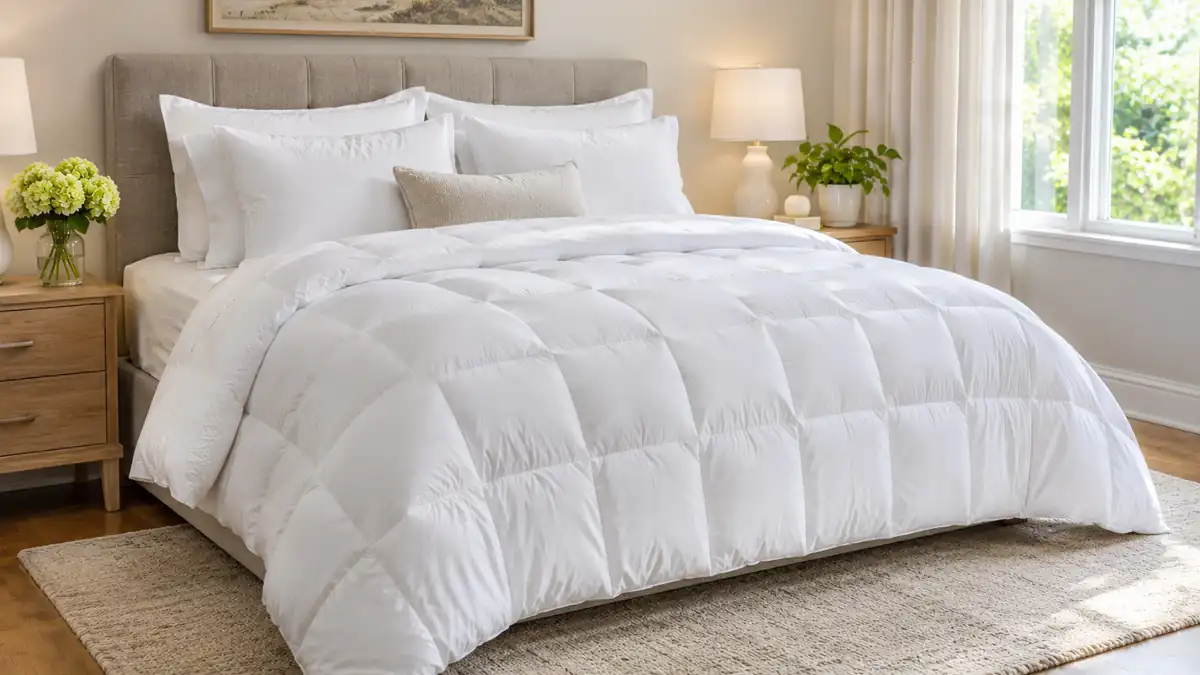
What is the difference between down and down alternative?
Down is the soft undercoat of ducks or geese, and it traps heat very well for its weight. Down alternative is a synthetic fill, usually polyester, designed to mimic down. Amerisleep compares the two in detail. Down alternative comforters mimic the soft and snuggly feeling of down without the allergens, and they usually cost less and are easier to wash.
Down is lighter and often lasts longer. Down alternative suits people with allergies or those who want a vegan option. Neither is better for everyone.
What is fill power?
Fill power measures how much space one ounce of down fills, so a higher number means more loft per ounce. One guide notes that more air trapped per ounce means more warmth at less weight. Fill power applies only to down. It is not used for synthetic fills.
Several retailers call 600 to 650 good and 700 and up excellent, while one source says a fill power of around 600 provides average warmth and durability. Feathered Friends, Downlite and Parachute publish guides explaining fill power. Treat the ranges as guides, because brands use slightly different measuring methods.
What is fill weight and why does it matter?
Fill weight is the amount of fill in the comforter. It drives warmth as much as fill power does, and it explains how heavy the comforter feels. A comforter with high fill power but low fill weight can be light and still not very warm, and one with moderate fill power and high fill weight can be warm and heavy. Fill weight and fill power together set the warmth level.
For down alternative, there is no fill power rating, so warmth comes from fill weight and construction. Check the product page for ounces or grams of fill.
What is baffle box construction?
In baffle box construction, the pockets for the fill are separated by fabric walls stitched inside the comforter. This lets the down lift to its full loft and keeps it from shifting or clumping. Sewn-through construction stitches the top and bottom layers together directly, which is cheaper and lighter but lets the fill shift more and creates cold spots along the stitching.
Most guides favor baffle box for even warmth. One source says sewn-through comforters perform slightly better at distributing warmth, which conflicts with most others. For a main winter comforter, baffle box is the safer choice.
How warm should a comforter be?
Think about your room and your body. A hot sleeper or a warm bedroom may want a lightweight or all-season comforter. A cold bedroom or a cold sleeper may want a heavier winter weight. The Company Store publishes a comforter buying guide with weights for different seasons. Layering helps too, since a lighter comforter plus a throw gives flexibility.
Also consider the cover and sheets. Our linen bedding and cotton sheets guides explain how fabric changes the feel of the bed.
Should you use a duvet cover?
A cover protects the comforter and makes it easy to change the look. You wash the cover often and the comforter rarely. Our best duvet covers and comforter vs duvet guides explain sizing and closures. If your comforter has corner loops, use ties to keep it from shifting inside the cover.
How do you care for a comforter?
Follow the care label. Many down comforters can be washed in a large machine on a gentle cycle and dried on low with dryer balls, but some need professional cleaning. Down alternative comforters are usually easier to wash at home. Dry them fully to avoid mildew. Air them out occasionally.
What should you check before buying?
Check the fill type and weight, the construction, the shell fabric and the size. Look at the warranty and the return policy, since you cannot judge warmth online. Read reviews that mention shifting fill, shedding and how warm the comforter feels over time. Our white comforter and bedding sets guides help with style and matched sets.
What mistakes should you avoid?
Do not buy by thread count or looks alone. Do not ignore fill weight. Do not choose sewn-through for a main winter comforter if you want even warmth. Do not forget allergies, since down can bother some people. And do not assume a higher price means a warmer comforter.
Which comforter suits which sleeper?
Hot sleepers do well with a lightweight or all-season comforter with moderate fill weight. Cold sleepers may prefer a heavier winter weight or a higher fill power. People with allergies should look at down alternative or hypoallergenic options. Couples with different temperatures can use two separate comforters on one bed, which is a trick many hotels and European homes use. Pick the size with a generous drop, because a comforter that is too small leaves one side cold.
Frequently Asked Questions
What is the best fill for a comforter?
Down is warmer for its weight. Down alternative avoids allergens and costs less.
What fill power is good?
Several retailers call 600 to 650 good and 700 and up excellent.
What is baffle box construction?
Fabric walls separate the fill pockets so the fill stays in place and keeps even warmth.
Does down alternative have fill power?
No. Fill power applies only to down.
Can I wash a comforter at home?
Many can, but check the label first.
Conclusion
The best comforter matches your climate, your sleep style and your allergies. Compare fill type, fill power for down, fill weight and construction, and choose baffle box for even warmth.
Because brands measure a bit differently, use ranges as guides and read reviews. A good comforter should keep you comfortable for years.
Related guides
 Comforter vs Duvet: The Real Difference and Which One to ChooseA comforter is a single quilted blanket that you can use on its own. A duvet is a soft insert that goes inside…Read more →
 White Comforter Guide: How to Wash, Whiten and Protect It With a Duvet Cover (and Bleach Rules by Fill)Quick answer: a white comforter looks fresh but shows every stain. Using a duvet cover is the easiest way to…Read more →
 Down Comforter Guide: Fill Power, Fill Weight, Baffle Box, Ethical Sourcing and How to ChooseA down comforter is the classic cozy bed cover. It is light, fluffy and warm, and it can last for many years.…Read more →
 Kids Couch Guide: Safety, Foam Density, Washable Covers, Sizes and Modular Play CouchesQuick answer: a good kids couch has rounded edges, non-toxic high-density foam, a washable removable cover and…Read more →