Down Comforter Guide: Fill Power, Fill Weight, Baffle Box, Ethical Sourcing and How to Choose
A down comforter is the classic cozy bed cover. It is light, fluffy and warm, and it can last for many years. Choose well, and you sleep under a soft cloud. Choose poorly, and you end up too hot, too cold, lumpy or flat. The tags and terms can be confusing: fill power, fill weight, baffle box, sewn-through, responsible down. This guide explains what each means, how to match warmth to your climate and sleep style, and how to avoid common mistakes.
This article is part of our bedding guide, where you can compare related options.
A down comforter is a bed cover filled with down clusters, the soft, fluffy undercoating of ducks or geese, inside a fabric shell. Down is a natural insulator. It traps air, holds heat and compresses easily for storage. This guide covers fill power, fill weight, construction, shell fabric, ethical sourcing, warmth levels, and care. Those sections are general knowledge, and I mark them. Several results were from spam or mirror pages, so I disregarded them.
Down vs Feathers vs Down Alternative
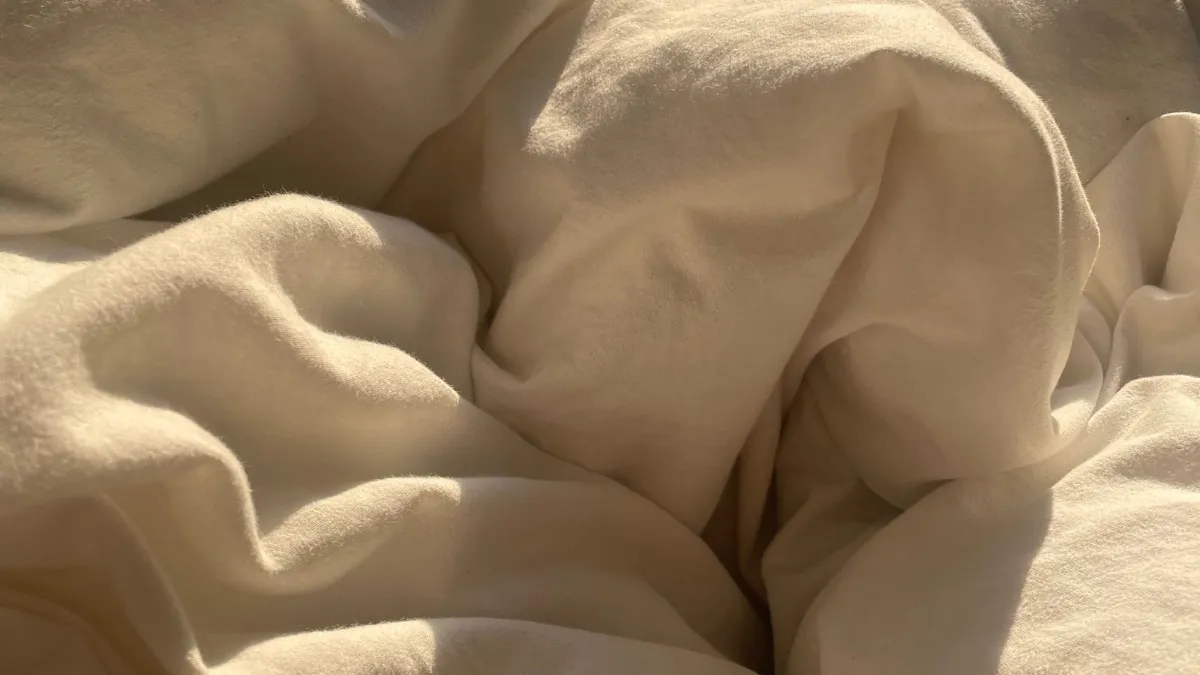
Down. The fluffy clusters under the outer feathers of ducks or geese. Light, warm and breathable. Feathers. The flat outer feathers have quills. Heavier, less lofty and can poke through. Some comforters blend down and feathers. Down alternative. Synthetic fill, usually polyester, made to mimic down. Cheaper and often easier to wash. See the cooling comforter guide.
Look at the label for the down percentage and the type of fill.
Fill Power
Fill power measures the loft and insulating ability of the down. It is the volume in cubic inches that one ounce of down fills. A higher fill power indicates a warmer and lighter comforter for the same weight, because the down clusters are larger and trap more air. One guide puts 600 or higher as a good target for optimal warmth and comfort.
Key points: under 500. Lower quality; 500 to 600. Good, common; 600 to 700. High quality; 700 to 800+. Premium. Very light and lofty.
Higher fill power often correlates with higher cost. But very high fill power does not always mean warmer for your needs, because fill weight matters too. Very high fill-power down (about 800 and above) can be too warm unless the room is cold.
Fill Weight
Fill weight is how much down is inside, usually in ounces. Fill power alone doesn’t set warmth. Fill weight matters too, and one guide says heavier is warmer. A comforter with a high fill power but low fill weight can still be light and cool. Climate and personal preference should drive the choice. People in warmer climates or who prefer a lighter sleep experience may choose a comforter with lower fill weight and fill power.
| Warmth level | Typical use |
|---|---|
| Lightweight | Summer, hot sleepers, warm rooms |
| All-season | Most climates |
| Medium-warm | Cool bedrooms |
| Extra-warm (winter) | Cold climates, cold sleepers |
Brands label warmth differently, so check the fill weight and read the descriptions.
Construction: Baffle Box vs Sewn-Through
Baffle box: baffle box is a stitching method with internal fabric walls. An extra piece of material is sewn between the front and back sides in a uniform pattern. It creates fabric-walled compartments that keep down evenly distributed and prevent shifting to the edges, which would leave cold spots. It is warmer and more durable. Sewn-through: the top and bottom fabrics are stitched together directly. One source notes sewn-through construction is less expensive than baffle-box construction, and it results in a lighter and less bulky comforter. However, sewn-through comforters are not as warm or durable as baffle-box comforters, because the stitching creates cold spots along the seams. Channel construction: long channels of fill. Gusseted: a strip of fabric forms walls for loft at the edges.
If you want the best warmth and loft, choose baffle box. If you want a lighter, thinner comforter or a lower price, sewn-through may suit.
Shell Fabric and Thread Count
The shell holds the down in. It must be tightly woven so the down does not leak.
Cotton. Breathable and common. Percale shells feel crisp, sateen shells feel smooth. See the best bed sheets guide. Cotton sateen. Soft and slightly warmer. Lyocell and bamboo-derived shells. Soft and moisture wicking. Down-proof weave. Essential. Look for terms like “down-proof” or a high thread count. Polyester shells. Less breathable.
A tight weave prevents leaks and pokes.
Responsible Down Standard
Look for down clusters from reputable sources, often indicated by certifications like the Responsible Down Standard (RDS). The RDS is a certification that aims to ensure down comes from birds that were not subjected to unnecessary harm, such as live plucking. Other certifications exist. Check what a label actually covers, and note that certification claims vary by brand.
Cost
Price depends on fill power, fill weight, shell quality and brand. Expect to pay more for higher fill power and baffle-box construction. Compare cost per year of use. A well-made down comforter can last many years.
I did not find reliable price figures in my sources. Compare several retailers.
Care, Washing and Allergies (General Knowledge)
Check the care label.
Use a duvet cover to protect the comforter and reduce washing. See the duvet vs comforter and duvet insert guides. Air out the comforter in fresh air now and then. Wash rarely. Many down comforters can be machine washed in a large front-loading machine on a gentle cycle with mild detergent, or professionally cleaned. Follow the label. Dry thoroughly on low heat with dryer balls to fluff. Damp down can mildew and smell. Store in a breathable cotton bag, not plastic. Allergies. Some people react to down or dust mites. If you have allergies, talk to your doctor, and consider down alternative or hypoallergenic-treated options. Allergen-proof covers may help. See the mattress cover guide.
Down Comforter for Hot or Cold Sleepers
Hot sleepers. Choose lightweight fill weight, a breathable cotton or lyocell shell and baffle-box for even loft. Avoid very warm weights. See the cooling comforter guide. Cold sleepers. Choose a higher fill weight and baffle-box. Layer with a blanket. Couples with different needs. Some brands offer dual-weight comforters. Or use two comforters.
Size
Match the comforter to your bed size. For fit, check dimensions against your mattress including toppers. See the full vs queen, twin vs twin XL and Alaskan king guides. A comforter that is slightly larger than the mattress gives overhang and avoids cold edges. Oversized options exist for deep mattresses.
How to Choose a Down Comforter
Pick a warmth level for your climate and sleep style. Check fill power (600 or higher for good quality). Check fill weight. Choose baffle-box for warmth and durability or sewn-through for a lighter, cheaper option. Check the shell fabric and that it is down-proof. Look for responsible down certification. Check size and mattress depth. Check the care label. Read reviews for notes on shifting, leaks and warmth. Check the return policy.
What mistakes should you avoid?
A few common mistakes are worth avoiding: choosing by fill power alone; buying too warm for your room; ignoring baffle-box vs sewn-through; skipping a duvet cover; not drying thoroughly; ignoring allergies.
Further reading: the Sleep Foundation mattress information hub.
Frequently Asked Questions
What is fill power?
A measure of the loft and insulating ability of down. Higher is lighter and warmer for the same weight.
What fill power should I look for?
One guide suggests 600 or higher for optimal warmth and comfort.
What is baffle box construction?
A stitching method with internal fabric walls that keep down evenly spread and prevent cold spots.
Is a down comforter good for hot sleepers?
A lightweight one with a breathable shell can be. Very high fill power can be too warm.
What does RDS mean?
Responsible Down Standard, a certification for ethical down sourcing.
Can I wash a down comforter?
Many can be washed carefully, but check the label. Use a large machine and dry fully.
Is down good for allergies?
Some people react to down. Ask a doctor, and consider alternatives.
Conclusion
A down comforter is a warm, light and long-lasting bed cover when you choose carefully. Look at fill power and fill weight together, choose baffle-box construction for even warmth, check the shell and sourcing and match the warmth level to your climate.
Protect it with a duvet cover and care for it gently. With the right choice, you get years of cozy sleep.
Related guides
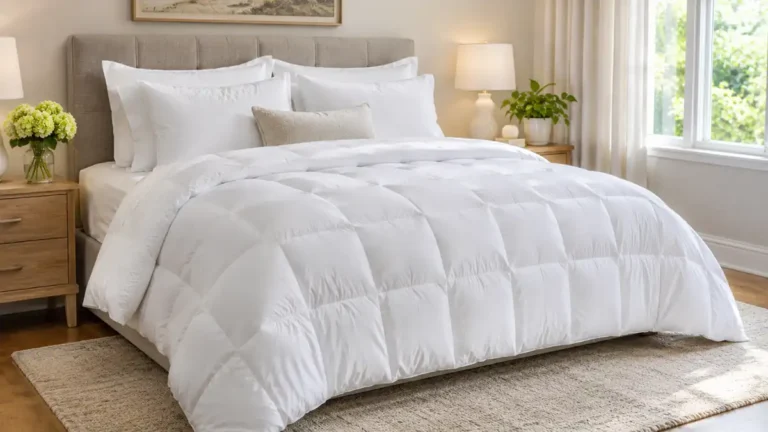 Best Comforter: Down vs Down Alternative, Fill Power, Fill Weight and Baffle Box ConstructionThe best comforter depends on how warm you sleep, whether you have allergies and how much you want to spend.…Read more →
 Comforter vs Duvet: The Real Difference and Which One to ChooseA comforter is a single quilted blanket that you can use on its own. A duvet is a soft insert that goes inside…Read more →
 Down Pillows Guide: Goose vs Duck, Fill Power vs Fill Weight, Allergies, Washing and LifespanQuick answer: down pillows are filled with the soft undercoating of geese or ducks. Fill power measures loft…Read more →
 Kids Couch Guide: Safety, Foam Density, Washable Covers, Sizes and Modular Play CouchesQuick answer: a good kids couch has rounded edges, non-toxic high-density foam, a washable removable cover and…Read more →