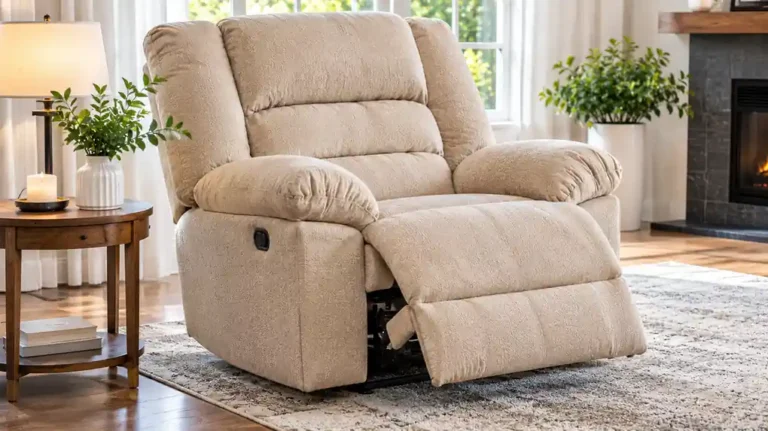
Small Recliner Chair: Wall-Hugger Clearance, Seat Size and Full-Recline Footprint
A small recliner chair fits a compact room, but the size on the box isn’t the whole story. A wall-hugger recliner moves forward as it reclines, so it can sit much closer to a wall than a traditional model. Always check the closed dimensions and the fully reclined footprint, because a chair with low wall clearance can still be too long or too wide once it’s open.
This article is part of our accent chairs, recliners and seating guide, where you can compare related options.
Recliners have a reputation for being huge. In a small living room, bedroom or apartment, they can swallow the floor. Smaller models and clever mechanisms help, but the labels are confusing: “compact,” “wall-hugger” and “zero wall” mean different things.
A small recliner is a chair with a footrest and a reclining back, built with a narrower frame or a space-saving mechanism. This guide explains wall-hugger mechanics, the measurements to check, seat sizing, rocker and lift options and how to choose. I found no authoritative standard for small recliner dimensions, and some search pages were repetitive or contained placeholder text, so I rely on general advice and listing examples. Check the manufacturer’s spec sheet for exact numbers.

What is a wall-hugger recliner?
A wall-hugger moves forward as it reclines, instead of pushing straight back. That lets you place it much closer to the wall than a traditional recliner. Listings report wall gaps from about 2 inches to 4 inches for true wall-hugger designs. A zero-wall model fully extends to 65.8 inches deep while positioned about 36 inches from a wall, which is a different category, so don’t treat 36 inches as typical.
One lift-recliner guide notes that “wall-hugger” describes the mechanism, while “compact footprint” describes the chair’s base size and shape on the floor. A chair can be one without the other.
What should I measure?
Measure the room first, then compare these numbers on the listing.
Closed width and depth. How much floor the chair uses when upright. Fully reclined length. How far the footrest extends. Wall clearance. How far the chair must sit from the wall to recline. Path to the room. Doorways and hallways.
Wall clearance alone isn’t enough. A chair with low wall clearance can still be too deep, wide or long once it’s fully reclined. Tape the open footprint on the floor to see how it fits. Our swivel recliner and oversized recliner guides explain more about sizing.
What seat size is right?
One guide suggests a seat height between 17 and 19 inches and a seat depth of 19 to 22 inches. That’s a general seating guideline, not a recliner-specific standard. Shorter people may want a petite frame. A product roundup mentions petite frames sized for users under 5 feet 4 inches. Taller people may want more seat depth and a longer footrest.
Sit in the chair if you can. Your feet should reach the floor when upright, and your back should feel supported.
Are there rocker and lift options?
Yes. Glider-style rocker recliners appear in small-space listings, and they suit nurseries and living rooms. Our nursery rocking chair guide covers gliders. Lift recliners raise the sitter to a standing position and help people with mobility limits. Eureka Ergonomic publishes a fit and clearance guide for lift recliners in small spaces. A power recliner needs an outlet or battery. Our zero gravity recliner and loveseat recliner guides cover other styles.
What materials should I look for?
Microfiber, fabric and leather are all common. Microfiber is budget friendly and easy to clean. Leather lasts but costs more. Check the frame, the springs and the reclining mechanism. A smooth, quiet mechanism and a sturdy footrest matter more than the label. Read reviews for noise and sagging.
Where should I put a small recliner?
Place it near a wall with an outlet if it’s powered, and leave space in front for the footrest. Keep it away from doors and walkways. Pair it with a small side table and a lamp. Our narrow side table guide helps with sizing. A recliner in a corner can save space if you check the clearance for the back.
How do I choose a small recliner chair?
Decide on the mechanism (manual, power, rocker, lift). Measure the room and tape the footprint. Check the fully reclined size and the wall clearance. Match the seat to your height. Choose fabric and frame quality. Read reviews. Check the return policy, since recliners are large.
What mistakes should I avoid?
The most common mistake is trusting wall clearance alone. A chair that sits 4 inches from the wall may still extend far into the room when open. Another is ignoring the path to the room: a chair that fits in the living room but not through the door becomes a return. A third is buying a seat that doesn’t fit your height, which can strain your back.
Finally, check that the page you read lists real dimensions. Some search pages had placeholder text, such as generic model names, so rely on manufacturer spec sheets.
Who should consider a lift recliner?
A lift recliner suits people who find it hard to stand up from a low chair. It raises the seat to help you stand. Eureka Ergonomic’s guide covers fit and clearance for small spaces. These chairs need an outlet, and they can be larger than manual recliners. If mobility is a concern, ask a doctor or occupational therapist about the right chair.
How do I test a recliner in a store?
Sit upright first and check that your feet reach the floor. Then recline and see whether your head and neck feel supported. Operate the footrest several times to feel the mechanism. Check how far the chair extends and whether the sides pinch your arms. Ask a staff member for the closed and open dimensions.
Frequently Asked Questions
What is a wall-hugger recliner?
A recliner that moves forward as it reclines, so it can sit close to a wall.
How close can it sit to a wall?
Listings range from about 2 to 4 inches for true wall-hugger models.
What seat height is typical?
One guide suggests 17 to 19 inches as a general seating guideline.
Is compact the same as wall-hugger?
No. Wall-hugger is a mechanism, and compact is a base size.
Should I measure the reclined size?
Yes. Wall clearance alone isn’t enough.
Conclusion
A small recliner chair can fit a compact room, but only if you check the open footprint, not just the wall clearance. Pick a wall-hugger for tight spaces, match the seat to your height and tape the size on the floor first.
Because I found no authoritative dimension standards, rely on the manufacturer’s spec sheet. A well-chosen small recliner gives comfort without crowding the room.
Related guides
 Recliner Chair: Types, Features and How to Choose the Right OneA good recliner chair changes how you relax. You can sit upright to read, lean back to watch TV or stretch out…Read more →
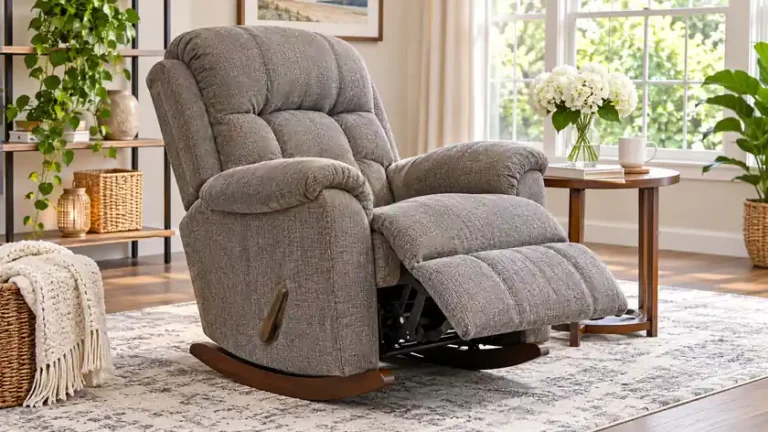 Rocker Recliner: Rocker vs Glider, Swivel Options and Whether It Suits a NurseryA rocker recliner combines a rocking or gliding motion with a reclining back and footrest. Rockers move in an…Read more →
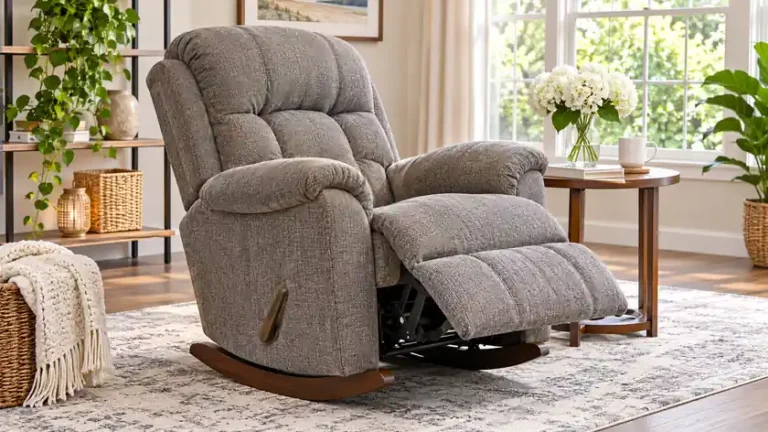 Club Chair: What It Is, Typical Sizes, Leather Styles and Club Chair vs ArmchairA club chair is a deep, low-backed, heavily upholstered lounge chair, traditionally covered in leather. One…Read more →
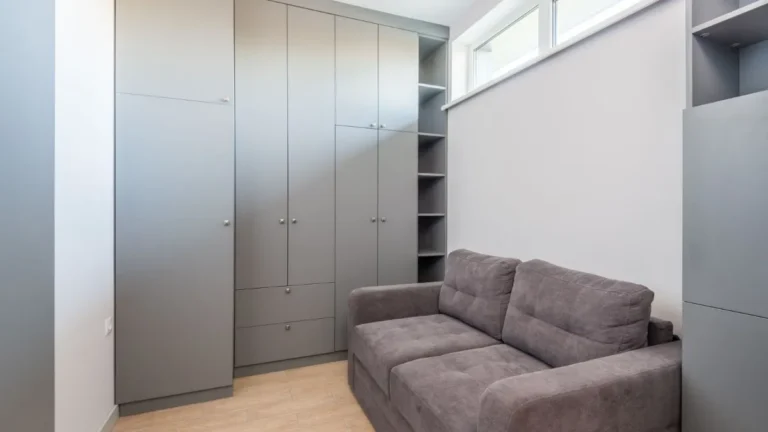 Small Sofa Guide: Loveseat and Apartment Sofa Sizes (48 to 84 Inches), Arms, Depth and Fit for Small RoomsQuick answer: a small sofa can be a compact loveseat (about 48 to 58 inches wide and 30 to 34 inches deep) or…Read more →