How to Choose a Mattress: Firmness, Sleep Position, Weight, Trial and Warranty
Choosing a mattress feels like a big decision, because it is one. You spend about a third of your life on it. Add a wall of options, confusing marketing and a high price tag, and it’s easy to feel stuck. The good news is that a simple sequence of steps narrows the choices fast.
This article is part of our mattress buying guide, where you can compare related options.
To choose a mattress, match the firmness to your sleep position and body weight, pick a type you like (foam, innerspring, latex or hybrid), then confirm the trial and warranty terms before you pay. On this sequence.
This guide walks you through each step, with ranges and tips from buying guides. It does not rank brands. It also links to guides on specific types and sizes. You’ll also find a comparison table, a checklist and answers to common questions.

Step 1: Start With Your Sleep Position
One source says your dominant sleep position is the single most important factor in choosing firmness and feel, because it shows where your body needs pressure relief and support.
A common rule of thumb:
| Sleep position | Suggested firmness (1 to 10 scale) |
|---|---|
| Side sleeper | Medium-soft to medium (about 3 to 6) |
| Back sleeper | Medium to medium-firm (about 5 to 8) |
| Combination sleeper | Medium to medium-firm (about 5 to 8) |
| Stomach sleeper | Medium-firm to firm (about 7 to 10) |
Side sleepers need cushioning at the shoulder and hip. Stomach sleepers need firmness so their hips don’t sink. Back sleepers sit in between. Brands rate firmness differently, so treat the numbers as a rough guide.
Personal preference matters too, and it can override the guidelines. Some individuals may find a medium-firm mattress comfortable, regardless of their sleeping position.
Step 2: Think About Your Body Weight
Body weight shifts the choice. Heavier sleepers compress foam more deeply and typically need firmer support. Lighter sleepers may find firm mattresses don’t contour enough.
Some guides suggest adjusting by one step for very light or heavy sleepers. For example, a heavier side sleeper may want medium-firm instead of medium-soft. Couples with different weights may compromise or choose a split option. See the memory foam vs hybrid guide for how types differ.
Step 3: Pick a Mattress Type
One guide lists innerspring, memory foam, latex and hybrid as the main options, and says the choice should follow your comfort preferences.
Memory foam: contouring, pressure relief and motion isolation. Can run warm. See the memory foam mattress guide. Innerspring: bouncy, breathable and often lower in cost. Hybrid: coils with foam or latex on top for balance. See the hybrid mattress guide. Latex: springy and durable, usually higher in cost. Airbed or adjustable: adjustable firmness or position. See the adjustable bed frame guide.
If you sleep hot, look at hybrids, latex or cooling designs. If you share a bed with a restless partner, think about motion isolation. If you sit on the edge of the bed, look at edge support.
Step 4: Choose the Size
Match the size to the sleepers and the room. Twin and twin XL suit single sleepers, full gives one adult more room, queen suits most couples and king or California king suit larger rooms or tall sleepers. See the bed sizes chart. Remember to measure the room and the path to the bedroom.
Step 5: Check the Trial
Because firmness is subjective, one guide recommends a trial of at least 30 nights. Your body needs time to adjust.
Sleep trials vary but are usually between 90 nights up to a whole year. Read the fine print. Some require you to keep the mattress for a minimum number of days before returning it. Check for return fees, pickup rules and donation requirements. Let the mattress expand fully, then give your body a few weeks to adjust before you decide to keep it.
Buying from third-party retailers may mean you don’t get offered a sleep trial or a warranty, which can make a discount a false economy.
Step 6: Check the Warranty
Look at the warranty’s length, whether it is prorated and what counts as a defect. Visible body impressions beyond a stated depth are often the key clause. Check: Length. How many years? Prorated or non-prorated. Prorated warranties reduce coverage over time. What counts as a defect. Sagging depth, broken coils or seams. Foundation rules. Some warranties require a specific base. See the box spring, platform bed and bunkie board guides. Stains. Many warranties exclude stained mattresses, so use a protector. See the mattress protector guide.
Step 7: Test the Mattress
Test the mattress thoroughly, either in a store or through an at-home trial.
In a store: Lie in your usual sleep position for at least 10 to 15 minutes. This time frame is a common suggestion, not from my sources. Bring your partner. Check edge support by sitting on the side. Ask about materials and layers.
At home: use a proper base; sleep on it for at least 30 nights; note how you feel when you wake up.
Step 8: Set a Budget
The sources I found offered no clear budget framework. The main advice is to weigh the trial and warranty against price, since a discount alone doesn’t guarantee protection. Remember to include the base or frame, bedding and delivery. Compare cost per year of use.
Step 9: Consider Special Needs
Key points: back or joint pain. Talk to your doctor, and look for supportive designs; allergies. Look at covers and materials; hot sleepers. Look for cooling features; couples. Check motion isolation and edge support; kids and teens. Firm, supportive mattresses; guest rooms. A medium-firm mattress works for most; adjustable bases. Need compatible mattresses.
Step 10: Compare and Decide
Make a short list of two or three mattresses. Compare type, firmness, thickness, trial, warranty, price and reviews. Pick the one that fits your sleep position, weight and budget with the best trial terms.
What mistakes should you avoid?
A few common mistakes are worth avoiding: choosing based on price alone (a cheap mattress can cost more over time); ignoring sleep position (firmness matters); skipping the trial (comfort takes weeks to judge); not reading the warranty (stains and foundations can void it); believing every claim (check reviews); forgetting the base (a poor base can cause sagging); giving up too soon (give your body time to adjust).
Frequently Asked Questions
How do I know what firmness I need?
Start with your sleep position and body weight. Side sleepers often prefer softer, stomach sleepers firmer, and back sleepers in between.
How long should I try a new mattress?
At least 30 nights, according to one guide.
What type of mattress is best?
It depends on your comfort preferences. Memory foam, innerspring, latex and hybrid each have strengths.
How long are sleep trials?
Usually from about 90 nights up to a year.
Do I need a mattress protector?
It helps keep the mattress clean and can protect your warranty.
Is a more expensive mattress better?
Not always. Compare materials, trial and warranty.
Conclusion
To choose a mattress, work through a simple sequence: start with your sleep position and body weight to pick firmness, choose a type, check the size, confirm a long trial and a clear warranty, and test it for at least 30 nights.
Don’t rely on price or marketing. Use the guidelines, read the fine print and give yourself time to adjust. A careful choice now can mean years of better sleep.
Related guides
 Folding Mattress: Tri-Fold Foam Thickness, Sizes, Density and Who It SuitsA folding mattress is a foam mattress that folds into thirds so you can store it in a closet or carry it.…Read more →
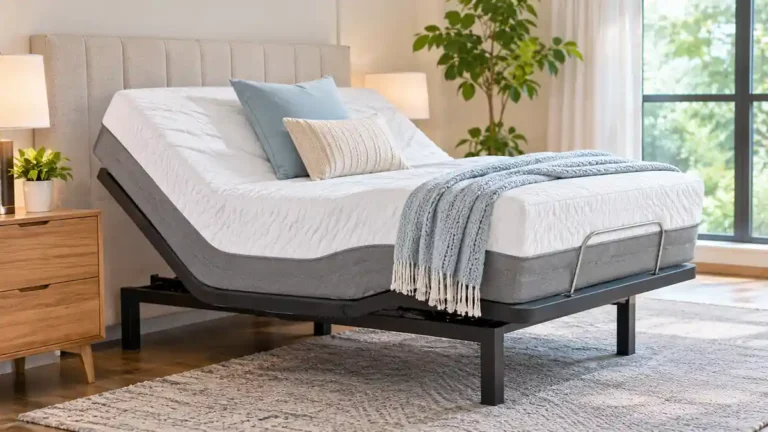 Adjustable Mattress Guide: Which Mattress Types Work on Adjustable Bases (Foam, Latex, Hybrid) and What to CheckQuick answer: most foam, latex and many hybrid mattresses work on an adjustable bed base. Casper rates memory…Read more →
 Inflatable Mattress Guide: Air Bed Height, Built-In Pumps, Leaks, Weight Capacity and CareQuick answer: an inflatable mattress, or air bed, is a mattress you fill with air for guests, camping or…Read more →
 Full vs Queen Mattress: Size Difference, Couples, Room Size, Price and How to ChooseFull and queen mattresses are two of the most popular sizes in the country, and they look close on a size…Read more →