Full Mattress: Size, Full vs Queen vs Twin XL and Who It Fits
A full mattress sits in the middle of the size chart. It’s wider than a twin but smaller than a queen, so it works in spaces where a queen would take over the room. People often choose it for guest rooms, teen rooms, small bedrooms and single sleepers who want a little extra space.
This article is part of our mattress buying guide, where you can compare related options.
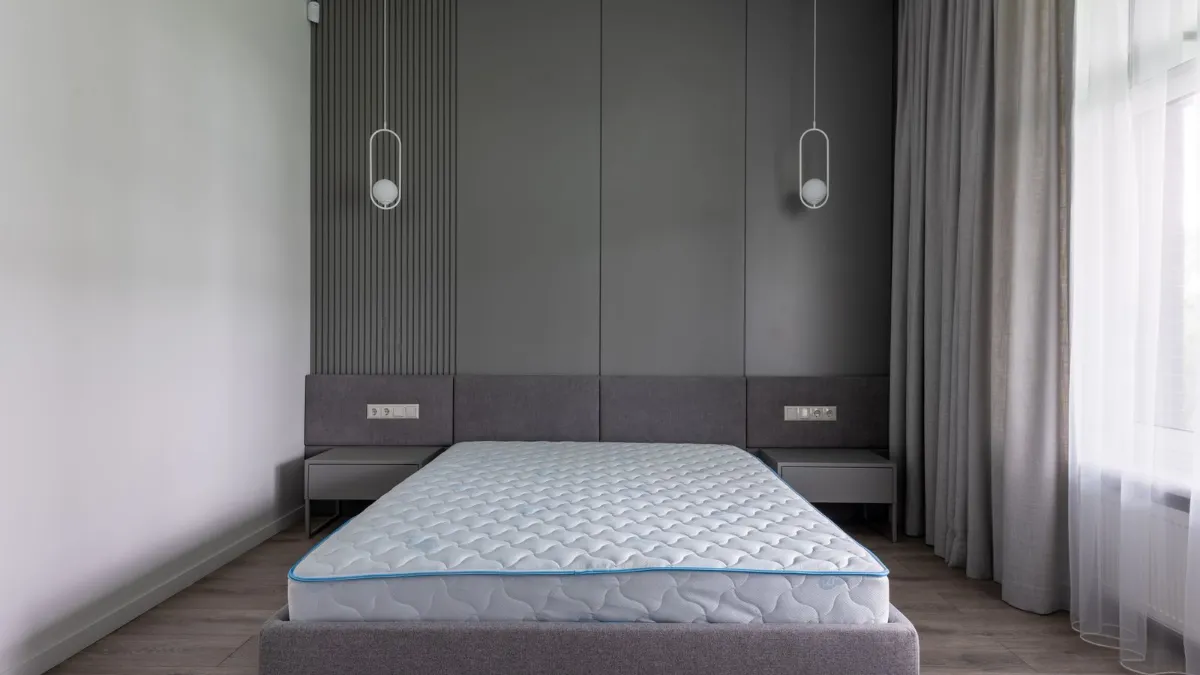
A full mattress, also called a double, measures 54 inches wide and 75 inches long. That’s about 4.5 feet by 6.25 feet, or roughly 137 by 190 centimeters. It’s 16 inches wider than a twin and the same length as a standard twin.
This guide explains the dimensions, who a full mattress suits, how it compares with a queen and a twin XL, what to know about frames, sheets and room size and how to choose. You’ll also find a comparison table, a checklist and answers to common questions. It also covers what people search as “full bed.”
Full Mattress Dimensions
| Unit | Width | Length |
|---|---|---|
| Inches | 54 | 75 |
| Feet | 4 ft 6 in | 6 ft 3 in |
| Centimeters | About 137 | About 190.5 |
A few sources list the width as 53 inches, so check the product page. Mattress thickness varies from about 8 to 16 inches or more. The frame adds a few inches to the width and length.
At 75 inches long, a full mattress suits people up to about six feet tall. Taller sleepers may find their feet hang over the end. Some brands sell a full XL, which is the same width but 80 inches long, for single adults over six feet.
Who Is a Full Mattress For?
Single adults: one guide suggests full for single adults and guest rooms. It gives more width than a twin, so you can spread out. Teens: a full bed gives a growing teen more room than a twin without taking over the room. Guest rooms: it sleeps one person comfortably and two for a night or two. Small bedrooms: it leaves more floor space than a queen. Shared nights: one source says full mattresses suit wider single sleepers, guest rooms and the occasional shared night.
A full isn’t ideal for couples who sleep together every night. Two adults get only about 27 inches each, which is narrower than a crib mattress. A queen is the better choice for most couples.
Full vs Queen vs Twin XL
| Size | Width x length | Best for |
|---|---|---|
| Twin XL | 38 x 80 in | Tall single sleepers, dorms, narrow rooms |
| Full | 54 x 75 in | Single adults, guest rooms, teens |
| Queen | 60 x 80 in | Couples, main bedrooms |
A full is 16 inches wider than a twin XL, while a twin XL is 5 inches longer. A queen is 6 inches wider and 5 inches longer than a full.
If you want width, choose a full. If you want length, choose a twin XL. One source says twin XL suits taller solo sleepers, teens, dorm rooms and narrow bedrooms. A taller or larger person may find a full cramped, and one guide suggests upgrading to a queen, or, if room space is an issue, trying a twin XL.
Price is another factor. Queen mattresses are typically around $100 to $300 more expensive than fulls, according to one retailer, so the full can save money.
How Much Room Does a Full Bed Need?
Larger mattresses suit master bedrooms, and a full-size bed won’t fill a large room. For small rooms, the frame’s length and width take up a lot of space, so measure first.
A planning guide: leave about 24 inches of walking space on each side of the bed and 36 inches at the foot. For a full bed, that adds up to roughly 102 by 111 inches, or about 8.5 by 9.25 feet, before furniture. That’s my own planning estimate, not an official rule. Many full beds fit comfortably in a room of about 9 by 10 feet or larger, depending on the other furniture.
Tape the outline of the bed on the floor to see how it feels.
Full Bed Frames
A full mattress needs a full-size frame. Retailers list full-size frames as fitting full and double beds, and some Murphy and studio beds. I found no detailed frame-specific guidance in the sources, such as whether a full needs a center support. As a general rule, check the frame’s weight rating, slat spacing and center support, and follow your mattress maker’s foundation rules.
Types of frames include platform beds, storage beds, metal frames, panel beds and canopy beds. A platform bed with slats needs no box spring. Check slat spacing, which should be close together, often 2.5 to 3 inches or less. See your mattress warranty for the exact rule.
Frame height matters, too. A low platform frame is modern and easy to see over. A taller frame with a box spring is easier to climb in and out of.
Full Mattress Bedding
Bedding doesn’t cross over between sizes. A twin XL fitted sheet is too narrow and too long for a full, and a full sheet is too wide and too short for a twin XL. Buy sheets, comforters and protectors labeled for full or double beds. Check the pocket depth if your mattress is thick.
Full-size bedding is easy to find and usually costs less than queen bedding. Many stores sell full and twin together.
Types of Full Mattresses
Full mattresses come in the same types as other sizes: memory foam, innerspring, hybrid and latex.
Memory foam: pressure relief and motion isolation. Can run warm. Innerspring: bouncy and breathable, often lower in cost. Hybrid: coils with foam or latex on top for a balance. Latex: springy and durable, usually higher in cost.
Choose firmness based on sleep position and body weight. Side sleepers often like medium-soft to medium-firm, back sleepers medium to firm and stomach sleepers firm.
How to Choose a Full Mattress
Decide who will sleep on it. One adult, a teen or a guest? Check height. If you’re over six feet, think about a full XL, twin XL or queen. Measure the room. Include walking space and furniture. Choose the type and firmness. Check the frame. Full-size frame with proper support. Check the trial and warranty. Know the return policy and the foundation rules. Plan bedding. Buy full-size sheets and a protector. Think about delivery. A boxed mattress is easier to carry. Set a budget. Include the frame and bedding.
What mistakes should you avoid?
A few common mistakes are worth avoiding: choosing a full for two adults every night (a queen is better); buying the wrong sheets (full and twin XL sheets don’t swap); ignoring height (a 75-inch mattress is short for tall people); skipping room measurements (a frame can take more space than the mattress); using a frame that doesn’t support the mattress (wide slat gaps cause sagging).
Further reading: the Sleep Foundation mattress information hub.
Frequently Asked Questions
What are the dimensions of a full mattress?
54 inches wide and 75 inches long, or about 137 by 190 centimeters.
Is a full the same as a double?
Yes. Full and double are two names for the same size.
Is a full bed big enough for two people?
It’s tight. Each person gets about 27 inches. A queen is better for couples.
What is the difference between a full and a queen?
A queen is 6 inches wider and 5 inches longer.
Is a full bed good for adults?
Yes, for single adults up to about six feet tall.
What size room do I need for a full bed?
About 9 by 10 feet or larger is a comfortable guide, though it depends on furniture. Measure your room.
Conclusion
A full mattress is a flexible size for single adults, teens, guest rooms and small bedrooms. It gives more width than a twin without the footprint of a queen. At 54 by 75 inches, it’s short for tall sleepers and tight for couples.
Measure your room, pick the right frame and buy full-size bedding. If you need more length or width, look at a full XL, twin XL or queen.
Related guides
 Folding Mattress: Tri-Fold Foam Thickness, Sizes, Density and Who It SuitsA folding mattress is a foam mattress that folds into thirds so you can store it in a closet or carry it.…Read more →
 Adjustable Mattress Guide: Which Mattress Types Work on Adjustable Bases (Foam, Latex, Hybrid) and What to CheckQuick answer: most foam, latex and many hybrid mattresses work on an adjustable bed base. Casper rates memory…Read more →
 Inflatable Mattress Guide: Air Bed Height, Built-In Pumps, Leaks, Weight Capacity and CareQuick answer: an inflatable mattress, or air bed, is a mattress you fill with air for guests, camping or…Read more →
 Full vs Queen Mattress: Size Difference, Couples, Room Size, Price and How to ChooseFull and queen mattresses are two of the most popular sizes in the country, and they look close on a size…Read more →