Best Affordable Mattress Guide: Foam Density, Trial Periods, Warranty Fine Print and Bed-in-a-Box Tips
Quick answer: a good affordable mattress has foam dense enough to last, a sleep trial of at least 100 nights and a warranty whose sag-depth rule you have read. Density matters more than the listed price, because low-density foam can wear out in the sleeping zone within a year or two. Look for certified foam and avoid claims you cannot check.
This article is part of our mattress buying guide, where you can compare related options.
A budget mattress can be a smart buy or an expensive mistake. Cheap beds can sag quickly, trap heat or smell for weeks. But well-made affordable ones exist, if you know what to check. This guide explains what to look for in foam density, trial periods, warranties, certifications, bed-in-a-box shipping, firmness and sizes, and how to shop safely online. Price and trial details are promotional and may be out of date, so I do not name brands or prices.

What “Affordable” Means
There is no fixed price. “Affordable” depends on size, type and market. Retailers publish “best mattress under $500” and similar lists. Compare mattresses of the same size and type, and consider the cost per year of use.
Foam Density
One suggests the ideal foam density for budget mattresses typically ranges from 1.5 to 2 pounds per cubic foot. Others set the bar higher, with one putting foam density above 1.8 pounds per cubic foot as a baseline for cheaper beds. For memory foam, one retailer says quality memory foam starts at 4.0 pounds per cubic foot.
The key idea: density matters more than the listed price, since a lower-density foam can wear out in the sleeping zone within a year or two. Ask the maker for foam density by layer, not just a thickness number. See the best memory foam mattress guide for density versus firmness.
Trial Period
Several guides recommend at least a 100-night trial and a 10-year warranty. Trial lengths vary by seller, and some budget beds have none. One guide notes that some do not include a sleep trial at all. A long trial lets you test the mattress. Check: whether returns are free or have a fee; whether you must keep the mattress for a minimum number of nights; whether returns require the original packaging; whether the mattress will be donated or refunded.
Warranty Fine Print
Budget warranties are often shorter and stricter. One source notes that budget mattresses often have five-year warranties with higher thresholds for warranty claims, so read the sag-depth requirement, not just the length. A warranty that only covers sags deeper than an inch and a half (a typical clause in general knowledge) may not help with a slight dip. Also check: whether the base needs to meet requirements. See the king box spring guide; whether stains void it; whether the warranty is prorated; what proof you need.
Bed-in-a-Box Caveat
Many affordable mattresses ship compressed in a box. One guide says decent-quality foam is especially important if your mattress is going to be compressed and boxed. Compression stresses foam. After unboxing, let it expand for 24 to 72 hours, and air out any smell. See the best memory foam mattress guide for off-gassing.
Certifications
Look for CertiPUR-US on foam products. It is a third-party certification of foam content, emissions and durability. Verify it on the certifier’s site, because some sellers claim certifications loosely.
Type: Foam, Innerspring or Hybrid
All foam. Common in budget bed-in-a-box mattresses. Check density. Innerspring. Often cheaper. Coil quality matters. See the best firm mattress guide. Hybrid. Coils plus foam. Often costlier. See the best cooling mattress guide. Latex. Usually pricier.
Coil quality matters for hybrids and innersprings. Ask about coil count and gauge, but don’t rely on count alone.
Firmness and Comfort
Pick firmness by sleep position and weight. Medium to medium-firm suits many people. See the best firm mattress guide. A cheap mattress that is too soft or too hard won’t help you sleep. Use the trial period to test.
Sizes and Costs
The mattress cost goes up with size. See the twin mattress dimensions, twin vs full, king vs queen and full size bed dimensions in feet guides. Remember extras: frame, foundation, sheets and delivery.
Buying on Amazon and Marketplaces
Two Tom’s Guide and TechRadar articles list things to check before buying a mattress on Amazon, such as clear returns, genuine certifications and sellers’ reputations. I did not verify the specific points in this search, so read those articles. In general: buy from the manufacturer or an authorized seller; check the return policy before buying; check reviews for sagging after six months; be careful with unfamiliar brands.
Where to Save and Where Not to
Save on: extras like bundled pillows; premium covers; adjustable features you don’t need.
Do not skimp on: foam density and support layers; trial period; warranty clarity; safe materials.
Signs of a Poor Budget Mattress
Key points: no density information; no sleep trial; very short warranty with strict rules; strong chemical smell that lasts; thin comfort layers; no certifications; reviews complaining of sagging within months.
What are the main strengths and weaknesses?
On the plus side: lower upfront cost; good for guest rooms and kids; easy delivery in a box. On the downside: may wear out sooner; strict warranty terms; fewer options; quality varies widely.
How to Choose an Affordable Mattress
Set a budget for your size. Choose a type: foam, hybrid or innerspring. Ask about foam density by layer. Check certifications. Check the trial period: 100 nights or more. Read the warranty sag-depth rule. Check firmness for your sleep position. Check delivery and return terms. Read reviews over months of use. Plan the base.
What mistakes should you avoid?
A few common mistakes are worth avoiding: choosing by price alone; ignoring density; skipping the sleep trial; not reading the sag-depth rule; using the wrong base; assuming all certifications are verified.
Frequently Asked Questions
What foam density should an affordable mattress have?
Sources range from 1.5 to 2 pounds per cubic foot, or above 1.8, as a baseline. Quality memory foam starts at 4.0, per one retailer.
How long should the trial be?
At least 100 nights, per several guides.
What warranty should I look for?
Around 10 years, but read the sag-depth requirement.
Is bed-in-a-box good for budget mattresses?
It can be, but compression stresses foam, so quality matters.
Is CertiPUR-US important?
It is a common marker of foam quality. Verify it.
Can I buy a good mattress on Amazon?
Possibly, if you check returns, certifications and seller reputation.
Conclusion
The best affordable mattress is not the cheapest one. It has dense foam, a clear warranty and a generous trial. Ask for details, read the fine print and use the trial period.
Prices and promotions change, so check current terms. A little homework gets you a mattress that lasts.
Related guides
 Folding Mattress: Tri-Fold Foam Thickness, Sizes, Density and Who It SuitsA folding mattress is a foam mattress that folds into thirds so you can store it in a closet or carry it.…Read more →
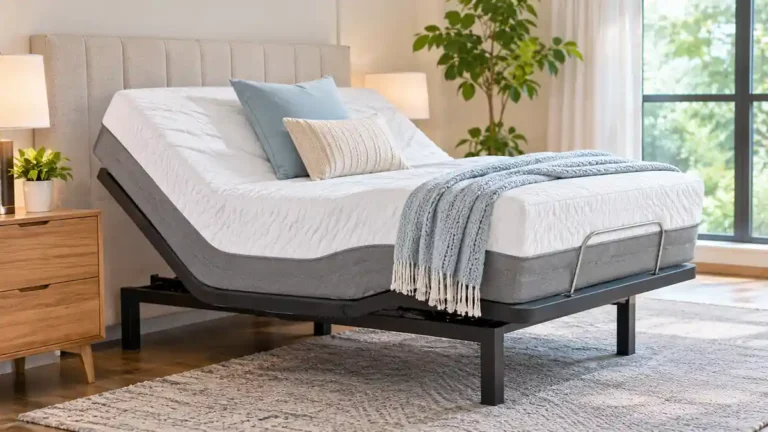 Adjustable Mattress Guide: Which Mattress Types Work on Adjustable Bases (Foam, Latex, Hybrid) and What to CheckQuick answer: most foam, latex and many hybrid mattresses work on an adjustable bed base. Casper rates memory…Read more →
 Inflatable Mattress Guide: Air Bed Height, Built-In Pumps, Leaks, Weight Capacity and CareQuick answer: an inflatable mattress, or air bed, is a mattress you fill with air for guests, camping or…Read more →
 Full vs Queen Mattress: Size Difference, Couples, Room Size, Price and How to ChooseFull and queen mattresses are two of the most popular sizes in the country, and they look close on a size…Read more →