
Japandi Style: Colors, Furniture, Materials and How to Get the Look
Japandi is a calm, simple style that blends Japanese and Scandinavian design. It suits people who like clear surfaces, natural materials and rooms that feel quiet. If you’ve been drawn to pale wood, soft neutrals and a few well-chosen objects, you’ve probably been looking at Japandi without the name.
Japandi is an interior design style that mixes the minimalism of Japanese design with the warmth and comfort of Scandinavian design. The name is a blend of “Japanese” and “Scandi.” Both traditions value simplicity, good craft, natural materials and a link to nature, which is why the two fit together so easily.
This guide explains the main ideas behind Japandi, the colors and materials that define it, the furniture to look for and how to style a room. You’ll also find tips for small spaces, a budget approach and the mistakes that make the look feel cold or cluttered.
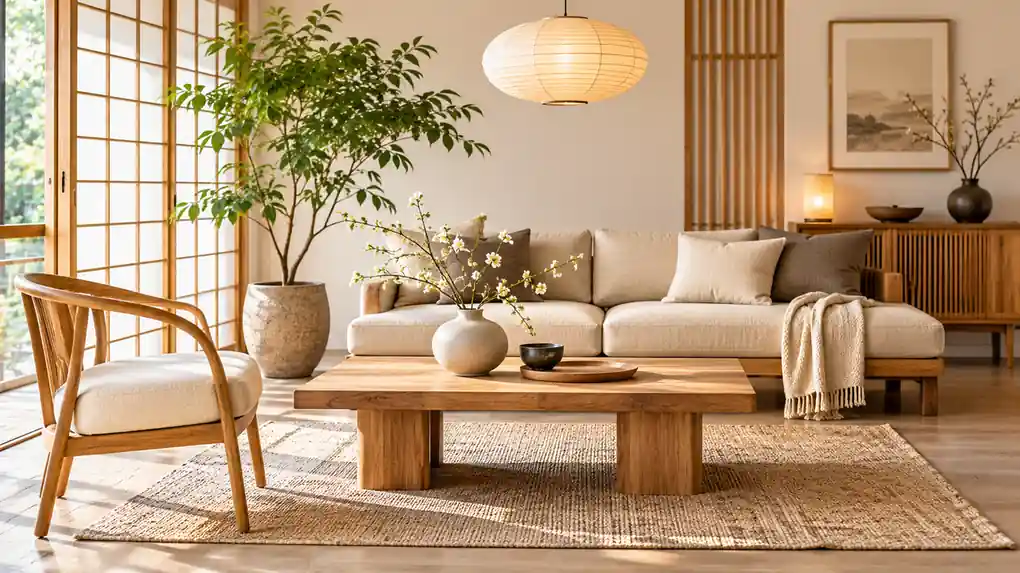
What are the main ideas behind Japandi?
Japandi rests on a few shared ideas. The first is simplicity: fewer things, chosen with care, and each given room to breathe. The second is function, which means every piece should earn its place by being useful or truly beautiful.
The third is a love of natural materials, like wood, linen, cotton, paper, clay and stone. The fourth is a quiet balance of warmth and calm. Scandinavian design brings a cozy feeling, often described with the Danish word hygge, and Japanese design brings a sense of order and the idea of wabi-sabi, which finds beauty in things that are simple, aged or slightly imperfect.
Together, these ideas give a room that feels peaceful but not empty. The goal isn’t to copy a catalog photo. It’s to make a home that’s easy to live in and easy to keep tidy.
Which colors work in a Japandi room?
Japandi uses soft, earthy colors. Warm whites, creams, light grays and sandy beiges form the base. Muted greens, clay and terracotta tones, warm browns and soft charcoal add depth. Black is used in small touches, such as a lamp base, a frame or a chair leg, to add contrast.
Keep the palette small. Three or four colors repeated through the room look more calm than a lot of different ones. Choose warm undertones for walls if the room lacks light, and cooler tones if it gets lots of sun.
Texture does the work that bright color would do in other styles. A nubby linen cushion, a woven rug and a smooth ceramic vase give the eye something to rest on without adding noise.
What materials and textures define it?
Wood is the heart of Japandi. Light woods like oak, ash and birch are common in Scandinavian pieces, and darker woods like walnut or stained oak appear in Japanese-inspired pieces. Mixing a light wood with one darker accent gives a balanced look.
Linen, cotton and wool suit curtains, bedding and throws. Paper lanterns, rattan, bamboo, cane and jute add warmth and a handmade feel. Stone and handmade ceramics bring weight and a quiet shine, and matte finishes feel calmer than glossy ones.
Look for pieces that show how they’re made, such as visible wood grain or simple joinery. Avoid shiny plastic, heavy ornament and busy patterns, which break the calm.
What furniture suits Japandi?
Choose low, clean-lined furniture. Low sofas, platform beds and low coffee tables give the room an open, grounded feel. Chairs with simple frames and slim legs, benches and stools work well, and a few natural-wood pieces will do more than a lot of small ones.
Keep storage simple and closed where you can. Cabinets with flat doors hide clutter, and open shelves hold only a few special items. A sideboard in light wood is a good anchor in a dining or living room.
Quality matters more than quantity. One well-made table you love is better than three mid-range ones. Look at joints, finishes and weight, and choose pieces you can live with for years.
How do you style a Japandi room?
Start by clearing the space. Remove what you don’t use or love, and leave open floor and wall space. Then add a few items with meaning, such as a ceramic vase, a piece of art or a single branch in a jug.
Use a simple rug, ideally in wool or jute, to define the seating area. Hang curtains in natural fabric that let light in. Add plants, but choose a few with strong shapes, like a small tree or a bonsai-style plant, instead of a crowd of small pots.
Lighting should be soft and warm. Paper or fabric shades, wood-based lamps and candles create a gentle glow. Aim for layers: an overhead light, a lamp for reading and an accent light for the evening.
Can you do Japandi in a small space?
Yes. Japandi suits small rooms, because it already values space and order. Choose multi-purpose furniture, like a bench with storage or a bed with drawers, and keep floors clear. A low bed and low furniture make a ceiling feel higher.
Use pale walls and natural light to keep the room open, and hang mirrors or art in a simple, uncluttered way. Keep surfaces nearly clear, with one or two objects on each shelf. Leave room around furniture so the eye has space to move.
Hide cables and small items in baskets or drawers. A tidy home is part of the look, and it’s also a good way to keep a small room feeling calm.
How can you get the look on a budget?
You don’t need expensive pieces. Start with paint, since a warm white or soft greige can change a room. Swap in simple linen or cotton textiles, and replace busy cushions with plain ones.
Look for simple, wood furniture secondhand and refinish it if needed. Add handmade or hand-looking ceramics a piece at a time, and use a plain glass jar or a simple bowl before buying anything special. Replace harsh bulbs with warm ones.
Be patient. Japandi grows slowly, and the aim is to add only what you truly want, so a gradual approach suits it well.
How does Japandi differ from Scandinavian and Japanese style?
Scandinavian style leans light and bright, with white walls, pale wood and cozy textiles like sheepskin and chunky knits. Traditional Japanese style leans calm and restrained, with low furniture, sliding screens, tatami mats and a strong sense of order. Japandi takes the shared ground between them.
In a Japandi room you’ll often see Scandinavian comfort and light colors paired with Japanese restraint and a darker wood accent. The result is warmer than strict minimalism and more disciplined than a typical cozy room. If a room feels too plain, add a soft throw. If it feels too busy, remove a few items until the surfaces feel calm again.
What mistakes should you avoid?
The most common mistake is going too bare, so the room feels cold. Add warmth with textiles, wood and soft light. Another is mixing too many colors or patterns, which breaks the calm.
It’s also easy to buy cheap items that only look like natural materials. Faux wood and plastic can feel flat. If your budget is limited, buy fewer pieces of better quality.
Don’t copy the style so closely that it doesn’t suit your life. If you have kids or pets, choose durable fabrics and rounded edges. Style should serve how you live.
Frequently Asked Questions
What is Japandi style?
It’s a mix of Japanese minimalism and Scandinavian coziness, using natural materials, soft neutral colors and simple furniture.
What colors are used in Japandi?
Warm whites, creams, beiges, muted greens and clay tones, with small touches of black or dark brown.
Is Japandi the same as minimalism?
It’s related, but warmer. Japandi uses texture, wood and soft light to keep a room cozy.
Can I use Japandi in a small apartment?
Yes. Its focus on order and low furniture suits small spaces.
What furniture is best for Japandi?
Low, simple pieces in natural wood, like platform beds, low sofas and slim-legged chairs.
Conclusion
Japandi style is about calm, balance and natural materials. Choose a small palette, add wood and soft textures, keep furniture low and simple and clear away what you don’t need. Add warmth with light and a few handmade pieces.
You can build the look slowly and on a budget. Start with one room, and let it grow as you find the pieces you love.
Related guides
 Mid-Century Modern Style: Furniture, Colors, Materials and How to Use ItMid-century modern is one of the most popular interior styles today, and it s easy to see why. The furniture is…Read more →
 How to Arrange Furniture in a Living Room: Layouts, Spacing and FlowA living room can have good furniture and still feel awkward if the pieces are in the wrong places. The right…Read more →
 Pendant Light Height: How High to Hang Over Islands, Tables and StairsA pendant light can make a room look finished, but only if it hangs at the right height. Too high, and it looks…Read more →

2 Comments