Buffet vs Sideboard: Differences, Sizes, Storage and How to Choose
A buffet and a sideboard both give a dining room extra storage and a surface for serving. They look so alike that many people use the words as if they mean the same thing. In practice, the two pieces differ a little in size, height and style, and knowing how can help you pick the right one.
A sideboard is a long, low cabinet with doors and drawers, usually standing on legs or a base. A buffet is a similar piece that is often a bit taller and deeper, and traditionally used to hold and serve food. Many makers use both names for the same furniture, so the label on the product matters less than the measurements.
This guide explains the differences, the common sizes, what storage each one offers and where to put it. It also covers materials, how to style the top and the mistakes that lead people to buy the wrong piece.
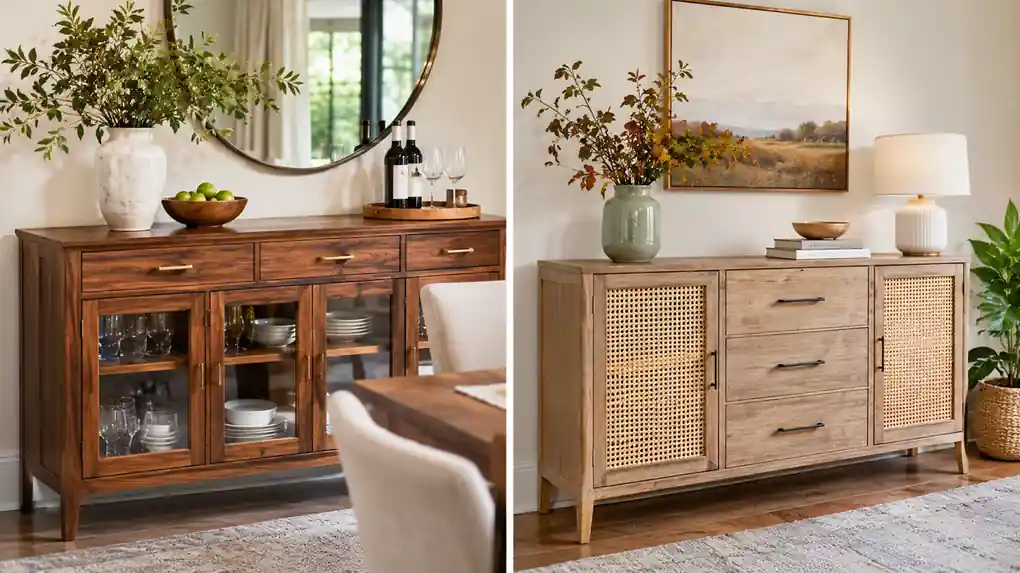
What is the difference between a buffet and a sideboard?
Traditionally, a buffet is a piece of dining furniture built to hold serving dishes and food for a meal, so it is often a little taller, about 34 to 38 inches, and deeper. A sideboard is usually lower, about 30 to 36 inches, and slimmer, and it is used mainly for storing dishes, linens and glassware.
In modern shops, the terms are used loosely. A “buffet” may be a long, low cabinet that looks exactly like a sideboard, and a “sideboard” may include a hutch on top. Some makers add a “credenza,” which is a similar low cabinet used in living rooms and offices, often with sliding doors.
Because names overlap, check the numbers. Look at the height, width, depth, the number of drawers and the shelf layout. These tell you what the piece can do, whatever it is called.
What sizes do they come in?
Most sideboards and buffets are about 48 to 72 inches wide, 15 to 20 inches deep and 30 to 38 inches tall. Smaller versions about 36 to 48 inches wide suit small dining areas, and large ones can be 80 inches or more.
Depth is the number to watch. A slim depth around 14 to 18 inches saves floor space and works in hallways. A deeper piece, 18 to 24 inches, holds big platters and small appliances but sticks out more. Leave room to open the doors and drawers fully.
Height matters for use and for looks. A piece at about 34 to 36 inches lines up with a kitchen counter, which makes it handy as a serving surface. A lower piece looks better under a window or a wall-mounted TV.
What storage do they offer?
Most have a mix of cabinets, drawers and shelves. Drawers are good for cutlery, napkins and table linens, and they often have felt-lined trays. Cabinets with adjustable shelves hold plates, bowls and serving dishes. Open shelves display decor but collect dust.
Look at the details. Soft-close drawers and doors are quiet and last longer. Interior shelves should be adjustable and strong enough for heavy dishes. If you plan to store glass, check for stable shelves and, if possible, a built-in wine rack or stemware holder.
If you want to use the top as a serving station, look for a surface that resists heat and stains. Some pieces have a stone or wood top, and some have a protective finish. Use trivets and mats to protect any top.
Where should you put it?
In a dining room, a sideboard or buffet usually sits against the longest wall, opposite or beside the table. Leave at least 36 inches between the table chairs and the piece, so people can move and open doors. If the room is tight, a slim sideboard is the better pick.
The pieces also work well in other places. In an entryway or hallway, a narrow sideboard holds keys, mail and baskets. In a living room, it can act as a media console, though you should check the weight rating and ventilation for a TV and devices. In a kitchen or an open-plan space, it can serve as a coffee station or a bar.
Think about what is behind it. A mirror or art above a sideboard adds depth. Keep the wall clear of outlets you need, and check that any lamp has a cord path.
Which materials and finishes last?
Solid wood is sturdy and can be refinished, but it’s heavy and can move with humidity. Veneer over a stable core looks like wood and is common, and it holds up when the edges are sealed well. Engineered wood and MDF cost less, but they can swell if water gets in, so wipe spills fast.
Metal and glass accents add a modern look. Glass doors show off dishes but need careful cleaning. Rattan or cane doors add texture and let air flow, which is useful for storing linens.
Look at the hardware and the legs. Strong legs with felt pads protect floors and carry weight. Check the weight rating for the top and shelves.
How should you style the top?
Keep it simple. A lamp, a tray with a few objects and a plant or flowers are enough. Leave part of the top clear so you can use it for serving. Vary heights, with a tall lamp or vase, a medium object and a low bowl.
Use art or a mirror above, hung about 6 to 10 inches above the top. Match the scale of the pieces to the furniture. Too many small items look cluttered, while a few larger ones look calm.
If you use the top as a bar or a coffee station, use a tray to keep bottles and cups together and to protect the surface.
How do you care for a sideboard?
Dust the top and the doors with a soft, dry cloth, and wipe spills right away. Use a damp cloth only if the finish allows it, and dry the surface afterward. Avoid harsh cleaners, which can dull a finish, and use trivets under hot dishes and mats under candles and plants.
Keep the piece away from direct heat, such as a radiator or a sunny window, since heat and light can fade or crack wood. If you store linens or food-safe items inside, air the cabinet from time to time and add a small moisture absorber in damp homes.
Check the hinges and drawer slides once or twice a year. Tighten loose screws, and if a drawer sticks, clean the track and check for objects that block it. Felt pads on the legs protect your floor and make the piece easier to nudge into place.
What mistakes should you avoid?
The biggest mistake is buying by name and not by size. Measure the wall and the doorway, and check how far doors swing. Another is picking a piece that is too deep for a narrow hallway.
Many people also forget to anchor tall or top-heavy pieces. If the sideboard has a hutch or if kids are around, secure it to the wall as the maker advises. Others skip the weight rating and overload the shelves.
Finally, check the finish and the return policy. A finish that looks perfect in a photo may look different in your room’s light.
Frequently Asked Questions
Is a buffet the same as a sideboard?
Often yes. Buffets are traditionally a bit taller and deeper and used for serving, while sideboards are lower and used for storage, but many makers use the names loosely.
How wide should a sideboard be?
Most are 48 to 72 inches wide. Pick one that is slightly narrower than the wall it stands on.
How deep is a typical sideboard?
About 15 to 20 inches, though slim versions are about 14 to 18 inches.
Can a sideboard be used as a TV stand?
Sometimes. Check the weight rating, the top size and whether the doors let cables and heat out.
Do I need to anchor a sideboard?
If it’s tall or top-heavy, or if children are in the house, follow the maker’s advice and anchor it to the wall.
Conclusion
A buffet and a sideboard are close cousins, and the choice comes down to size, height and storage. Measure your wall and your walkway, choose the depth that fits and look at the drawers and shelves you need.
Check the weight rating, the finish and the anchoring advice. A well-chosen piece will store your dishes and linens and give the room a useful, good-looking surface.
Related guides
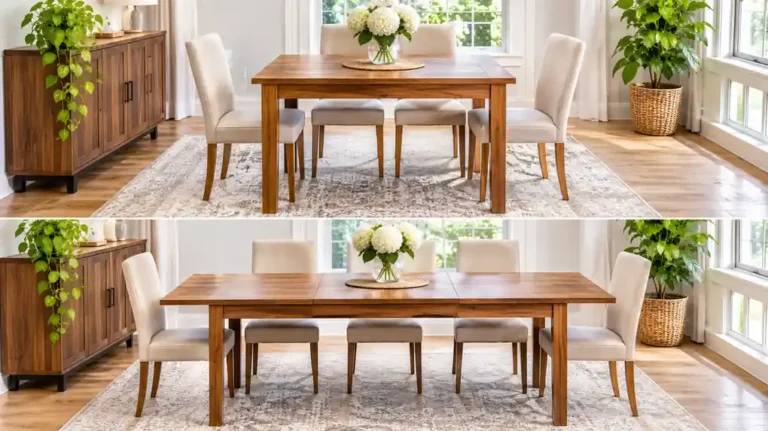 Extendable Dining Table: Sizes, Leaf Types, Mechanisms and What to CheckAn extendable dining table gives you a small table for everyday meals and a bigger one when guests come. It s a…Read more →
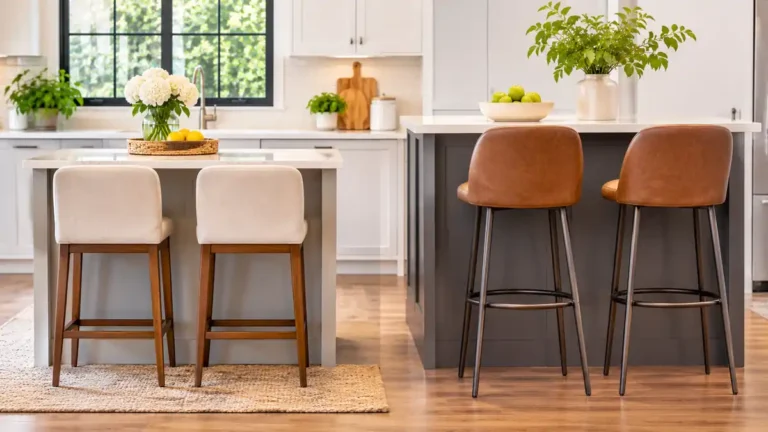 Counter Height vs Bar Height: Differences, Stool Sizes and Which to ChooseCounter height and bar height are two common table heights, and they re easy to mix up. Both are taller than a…Read more →
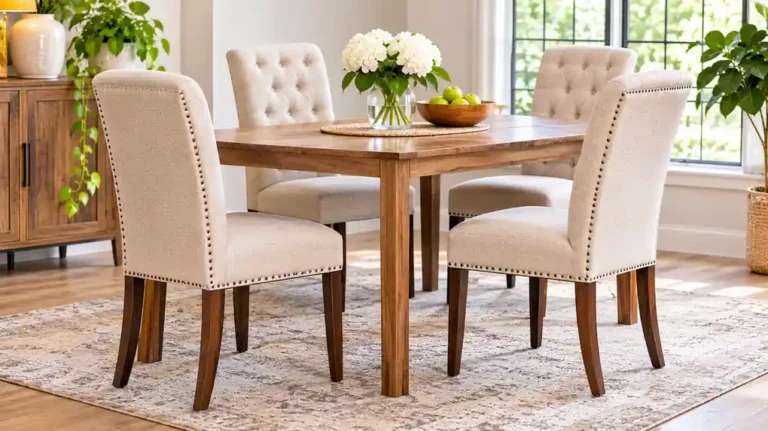 Upholstered Dining Chairs: Fabrics, Comfort, Cleaning and How to ChooseUpholstered dining chairs are more comfortable than bare wood or metal, and they add color and texture to a…Read more →