Loft Beds Guide: Sizes, Ceiling Clearance, Guardrails, Age Limits and Space-Saving Layouts
A loft bed lifts the mattress high off the floor and leaves the space underneath free. That space can hold a desk, a sofa, a play area, a closet or storage. In a small bedroom, a dorm or a shared room, a loft bed can add the equivalent of an extra room without any construction. It is also a tall piece of furniture, so safety and clearance matter more than usual.
This article is part of our bed frame guide, where you can compare related options.
A loft bed is a raised bed on tall legs, reached by a ladder or stairs. It differs from a bunk bed because there is no lower bed. This guide explains the sizes, how to measure ceiling clearance, what guardrails and age guidance mean, what you can put under a loft bed and how to choose one. This is not safety certification advice.
Sizes and Footprint
Twin and full are the most common loft sizes. One retailer suggests twins suit younger kids and smaller rooms, while fulls give older kids and teens more room to stretch out. Loft beds most commonly come in twin and full sizes, and a full loft bed gives older kids, tweens and teens extra space.
Queens are the largest and need the most room. One guide says a queen loft is generally only practical if the room is more than about 10 feet wide. Another notes that a queen-platform loft can take roughly 220 to 230 centimeters (about 87 to 91 inches) of width once ladder clearance is included. Reserve the queen size for scenarios where two adults will regularly share the bed.
Keep the mattress dimensions separate from the frame footprint, since the frame is larger. See the twin vs twin XL and full vs queen guides for mattress sizes.
| Size | Best for |
|---|---|
| Twin | Younger kids, small rooms |
| Twin XL | Teens, college dorms |
| Full | Older kids, teens, adults |
| Queen | Two adults, big rooms |
Ceiling Clearance
This is the most important measurement.
Measure from the top of the mattress to the ceiling. The Consumer Product Safety Commission recommends at least 30 inches of clearance between the top of the mattress and the ceiling, according to one guide. Verify this with the CPSC. Mattress thickness reduces headroom. One guide advises keeping mattresses under about 25 centimeters (about 10 inches), and another suggests subtracting the platform height and mattress thickness from the floor-to-ceiling height to find sitting room. Example. In a standard 8-foot room, one product’s height works out to about 26 inches of clearance, which is below the 30-inch guideline. This is a useful example of why you should check the specific model. Low ceilings. If the ceiling is low, a low-loft design is the usual solution. Avoid ceiling fans and lights directly above the bed.
Steps:
- Measure the ceiling height.
- Find the loft’s platform height from the listing.
- Subtract platform height and mattress thickness.
- Compare the result with the 30-inch guideline.
- Check for fans, sprinklers and sloped ceilings.
High vs Low Loft
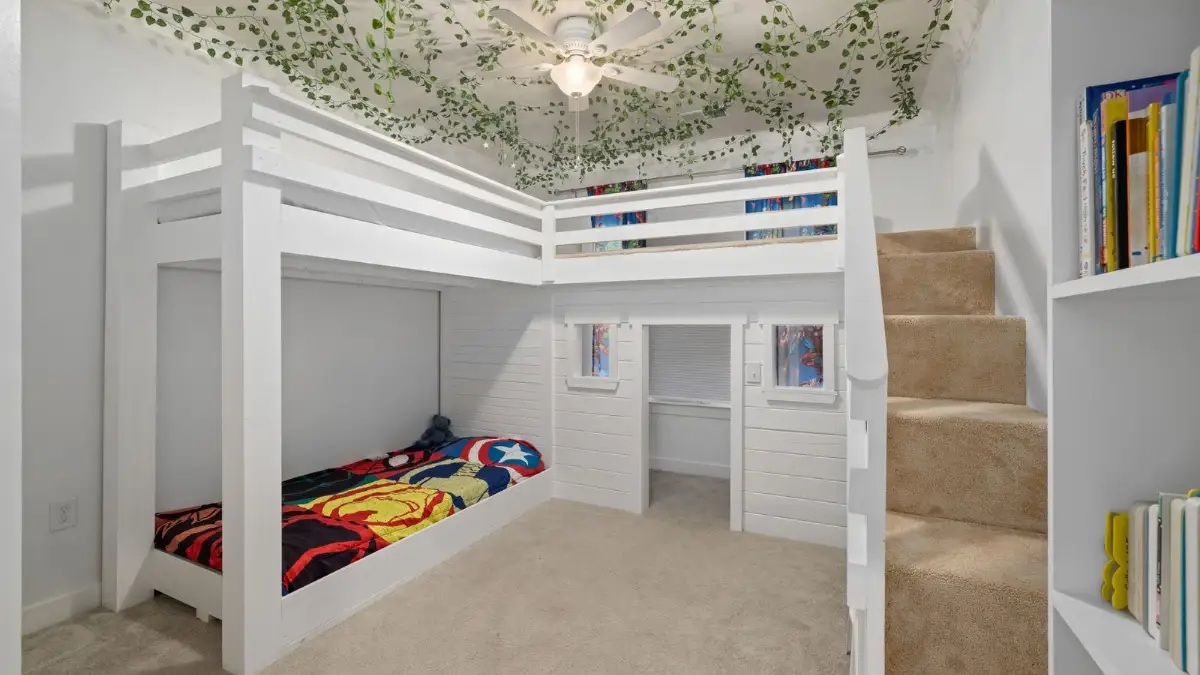
High loft: maximum space underneath (about 5 to 6 feet), so you can fit a desk and chair or a sofa. Needs high ceilings. Low loft (or mid-height): less space below, but better for low ceilings and younger kids. A bthinner mattress helps. See the kids bed guide. Loft with stairs: safer and easier to climb than ladders, and the stairs often hold storage drawers. Loft with slide: fun for kids but check age and safety.
Guardrails and Safety
Guardrails should run continuously on all four sides of the platform, according to one guide. A ladder opening is needed, but make sure the rest is closed. One brand’s guardrails are 14 inches tall, which suits most twin child mattresses. Confirm that your mattress profile fits safely under the rail. A thicker mattress can make guardrails less effective, so either check that the rails still provide enough protection or choose a frame with extensions. Choose a sturdy frame that meets industry standards, with a secure, stable ladder or stairs. See the triple bunk bed guide for the federal bunk bed rule, which covers related products. Check the weight capacity. Tighten bolts regularly. No roughhousing on the bed. Keep the area clear of cords and blinds. Add a night light.
Age Guidance
Loft beds are generally not recommended for children under about 6, given the climb and the need for ceiling clearance. That is retailer guidance, not an official limit. Always follow the manufacturer’s age label. For younger children, choose a low loft or a standard bed. See the kids bed guide.
For adults, check the weight rating. See the bunk beds for adults guide for notes on frame strength.
What to Put Under a Loft Bed
Desk and chair. A full frame’s extra width leaves more usable space below, and one guide ties under-bed clearance to whether a desk fits. See the kids desk, writing desk and small desk guides. Sofa, daybed or beanbags. A cozy lounge. See the bean bags guide. Dresser and closet. See the small dresser and kids dresser guides. Play area or reading nook. See the kids bookshelf guide. Storage bins. A mini studio or workspace in a dorm or small apartment.
Check that the height under the bed suits the furniture and that there is enough light.
Loft Bed vs Others
A retailer compares a loft bed with a captain’s bed for small rooms. In general: loft bed. Frees the most floor space; bunk bed. Two beds, less open space; captain’s bed. Storage drawers under the bed. See the storage bed guide; platform bed. Simple and low.
For small rooms, see the small bedroom ideas guide.
Mattresses
Key points: use the size the maker specifies; choose a thinner mattress (under about 10 inches) for headroom; use a protector. See the mattress cover guide; choose fitted sheets that fit. See the fitted sheet guide.
Assembly and Moving
Key points: loft beds are heavy and tall. Plan for two or more people; measure doors and stairs; check the assembly manual and the hardware; place on a level floor; tighten bolts after the first few weeks.
What are the main strengths and weaknesses?
On the plus side: saves floor space; creates usable space below; works in small rooms and dorms; fun for kids. On the downside: needs high ceilings; climbing in and out is harder; can be hot near the ceiling; making the bed is awkward; safety risks if poorly built or used.
How to Choose a Loft Bed
Measure the ceiling and check clearance of at least 30 inches above the mattress. Choose the size: twin, full or queen. Check the age guidance and weight rating. Check guardrails on all four sides. Choose ladder or stairs. Plan what goes underneath. Check the frame and warranty. Plan delivery and assembly. Read reviews for wobble.
What mistakes should you avoid?
A few common mistakes are worth avoiding: ignoring ceiling clearance; using a mattress that is too thick; putting a young child on a high loft; skipping the guardrails; not tightening bolts; placing it under a ceiling fan.
Frequently Asked Questions
How much ceiling clearance does a loft bed need?
One source says the CPSC recommends at least 30 inches between the top of the mattress and the ceiling. Check with the CPSC and the maker.
What size loft bed should I get?
Twin for younger kids and small rooms, full for older kids and teens, queen only for large rooms.
How old should a child be for a loft bed?
Retailer guidance says generally not under 6. Follow the manufacturer’s label.
Can adults use loft beds?
Yes, if the frame is rated for adult weight.
What can I put under a loft bed?
A desk, a sofa, a dresser, storage or a play area.
Are loft beds safe?
They can be if well built, assembled properly and used with attention to clearance and guardrails.
Conclusion
A loft bed turns vertical space into usable room. Measure your ceiling carefully, keep at least 30 inches of clearance above the mattress, check guardrails on all sides and follow age and weight guidance.
Plan what goes underneath, and tighten the hardware regularly. With the right loft bed, a small room can do much more.
Related guides
 Loft Bed: Types, Ceiling Height, Weight Limits and SafetyA loft bed lifts your mattress up high and gives you floor space underneath. That space can hold a desk, a…Read more →
 Queen Loft Bed Guide: Ceiling Height, Headroom, Dimensions and SafetyA queen loft bed lifts a queen mattress off the floor so you can use the space underneath. Most sources put the…Read more →
 Loft Bed with Stairs Guide: Stairs vs Ladder, Storage Steps, Dimensions and Ceiling HeightQuick answer: a loft bed with stairs replaces the ladder with wide, flat steps that often hide drawers.…Read more →
 Bed in a Bag: What’s Included, Sizes and How to Check QualityA bed in a bag is a full set of bedding sold as a single purchase. It usually includes a comforter, a fitted…Read more →