Loft Bed: Types, Ceiling Height, Weight Limits and Safety
A loft bed lifts your mattress up high and gives you floor space underneath. That space can hold a desk, a sofa, a play area or a closet. In a small bedroom, dorm or studio, a loft bed can make a room feel twice as big.
This article is part of our bed frame guide, where you can compare related options.
A loft bed is a raised bed that sits on tall legs or posts, with a ladder or stairs to climb up. It looks like the top half of a bunk bed with nothing below the mattress. Loft beds come in twin, full and queen sizes, with models for kids, teens and adults.
This guide explains the main types of loft beds, how much ceiling height you need, what weight limits to expect and which safety features matter most. You’ll also find a buying checklist and answers to common questions.

What types of loft beds are there?
Loft beds differ mainly by height and by what sits underneath. A low or junior loft is shorter and suits younger kids. The mattress sits lower, and the space below can hold a play tent or a small desk. One listing gives a 56-inch floor-to-mattress height for a standard loft, while junior models sit lower. A standard loft raises the mattress higher and leaves room for a desk or a sofa.
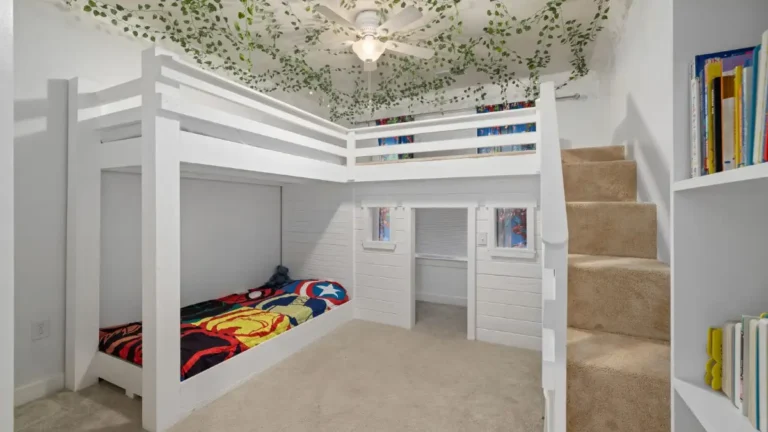
Other versions add features. A loft with a desk includes a built-in desk and shelves, which makes it popular for dorms and teen rooms. A loft with storage has drawers, cabinets or a closet underneath. An adult loft is built with a stronger frame and a higher weight rating, usually in metal, so it is not just a bigger kids’ bed. A loft with stairs swaps the ladder for steps, which are easier to climb and can hold storage but take more floor space. A convertible loft can change into a bunk or two separate beds.
| Type | Best for | Watch out for |
|---|---|---|
| Low loft | Younger kids | Lower weight rating |
| Standard loft | Teens, small rooms | Ceiling height |
| Loft with desk | Students, home offices | Desk size and weight |
| Adult loft | Adults, studios | Higher cost, ceiling height |
| Loft with stairs | Easy climbing | Takes more space |
How much ceiling height do you need for a loft bed?
Ceiling height is the biggest limit, because you’ll be sitting up on the bed, not just lying down. Product listings show minimum ceiling heights. One adult loft lists a minimum of about 97.86 inches, a bit over 8 feet. Another says 8 feet, and a taller model needs 10 feet.
A simple way to check is to take your ceiling height and subtract the platform height, the mattress thickness and your seated height. What remains is your headroom. If it’s tight, you may bump your head when you sit up. Low lofts are better for rooms with standard 8-foot ceilings. Fans and light fixtures can also get in the way, so check those too.
A Singapore-based guide suggests most adults need about 2.6 to 2.7 meters of ceiling height to feel comfortable, which is roughly 8.5 to 8.9 feet. Use this as a guide, and always compare it to the maker’s listed minimum.
What weight limit should a loft bed have?
Weight limits vary a lot. A bed’s limit is the combined weight of the sleeper, the mattress and the bedding. Some guides say twin lofts built for kids are rated around 150 to 200 pounds. Adult-rated lofts are often listed at about 250 to 500 pounds, and some commercial-grade models go higher. One guide says at least 250 to 300 pounds for a single adult sleeper, with 400 pounds or more recommended.
Metal frames are generally a better choice for adults than particleboard ones. Don’t use a children’s loft for an adult. Look for the official weight limit in the manual or on the maker’s site, and ask whether the rating is static, meaning a still load, or dynamic, meaning it includes climbing and movement. Don’t rely on a verbal promise from a salesperson.
Which safety features should you check?
Start with the guardrails. Rails on all open sides help prevent falls, and listed heights vary, with some products showing 12 inches and others 16 inches. A thick mattress reduces the rail’s effective height, so check the maker’s maximum mattress thickness. Next, look at the ladder or stairs. You want wide, non-slip steps that attach firmly to the frame, and stairs are often safer for younger kids.
Then check the frame itself. Inspect the joints, bolts and legs, because a bed that wobbles when you shake it is a warning sign. Some beds can be fixed to the wall for extra stability, and you should use the anchors if the maker includes them. Follow the maker’s recommended age for the top bed, since many safety groups advise against letting young children sleep in high beds. Bunk bed rules from the U.S. Consumer Product Safety Commission (CPSC) are written for bunks, not for adult lofts, but they are a good place to check basic safety ideas.
How do you choose a loft bed?
Begin by measuring the ceiling and comparing it with the maker’s minimum, and think about fans and lights. Then pick the size. Twin lofts are the most common, while full and queen sizes need more room and stronger frames. Make sure the weight rating suits the sleeper, and decide on the material: metal for adults and strength, solid wood for a warm look.
Next, decide what goes underneath, whether it’s a desk, a sofa, a closet or storage. Confirm the mattress size and its maximum thickness. Think about whether the user will be comfortable with a ladder or steps every night. Finally, plan the assembly. Lofts are heavy and take time to build, so plan for two people.
What are the limits of a loft bed?
Loft beds save floor space, give you a place for a desk or a sofa and make small rooms feel bigger. Many have storage built in, and they look neat in a kid’s room. The limits are real, though. Ceiling height decides whether one fits at all, and making the bed is harder at height. Climbing at night can be a problem for some people, and the top bed can feel warmer because heat rises. Moving or reassembling a loft takes work, so think about how long you will keep it in one place.
What tips make a loft bed safer and easier to live with?
Use a light, well-fitting mattress so the rail stays tall, and keep the area around the ladder clear. A small night light helps with safe climbing. Tighten the bolts every few months, since movement can loosen them. Don’t let people jump or play roughly on the top bed. If you rent or live in a dorm, check the rules first, because some places restrict lofts or ask you to use approved models.
Frequently Asked Questions
How high should the ceiling be for a loft bed?
It depends on the bed. Product listings range from about 8 feet to 10 feet. Subtract the platform height, the mattress thickness and your seated height to see your headroom.
How much weight can a loft bed hold?
Kids’ lofts are often rated around 150 to 200 pounds. Adult lofts are often rated about 250 to 500 pounds. Check the model’s official rating.
Are loft beds safe for adults?
They can be, if you choose an adult-rated frame with a high weight limit and guardrails. Metal frames are commonly recommended. Don’t use a children’s loft for an adult.
What size mattress does a loft bed use?
Most use a twin mattress, which is about 38 by 75 inches. Full, queen and twin XL options also exist.
Can I use a thick mattress on a loft bed?
Be careful. A thick mattress reduces the effective height of the guardrails. Check the maker’s maximum mattress thickness.
Are loft beds good for small rooms?
Yes. They free up floor space for a desk, couch or storage. Make sure your ceiling is high enough.
Conclusion
A loft bed is a smart way to get more from a small room, as long as it fits your ceiling and your needs. Check the minimum ceiling height, pick a frame with the right weight rating and look for strong guardrails and a safe way to climb.
Read the maker’s safety guidance, and use an adult-rated frame for adults. With the right loft, you can turn the floor under your bed into a desk, a lounge or a play area.
Related guides
 Loft Beds Guide: Sizes, Ceiling Clearance, Guardrails, Age Limits and Space-Saving LayoutsA loft bed lifts the mattress high off the floor and leaves the space underneath free. That space can hold a…Read more →
 Queen Loft Bed Guide: Ceiling Height, Headroom, Dimensions and SafetyA queen loft bed lifts a queen mattress off the floor so you can use the space underneath. Most sources put the…Read more →
 Loft Bed with Stairs Guide: Stairs vs Ladder, Storage Steps, Dimensions and Ceiling HeightQuick answer: a loft bed with stairs replaces the ladder with wide, flat steps that often hide drawers.…Read more →
 Bed in a Bag: What’s Included, Sizes and How to Check QualityA bed in a bag is a full set of bedding sold as a single purchase. It usually includes a comforter, a fitted…Read more →