Bunk Beds for Adults: Weight Ratings, Frames, Guardrails, Slats and Safety Checks
Adults share bedrooms more often than people think: college roommates, hostels, cabins, vacation homes, military quarters, tiny apartments and families doing everything to save space. A bunk bed can double the beds in a room. But an adult bunk bed has to carry much more weight than a kids’ bunk, and not every bunk bed is made for adults.
This article is part of our bed frame guide, where you can compare related options.
Bunk beds for adults are heavy-duty bunk frames rated for adult weights, with strong metal or wood construction, tight slat spacing, solid guardrails and a safe ladder. This guide explains what to check: weight ratings per bunk, frame materials, slats, guardrails, ladders, layouts, mattresses and installation. The search results were mostly low-quality keyword-stuffed pages, and I found no authoritative adult-bunk standard, such as a CPSC or ASTM document. The numbers here are rough guidance from retail and blog pages. Always confirm the weight ratings, rail heights and slat spacing directly with the manufacturer before buying. This is not safety certification advice.

Why Adults Need Different Bunk Beds
A kids’ bunk bed may be rated for 150 to 250 pounds per bunk. Adults weigh more, move more and sit up on the top bunk. A weak frame can wobble, squeak or fail. On a few basics: Each bunk should carry a published capacity, and the manufacturer’s label governs. Top bunk use by adults is allowed only on frames rated for adult weight, and adult use of the top bunk usually calls for heavy-duty construction.
Weight Ratings
One page suggests adult frames often handle roughly 250 to 600 pounds on the top bunk. Another puts the minimum for adults at 400 pounds per bunk, with 500 or more pounds better for heavier adults.
Tips: check the rating for each bunk, not only the total; add the mattress weight. Thick mattresses add 50 to 100 pounds or more; leave a safety margin; consider dynamic loads. Climbing and sitting up add force; don’t trust vague claims. Ask for documented ratings.
Frame Materials
Metal frames: one source advises a metal frame and support slats strong enough for two adults. Another flags thin metal tubing under 1.5 inches in diameter as structurally weak. Look for thick steel tubing, welded joints and a powder-coated finish. Wood frames: solid hardwood is strong. Pine is softer. Engineered wood should be thick and well made. See the wood bed frame guide. Hybrid frames: metal posts with wooden slats.
Check joints, bolts and braces. Cross bracing prevents wobble.
Slats
Slat spacing over 3 inches can cause sagging, according to one source. This also affects some mattress warranties. See the wood bed frame guide. Slats should be thick and sturdy, with a center support if wide. Metal slat bars are strong, but may be noisy. A solid deck can support foam mattresses.
Guardrails
One page notes that beds with mattress foundations more than 30 inches above the floor need guardrails on both sides. Another gives a minimum of guardrails at least 5 inches above the mattress. I could not confirm these against an official standard.
For safety: choose a mattress thickness the maker allows. A thicker mattress reduces the effective guardrail height; check that guardrails are continuous and securely attached; do not remove guardrails; check gaps for entrapment.
See the triple bunk bed and kids bed guides for the federal bunk bed rule for non-institutional use and notes on entrapment. That rule is the CPSC’s, and its details are in those guides.
Ladder
Warnings include ladder rungs more than 3.5 inches apart, which can let feet slip through.
Key points: wide, flat rungs are more comfortable; angled ladders are easier to climb than vertical ones; stairs with storage are safer but take space; secure attachment to the frame; non-slip surfaces; a night light for the ladder.
Layouts
Twin XL over full and full over queen layouts appear in several product-style pages. The results did not give clearance dimensions or ceiling-height guidance.
Key points: twin over twin. The most common; twin XL over twin XL. Better for tall adults. See the twin vs twin XL guide; twin over full. The bottom bunk is wider; full over full. Bigger, heavier; full over queen. For couples on the bottom; l-shaped bunk. Lower height; loft bed. One bed on top with a desk or couch below; bunk with trundle. A third bed. See the daybed with trundle guide.
Ceiling and Room Clearance (General Knowledge)
Measure the ceiling height and the bed height. Leave enough space above the top bunk to sit up without hitting the ceiling or a fan. Many makers recommend a minimum. Avoid ceiling fans, lights and sprinklers. Leave room for the ladder and for getting in and out. Place on a level floor.
Mattresses
Use the size the maker specifies. Choose a thickness that keeps guardrails effective. Thin, firm mattresses are lighter. Foam is common. See the how to choose a mattress guide. Use mattress protectors. See the mattress cover guide. Check bedding. Fitted sheets for thin or twin XL mattresses. See the fitted sheet guide.
Comfort and Privacy
Bottom bunk may feel dark and cramped. Add lights. Top bunk can be warm. Use a fan and breathable bedding. See the best cooling sheets guide. Noise. Movement can be felt. A sturdy frame helps. Privacy. Curtains can hang from the frame. Storage. Shelves, hooks and under-bed storage.
Setup and Care
Key points: read the manual and use all hardware; assemble with two or more people; tighten bolts regularly; check welds and joints for cracks; don’t jump or roughhouse; don’t hang items from rails; replace damaged parts with the maker’s parts.
Who Uses Adult Bunk Beds?
Key points: college roommates and dorms; cabins, hostels and vacation homes; small apartments; shared rooms in a family home; military and institutional settings. (Institutional beds may have different rules.).
What are the main strengths and weaknesses?
On the plus side: doubles sleeping space; saves floor area; can be affordable; works in cabins and shared rooms. On the downside: top bunk can be hard to climb; less privacy; heavy and hard to move; higher risk of falls; quality varies, especially on weight ratings.
How to Choose Bunk Beds for Adults
Check per-bunk weight ratings with margin. Choose a strong frame: thick metal tubing or hardwood. Check slats and spacing of 3 inches or less. Check guardrails and mattress thickness. Check ladder rung spacing and attachment. Choose a layout for your room and ceiling. Confirm all specs with the manufacturer. Read reviews for wobble. Check the warranty.
What mistakes should you avoid?
A few common mistakes are worth avoiding: using a kids’ bunk bed for adults; ignoring per-bunk ratings; choosing thin metal tubing; wide slat spacing; not tightening bolts; ignoring ceiling clearance.
Frequently Asked Questions
Can adults sleep on a bunk bed?
Yes, on a bunk bed rated for adult weight. Check each bunk’s capacity.
How much weight should an adult bunk hold?
One page suggests at least 400 pounds per bunk, with 500 or more better for heavier adults. Confirm with the maker.
What type of frame is best?
A heavy-duty metal or hardwood frame, with thick tubing and strong joints.
How high should guardrails be?
One source says at least 5 inches above the mattress. Verify with the maker and safety rules.
What is twin XL over full?
A layout with a twin XL top bunk and a full bottom bunk.
Are adult bunk beds safe?
They can be if well built, correctly assembled and used within ratings.
Conclusion
Bunk beds for adults must be built stronger than kids’ bunks. Check weight ratings per bunk, choose a sturdy frame, look for tight slat spacing, solid guardrails and a safe ladder, and confirm every spec with the manufacturer.
Assemble it carefully, tighten the hardware often and respect the limits. With the right bed, two adults can share a room safely.
Related guides
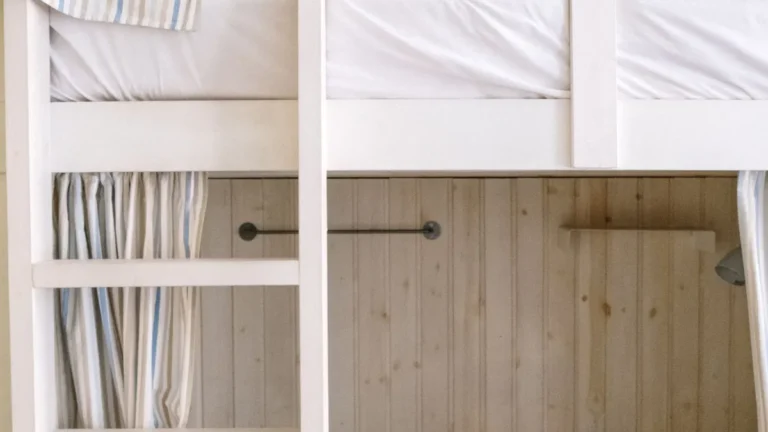 Bunk Beds: Types, Safety Rules and How to Choose the Right OneBunk beds save floor space and give kids a fun place to sleep. They re a classic choice for shared rooms,…Read more →
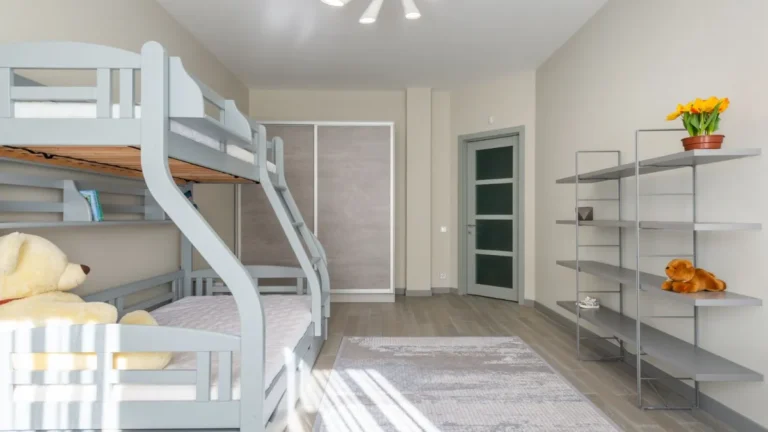 Triple Bunk Bed Guide: Safety Rules, Layouts, Guardrails, Ceiling Height and Who It SuitsA triple bunk bed sleeps three people in the space of about one. It is popular in shared kids rooms, vacation…Read more →
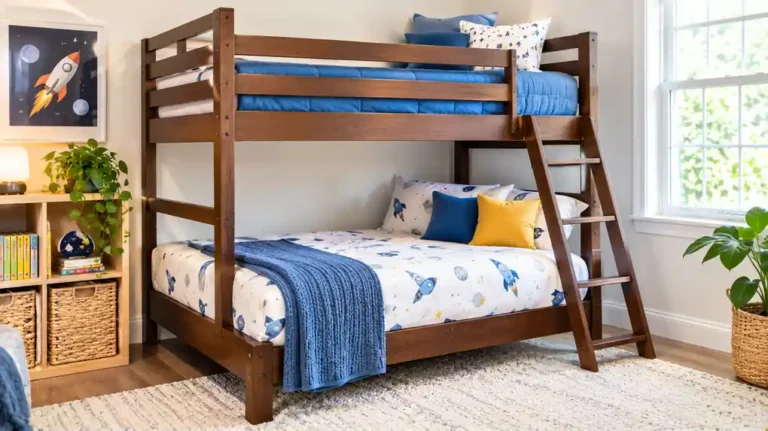 Twin Over Full Bunk Bed Guide: Dimensions, Weight Limits, Guardrails and Safety ChecksQuick answer: a twin over full bunk bed has a twin mattress (38 by 75 inches) on top and a wider full mattress…Read more →
 Bed in a Bag: What’s Included, Sizes and How to Check QualityA bed in a bag is a full set of bedding sold as a single purchase. It usually includes a comforter, a fitted…Read more →