
Sofa Bed Couch Guide: Mechanisms, Mattress Types, Sizes and How to Choose
A sofa bed couch is a sofa by day and a bed at night. It is a smart choice for guest rooms, studio apartments and home offices where a full bed would take over the room. The catch is that many sofa beds are good at one job and poor at the other. Some are comfortable to sit on and awful to sleep on. Others make a decent bed but feel like a plank as a sofa. A little knowledge helps you find one that does both well.
This article is part of our sofa and couch buying guide, where you can compare related options.
A sofa bed, also called a sleeper sofa, has a frame and mattress hidden inside or folding out from the seat. This guide explains the main mechanisms, the mattress types, the sizes, how to test one in a store, how to care for it and how to choose. Many search results for this topic were spam pages, so I relied on retailer and magazine guides and kept the advice general.
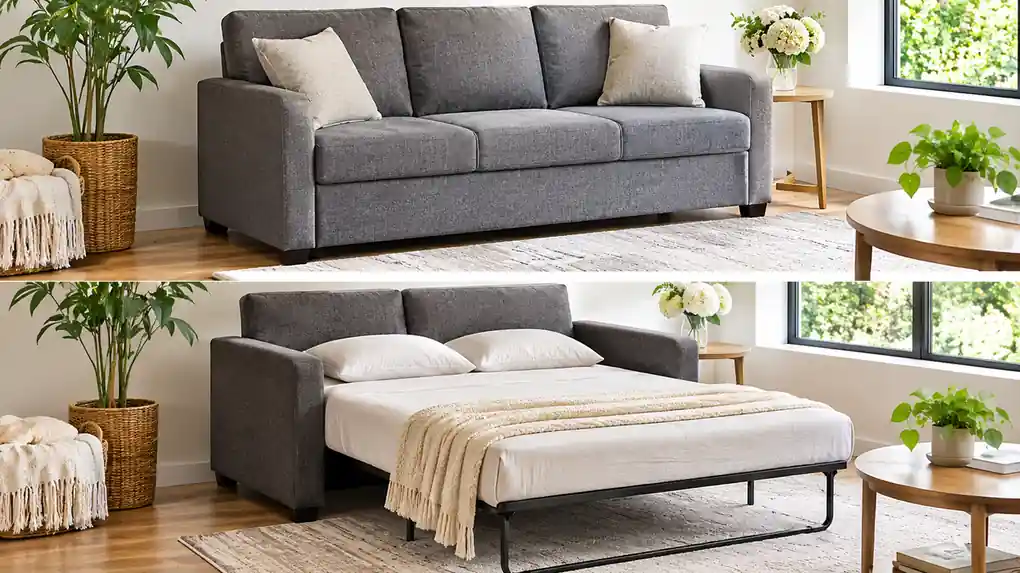
How Sofa Beds Work: The Main Mechanisms
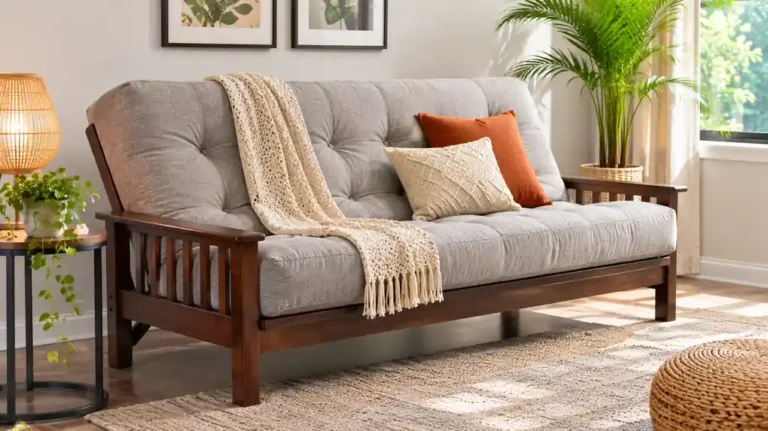
Pull-out (fold-out) sofa bed: the classic design. You remove the seat cushions, pull a handle and a folded mattress on a metal frame unfolds out of the sofa. It gives you a real mattress, but it is heavy and can be tough to open in a small room. Click-clack: the backrest tilts down flat to form the bed surface, using the seat and back cushions as the mattress. It clicks into positions: sitting, reclined and flat. It is simple and good for occasional use. Platform sofa bed: the seat slides forward, or the frame lifts up to make a flat platform. Often has a real mattress and sleeps well. Futon-style: the seat cushion itself is the bed. Cheap and simple, but usually less comfortable. See the futon mattress guide. Daybed with trundle: not a sofa bed in the strict sense, but a useful alternative. See the daybed with trundle guide.
Measure your room for both modes. One guide suggests measuring for opening and closing the bed as well as walking space around it. A pull-out needs a lot of floor space in front of the sofa.
| Mechanism | Comfort as a bed | Ease of use | Notes |
|---|---|---|---|
| Pull-out | Good with a quality mattress | Heavy to open | Needs floor space |
| Click-clack | Fair | Easy | Occasional use |
| Platform | Good | Medium | Often higher cost |
| Futon-style | Basic | Easy | Cheapest |
Mattress Types
The mattress is what turns a sofa bed from a joke into a real bed.
Innerspring. The traditional choice and generally budget-friendly. Springs can be felt through thin mattresses. Foam, including memory foam. Common in modern sleepers. Softer and quieter, with less pressure on the back. Hybrid. A mix of foam and springs, for support and comfort. Futon cushions. The cheapest, usually less comfortable. Air mattress. Some sofa beds use an inflatable mattress. One source ranks it as the least comfortable option, and it can leak.
One Q&A-style source says a mattress of about 6 inches or thicker generally feels better, and a sturdy frame helps prevent sagging. Thickness is limited by the fold, so most sofa bed mattresses are thinner than a regular mattress. A mattress topper can help. See the mattress topper guide.
Sizes
Twin and queen are the most common sofa bed sizes, with full and king less common. A twin suits small rooms and solo guests. A queen suits larger rooms and couples. Sleeper mattress dimensions can differ slightly from standard mattress sizes, so check the listed dimensions and the length. Tall guests need to check that the bed is long enough.
| Size | Best for |
|---|---|
| Twin | Small rooms, solo guests |
| Full | Compact couples |
| Queen | Larger rooms, couples |
If you buy bedding, make sure fitted sheets match the mattress thickness, which is often thinner than a standard mattress.
How Often Will You Use It?
Decide this before you buy.
Occasional guests (a few nights a year). A click-clack or basic pull-out is probably enough. Regular guests (many nights a year). Choose a better mattress, such as memory foam or a good hybrid, and a sturdy frame. Daily sleeping. One guide notes that frequent use calls for more durable, comfortable mattresses. A quality platform or a real bed may be a better choice.
How to Test a Sofa Bed
If you can visit a showroom:
- Sit on it. Check seat depth, height and support. Is it comfortable for long sitting?
- Open it. Is the mechanism smooth, or does it stick? Can one person do it?
- Lie on it. Stay a few minutes. Can you feel bars or springs?
- Check the length for the tallest guest.
- Look at the frame. Metal frames should be sturdy, with no loose welds.
- Check the cover. Is it removable and washable?
- Ask about the warranty on the frame and mattress.
If you are buying online, read reviews carefully and check the return policy, because comfort is hard to judge from a photo.
Space Planning
Before buying, measure: the room’s length and width; the sofa’s depth when closed; the bed’s length when open; the walking space beside and at the foot of the bed; the path to the room (doors, halls, stairs).
Tape the open bed on the floor to see if it blocks a door or other furniture. In a small room, a sofa bed that opens into a path may not be practical. A sleeper chair can work for one guest in a tight space. See the sleeper chair guide.
Care and Maintenance
Key points: open and close the mechanism gently; do not stand or jump on the bed frame; vacuum the sofa and mattress; use a mattress protector. See the mattress protector guide; rotate or flip cushions where possible; wash covers according to the label; keep pets’ claws away from the fabric; check bolts and screws now and then; keep bedding in a nearby closet or storage ottoman. See the storage ottoman guide.
What are the main strengths and weaknesses?
On the plus side: saves space compared with a separate guest bed; gives you seating and sleeping in one piece; good for small homes and home offices. On the downside: mattresses are usually thinner than regular beds; mechanisms add weight and can break; can be expensive for a good one; needs floor space to open.
How to Choose a Sofa Bed Couch
Decide how often it will be used for sleeping. Measure the room, doorways and open-bed space. Choose a mechanism: pull-out, click-clack, platform. Pick a mattress type and thickness. Test it in a showroom if you can. Check the frame and warranty. Choose a fabric that suits your household. Set a budget first, since prices vary widely. Read reviews for notes on comfort and durability.
What mistakes should you avoid?
A few common mistakes are worth avoiding: buying for looks only (comfort in both modes matters); not measuring the opened size; choosing a thin mattress for regular sleeping; skipping the mechanism test; ignoring the delivery path; forgetting to plan bedding storage.
Frequently Asked Questions
What size sofa bed do I need?
Twin for small rooms, queen for larger rooms and couples.
Are sofa beds comfortable?
It depends on the mattress and frame. Foam or good innerspring beds are better than futon cushions or air mattresses.
How thick should the mattress be?
About 6 inches or more feels better, according to one source.
Can I sleep on a sofa bed every night?
Possible with a high-quality model, but most are designed for occasional use.
What mechanism is best?
Pull-out for a bed-like feel, click-clack for simplicity, platform for comfort.
How do I make a sofa bed more comfortable?
Add a mattress topper, use good bedding and check the support underneath.
Conclusion
A good sofa bed couch balances sitting comfort, sleeping comfort and space. Think about how often you will use it for sleeping, measure the room for both modes and test the mechanism and mattress.
Spend a little more for a better mattress and frame if guests stay often. With the right choice, you get a comfortable sofa every day and a real bed when you need one.
Related guides
 Futon Sofa Bed Guide: Mattress Thickness, Frame Types, Sizes and Comfort TipsQuick answer: a futon sofa bed is a frame with a folding mattress that works as a couch by day and a bed at…Read more →
 Fainting Couch: What It Is, Real History, Myths and How to Use One TodayA fainting couch is a long, narrow couch with a raised end, made for reclining with the legs up. It was popular…Read more →
 Deep Couch: Seat Depth (23-27+ Inches), Who It Suits and How to ChooseA deep couch has a seat that measures about 23 inches or more from front to back. One retailer guide puts…Read more →
 Couch Table Guide: Sofa Table Height, Width, Depth and Walkway SpaceWhen people search for a couch table, they often mean one of two things: a narrow table that sits behind the…Read more →



One Comment