Futon Sofa Bed Guide: Mattress Thickness, Frame Types, Sizes and Comfort Tips
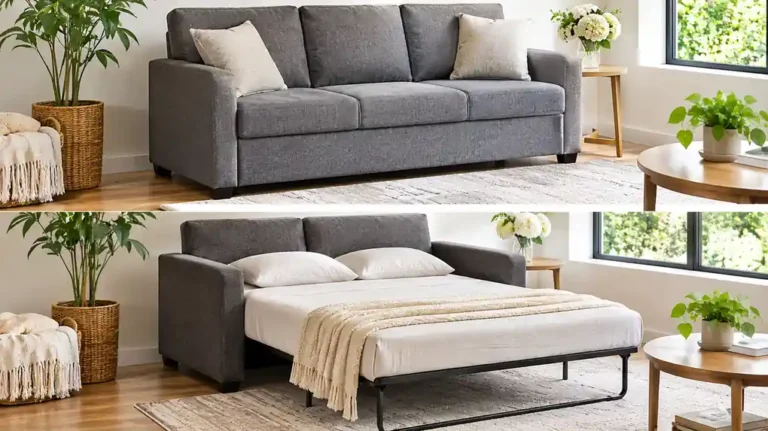
Quick answer: a futon sofa bed is a frame with a folding mattress that works as a couch by day and a bed at night. For regular use, choose a mattress about 6 to 8 inches thick or more, a sturdy wood or metal frame and a size you measure yourself, because futon sizes vary by maker. Test the mattress, since a thin one lets you feel the frame.
This article is part of our sofa and couch buying guide, where you can compare related options.
A futon sofa bed is a practical answer for small apartments, dorm rooms, guest rooms and home offices. It takes the space of one piece of furniture and gives you two uses. But a bad futon is uncomfortable both as a couch and as a bed. The secret is in the mattress and the frame. This guide explains frame types, mattress thickness and fill, sizes, how to choose between wood and metal, how to care for a futon and what to check before buying. Thickness numbers conflict, so I give ranges. This is a Western-style futon, not the Japanese floor mattress covered in another guide.

What Is a Futon Sofa Bed?
A futon sofa bed has two parts: The frame. Folds from a sofa position into a bed. The mattress. A thick, foldable mattress, often filled with foam, cotton, innerspring coils or a blend.
It differs from a sofa bed with a hidden pull-out mattress. A futon’s mattress stays on the frame all the time, so it must be comfortable to sit on and sleep on. See the japanese floor mattress guide for the traditional floor-bedding version.
Frame Types
Cymax explains the common options: Standard bi-fold frame. Takes a bi-fold mattress and folds in half. The most common. Loveseat frame. Takes a two-piece mattress in twin or double sizes, and is smaller. Tri-fold and other designs. Fold into three parts for narrow spaces. Bunk and futon combos. Rare.
Frames are typically wood (often oak or pine) or metal, since they must hold the mattress and the folding mechanism.
| Frame | Pros | Cons |
|---|---|---|
| Wood | Warm look, sturdy | Heavy, pricier |
| Metal | Light, slim | Can look plain, may squeak |
| Wood with arms | Looks like a sofa | Takes more space |
Check the mechanism. It should move smoothly, lock in sitting and sleeping positions and stay stable when you sit.
Mattress Thickness
One retailer guide suggests 6 to 8 inches or more for daily use, which helps prevent bottoming out. Another recommends at least 6 inches if you will use it as a regular bed. A third table lists 8 to 10 inches for a primary sleeping bed.
For a guest bed, a 6-inch mattress may do. For daily sleeping, aim for 8 inches or more if the frame can fold it. A thicker mattress is more comfortable but harder to fold and may not suit all frames. Check the maximum thickness the frame supports.
Mattress Fill
Futon mattresses vary.
Cotton and cotton blends. Firm, traditional and can compress over time. Foam. Soft or firm, light and common. Memory foam. Contouring. See the best memory foam mattress guide. Innerspring and hybrid. One source suggests hybrid mattresses that combine foam and innerspring as another option. Coils add support and bounce. Wool and latex blends.
Cheap mattresses can be thin enough that you feel the frame beneath, per one guide. Test in a store if you can, or read reviews if buying online, as recommended by Puffy.
Sizes
Futon sizes are named after standard mattress sizes, but the actual dimensions often differ, and frames vary more between manufacturers than bed frames do. So measure before buying.
Common sizes: twin, full (double) and queen. For standard mattress sizes, see the twin mattress dimensions, full size bed dimensions in feet and king vs queen guides. A futon’s sofa form uses less width than its bed form uses length. Check two measurements:
- Sofa size. Width and depth when folded.
- Bed size. The length it takes when opened.
Leave room to unfold the frame without hitting walls or furniture.
Using a Futon as a Couch
Choose a firm enough mattress to sit on without sinking. Add cushions and pillows for back support. See the decorative pillows guide. Check the seat height, around 16 to 19 inches in comfortable chairs (general guideline). Consider arms for support. Rotate the mattress to even out wear.
Using a Futon as a Bed
Add a mattress topper if needed. See the mattress topper guide. Use fitted sheets sized for the thickness. See the fitted sheet guide. Use a mattress protector. Check that the frame supports weight and has slats or a solid platform. Expect a guest-bed feel, not a premium mattress feel.
Weight Capacity
I found no reliable weight capacity numbers for futons in this search. Check the maker’s specs, and consider the weight of two adults sitting or sleeping.
Care
Key points: rotate and flip the mattress regularly if the maker allows; fluff cotton mattresses; vacuum the surface; use a washable cover. Removable covers make cleaning easier; tighten bolts on the frame twice a year; keep the mattress dry. See the japanese floor mattress guide for mold prevention.
What are the main strengths and weaknesses?
On the plus side: two uses in one piece; space-saving; affordable; easy to convert. On the downside: comfort varies; thin mattresses feel the frame; mattress can wear fast; frames can squeak or loosen; heavy to move.
Futon vs Sofa Bed vs Daybed
| Feature | Futon | Sofa bed | Daybed |
|---|---|---|---|
| Mattress | On frame all the time | Hidden pull-out | Twin mattress on frame |
| Conversion | Fold flat | Pull out | None |
| Space | Compact | Bulky | Long |
| Comfort | Varies | Often thin | Often better |
See the day beds guide for daybeds.
How to Choose a Futon Sofa Bed
Decide how often you will sleep on it. Measure the room for the sofa and bed positions. Choose the frame type and material. Choose the mattress thickness: 6 to 8 inches or more. Choose the fill and firmness. Check the maximum thickness the frame supports. Check the mechanism and construction. Check the warranty and return policy. Test it in person, or read reviews. Plan cover and bedding.
What mistakes should you avoid?
A few common mistakes are worth avoiding: buying a thin mattress for daily sleeping; assuming size names match standard sizes; not leaving space to unfold; picking a weak frame; forgetting a topper or protector; skipping the trial.
Further reading: the Sleep Foundation mattress information hub.
Frequently Asked Questions
How thick should a futon mattress be?
6 to 8 inches or more for daily use, per one guide. Some suggest 8 to 10 inches for a primary bed.
What is the difference between a futon and a sofa bed?
A futon’s mattress stays on the frame, while a sofa bed hides a pull-out mattress.
Are futon sizes standard?
They are named after standard sizes, but actual dimensions vary by maker. Measure.
Wood or metal frame?
Wood is sturdy and warm. Metal is light and slim.
Can I sleep on a futon every night?
Many people do with a good mattress. Choose a thicker one and ask a doctor if you have back concerns.
How do I make a futon more comfortable?
Add a topper, choose a thicker mattress or try a hybrid.
Conclusion
A futon sofa bed works when the frame is sturdy and the mattress is thick enough. Aim for 6 to 8 inches or more, check the maker’s sizes, test the mechanism and plan for care.
If comfort matters most, invest in a better mattress. Then your futon can be a couch and a bed you enjoy.
Related guides
 Futon Bed: What It Is, Futon vs Sofa Bed, Sizes and Mattress TipsA futon bed is a sofa by day and a bed at night, and it does the change in one simple move. It s a classic choiceRead more →
 Sofa Bed Couch Guide: Mechanisms, Mattress Types, Sizes and How to ChooseA sofa bed couch is a sofa by day and a bed at night. It is a smart choice for guest rooms, studio apartments…Read more →
 Sofa with Chaise: Left vs Right Facing, Measuring and What to CheckA sofa with a chaise is a sofa with one extended seat where you can stretch out your legs. Left-facing and…Read more →
 Adjustable Bed Guide: Features, Zero Gravity, Mattress Compatibility, Split King and CostAn adjustable bed lets you raise the head, the feet or both at the push of a button. Some people use it for…Read more →