Display Cabinet Guide: Types, Glass, Lighting, Safety and Styling
A display cabinet is where you show off the things you love and keep dust off them at the same time. People use them for dishes, glassware, figurines, trophies, model cars, books, souvenirs and family keepsakes. A good one protects your items, looks nice in the room and fits the space. A poor one wobbles, shows every fingerprint or tips over when someone opens a door.
This article is part of our shelves, bookcases and storage furniture guide, where you can compare related options.
A display cabinet is a cabinet with glass doors, glass sides or both, so you can see what is inside. This guide explains the main types, how to choose glass and lighting, how to keep a tall cabinet safe, where to place it and how to style the shelves. I wrote it from general knowledge, so verify sizes and safety details against the product you plan to buy.
Types of Display Cabinets
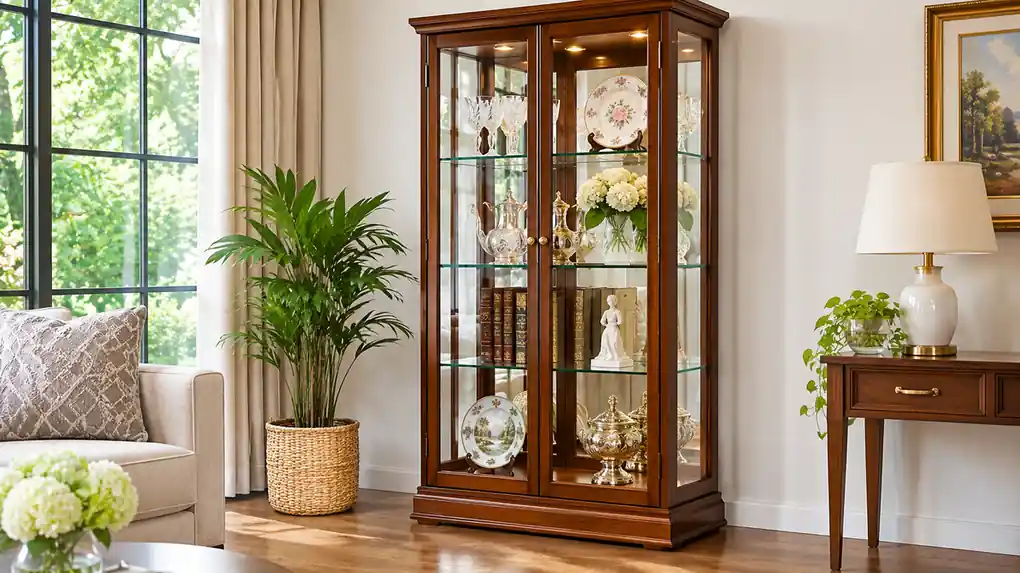
Curio cabinet: a tall, classic cabinet with glass sides and a glass door. It often stands on short legs and has several glass shelves. Great for small collectibles and figurines. Glass-door cabinet: a cabinet with a glass front and sometimes wood or solid sides. More versatile for mixed items. China cabinet or hutch: a larger cabinet for dishes, often with storage drawers or cupboards below. Common in dining rooms. Wall-mounted display case: saves floor space and suits lightweight collections. Needs secure mounting into studs. Shadow box: a shallow frame for small items such as medals, pins or miniatures. Arched display cabinet: adds a curved top for a softer look. See the arched bookcase guide. Tabletop display case: a small case for tiny collectibles. Bar or liquor display cabinet: made to show bottles and glasses. Trophy or sports case: built for awards, jerseys and memorabilia.
| Type | Best for | Note |
|---|---|---|
| Curio | Figurines, keepsakes | Tall, needs anchoring |
| Glass-door | Mixed items | Versatile |
| China cabinet | Dishes | Large |
| Wall-mounted | Light items | Needs secure mounting |
| Shadow box | Small items | Shallow |
Choosing the Right Glass
Glass is the heart of a display cabinet.
Tempered glass. Stronger than ordinary glass and breaks into small pieces. It is the safer choice, especially if children are around. Clear glass. Shows everything. Shows fingerprints and dust too. Low-iron glass. Clearer, with less green tint. Often more costly. Mirrored backs. Reflect light and make items look fuller. They also let you see the back of objects. Glass shelves. Let light pass through. Check the weight rating, because heavy items can crack thin glass. Wood shelves. Sturdier and warmer in look, but block light. Frosted or patterned glass. Hides clutter but also hides items.
If you display heavy items like dishes or books, choose thicker glass or wood shelves. Check the weight limit per shelf in the product details.
Lighting
Good lighting makes a collection stand out.
LED strip or puck lights give off little heat, so they are safe for most items. Warm or neutral white works for most displays. Cool white can look harsh. Top lighting shines down through glass shelves and lights everything. Side lighting reduces shadows. Dimmers let you adjust the mood. Battery or plug-in options. Plug-in is more reliable, but you need an outlet.
Keep lights away from fabrics, paper and photos that can fade. UV light can damage some items, so choose LED lights with low UV output for sensitive collections.
Safety and Stability
Tall cabinets with glass can be dangerous if they tip.
Anchor the cabinet to a wall stud with the hardware that comes with it. This is especially important in homes with children, pets or earthquakes. See the arched bookcase guide for anchoring steps. Put heavy items on the lowest shelves. Do not overload the glass shelves. Check the rating. Use a lock if children or guests might open the doors. Check hinges and glass edges. Look for smooth edges and safe hinges. Place the cabinet where doors can swing open safely. Choose tempered glass where possible.
Never let children climb on a cabinet. A tall cabinet can tip with very little force.
Where to Put a Display Cabinet
Key points: living room. Beside a sofa, along a wall or next to a fireplace; dining room. For dishes and glassware; hallway or entry. A slim cabinet fits narrow spaces; home office or den. For books, awards and collectibles; bedroom. For perfumes, jewelry or a small collection; kitchen. For decorative dishes.
Avoid direct sunlight, which can fade items and heat glass. Avoid damp areas such as bathrooms. Keep the cabinet away from heat sources and vents. Leave space for the doors to open and for people to walk by.
How to Style a Display Cabinet
Group by theme, color or size. A cabinet of blue and white china looks tidy. Put large items low and small items high. A heavy base looks stable. Use risers or small stands to add height and depth. Leave empty space so the cabinet does not look cluttered. Rotate items by season or mood. Add a plant or a candle if the cabinet is open or has a door that opens. Use labels or small cards for collections you want to explain. Keep the back clean and consider a colored or mirrored backing. Dust regularly. A little dusting keeps the glass sparkling.
Cleaning and Care
Key points: clean glass with a soft cloth and a gentle glass cleaner. Spray the cloth, not the glass, to avoid drips into the cabinet; dust wood with a microfiber cloth; wipe mirrored backs gently; remove items before cleaning shelves; check hinges and screws now and then; use felt pads under objects to protect shelves.
How to Choose a Display Cabinet
Decide what you will display. Measure the space, including ceiling height and door swing. Check the delivery path. Choose the type: curio, glass-door, china cabinet or wall-mounted. Check the glass type and shelf strength. Look at lighting, or plan to add it. Plan wall anchoring. Match the finish to your furniture. Check the warranty and reviews.
What mistakes should you avoid?
A few common mistakes are worth avoiding: skipping the wall anchor (a tall cabinet can tip); overloading glass shelves; placing it in direct sun (items fade); buying without measuring the doorway; forgetting about lighting; choosing thin glass for heavy items.
Frequently Asked Questions
What is a display cabinet used for?
To show and protect collections, dishes and keepsakes.
Should I choose glass or wood shelves?
Glass shows more but can show smudges and has weight limits. Wood is warmer and often sturdier.
Do display cabinets need lights?
No, but LED lights make items stand out.
How do I stop a tall cabinet from tipping?
Anchor it to a wall stud.
How do I clean the glass?
Use a soft cloth and a gentle glass cleaner.
What is the difference between a curio cabinet and a china cabinet?
A curio cabinet is tall with glass sides, for small collectibles. A china cabinet is larger and holds dishes, often with storage below.
Can I hang a display cabinet on the wall?
Yes, if it is designed for it and mounted into studs.
Conclusion
A display cabinet protects and presents what matters to you. Choose a type that fits your collection and space, check the glass and shelf strength, anchor tall units and use lighting and simple styling.
A little planning makes the cabinet a feature of the room, and your treasures will look great for years.
Related guides
 Glass Cabinet: Tempered vs Regular Glass, Thickness, Safety and Wall AnchoringTempered or laminated glass is the safer choice for a glass cabinet, especially in a home with children.…Read more →
 Accent Cabinet Guide: Uses, Sizes, Doors, Placement and Styling for Entryway and Living RoomAn accent cabinet is the quiet workhorse of a home. It stores things you do not want to see, shows things you…Read more →
 Floating Wall Shelves: Weight Capacity, Studs, Brackets and InstallationA floating shelf hides its brackets, so it looks like it s hovering on the wall. How much it can hold depends…Read more →
 TV Cabinet Guide: Sizing to Your TV, Cable Management, Ventilation, Doors and HeightA TV cabinet holds your TV, hides your gear and sets the tone for the living room. A good one fits your…Read more →