Trundle Bed: Types, Mattress Thickness and How to Choose One
A trundle bed gives you a second bed without a second bed frame. When you don’t need it, it slides away under the main bed. When a friend sleeps over or a guest stays, you pull it out. It’s one of the easiest ways to add sleeping space to a small room.
This article is part of our bed frame guide, where you can compare related options.
A trundle bed is a bed with a low second mattress stored underneath. The lower bed usually rolls out on wheels. Some trundles then pop up to the height of the main bed, which creates one large sleeping surface or two beds at the same height.
This guide explains how a trundle bed works, the main types, what mattress thickness fits, who should use one and what to check before you buy. You’ll also find a comparison table and answers to common questions.
How Does a Trundle Bed Work?
A trundle bed has a main bed and a lower frame on casters. You pull the lower frame out from under the main bed, and the mattress sits ready for use. When you’re done, you push it back in. The main bed stays in place all the time.
Trundle beds are common with twin beds and day beds. Most have a twin mattress on top and a twin trundle mattress below. The lower mattress must be thin enough to fit under the frame.
Types of Trundle Beds
Roll-out trundle: this is the most common type. The lower bed sits on casters and stays lower than the main bed. You roll it out to use it. It’s simple and usually more durable, because it has fewer moving parts. Pop-up trundle: after you pull the lower bed out, you lift it so it sits at the same height as the main bed. Most pop-ups use a metal frame with spring-loaded legs or a scissor lift. The lift should lock in place. They have more moving parts, so check the action and lock before you buy. Daybed with trundle: a daybed with a trundle gives you seating by day and two beds when needed. Trundle with storage: some frames mix a trundle with drawers. Standalone trundle frame: a frame you slide under an existing bed. Check the height and width, so it fits.
| Type | Height when open | Best for | Watch out for |
|---|---|---|---|
| Roll-out | Lower than main bed | Kids, sleepovers | Low to the ground |
| Pop-up | Same as main bed | Older guests, joined beds | More parts to wear out |
| Daybed with trundle | Varies | Small rooms | Check mattress limits |
Trundle Bed Mattress Thickness
Because the trundle slides under the main bed, the mattress must be thin.
One source says roll-out trundles need a mattress under 8 inches. Another puts standard trundles at 6 to 8 inches and pop-ups at 8 to 10 inches. A third says both types should stay around 5 to 8 inches. One source puts pop-ups at about 10 inches.
The simplest approach is to measure. Check the interior height of the trundle drawer with its frame and use that as your maximum. Then look at the maker’s recommendation for your model.
Thin mattresses give less cushioning and support. For long-term use, a trundle mattress may feel firm and basic. Many are made of foam or have a thin innerspring layer. If the bed is for guests who stay a night or two, a thin mattress is fine. For regular use, choose the best quality you can fit and consider a topper.
Trundle Bed Sizes
Most trundle beds are twin over twin. The trundle mattress is usually the same size as the top mattress, a twin or sometimes a full. Twin trundles measure about 38 by 75 inches, like a standard twin mattress. Full-size trundles exist, though they’re less common, and need a larger bed frame.
If you want to join the two beds into one large surface, a pop-up trundle brings them to the same height. Keep in mind that there will be a gap in the middle, since the beds sit side by side.
Who Needs a Trundle Bed?
Families with sleepovers: kids love having a friend stay over, and a trundle makes it easy. Shared kids’ rooms: a trundle lets siblings share a room with only one bed frame taking floor space. Bunk beds are another option. Guest rooms: it turns a single bed into a bed for two. Small homes and apartments: you get a second bed only when you need it. Older guests: a pop-up trundle sits at the same height as the main bed, which is easier to get in and out of. One source notes that pop-ups suit older guests because getting up from a low mattress is harder with age.
What to Check Before You Buy
Measure the room. Leave space for the trundle to roll out. You’ll need roughly the length of the bed in clear floor space on the side where it pulls out. Check the frame material. Solid wood or sturdy metal tends to last longer than MDF or particleboard. Check the mattress limit. Know the maximum thickness for the main bed and the trundle. Test the mechanism. The trundle should roll smoothly. A pop-up should lift and lock firmly. Check the weight limit. One retailer cites a 250-pound capacity for its trundles. Ratings vary, so check each product. Look at the floor. Casters work best on hard floors. Thick carpet can make rolling hard. Think about use. Occasional guests need less than regular sleepers. Plan the bedding. Twin sheets fit twin mattresses, but the trundle mattress may be thinner, so check the pocket depth. Check the assembly. Some frames need two people and several hours. Read the return policy. It helps if the bed doesn’t fit or the mechanism doesn’t work well.
Trundle Bed vs Bunk Bed vs Daybed
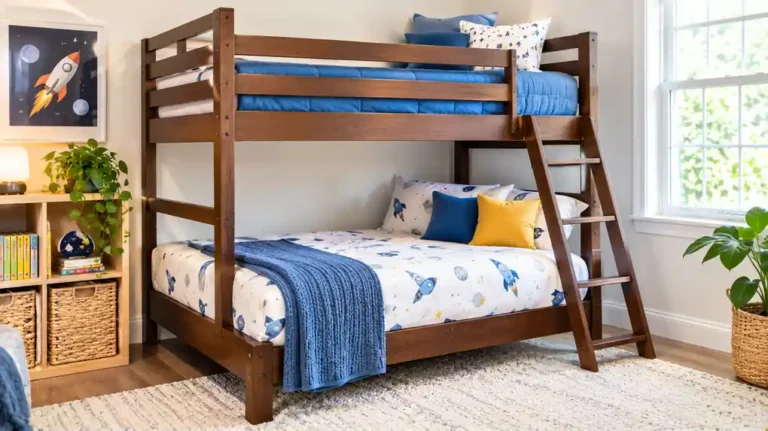
A bunk bed stacks beds vertically. It saves floor space, but the top bunk requires climbing and has age limits. A daybed is a bed that acts as a sofa. It can include a trundle. A trundle bed stores a second bed under the first, and everything stays close to the floor.
If you have young children, a trundle can be a good alternative to a bunk since there’s no climbing. If you need seating by day, a daybed with a trundle gives you both.
Tips for Using a Trundle Bed
Keep the path clear so the trundle rolls easily. Store bedding nearby so it’s ready for guests. Use a mattress protector to extend the life of the thin mattress. Check the casters now and then, and clean the wheels. Don’t let children play on the trundle’s moving parts. Check that the lift locks before anyone sleeps on a pop-up.
Frequently Asked Questions
What is a trundle bed?
A bed with a second mattress stored underneath on a rolling frame. You pull it out when you need an extra bed.
How thick should a trundle mattress be?
It depends on the model. Around 5 to 8 inches for roll-outs, and up to 8 to 10 inches for some pop-ups. Measure the drawer height to be sure.
What’s the difference between a pop-up and a roll-out trundle?
A roll-out trundle stays low. A pop-up trundle lifts to the height of the main bed, so you can use it as a second bed at the same level.
Are trundle beds comfortable?
They can be for short stays. The mattresses are thin, so they give less cushioning than a regular mattress. A topper can help.
How much space does a trundle bed need?
Enough clear floor space for the trundle to roll out, which is about the length of the mattress.
Can adults sleep on a trundle bed?
Yes, for a short stay. Check the weight rating. A pop-up is easier for adults than a low roll-out.
Conclusion
A trundle bed adds a second sleeping spot without adding a second frame. Roll-out trundles are simple and durable, while pop-up trundles lift to the main bed’s height for easier use.
Measure the room, check the mattress thickness and test the mechanism before you buy. With the right trundle, your small room can handle sleepovers and guests with ease.
Related guides
 Bunk Beds: Types, Safety Rules and How to Choose the Right OneBunk beds save floor space and give kids a fun place to sleep. They re a classic choice for shared rooms,…Read more →
 Chair Bed: Folding Sleeper Chair Sizes, Mattress Thickness and Weight LimitsA chair bed is a chair that unfolds into a thin guest bed. Guest-oriented models often have a mattress about 49…Read more →
 Japanese Bed: Shikibuton, Tatami Frames, Low Platforms and AirflowA Japanese bed usually means a shikibuton, a thin cotton-filled floor mattress of about 3 to 4 inches, laid on…Read more →
 Bed in a Bag: What’s Included, Sizes and How to Check QualityA bed in a bag is a full set of bedding sold as a single purchase. It usually includes a comforter, a fitted…Read more →