Upholstered Dining Chairs: Fabrics, Comfort, Cleaning and How to Choose
Upholstered dining chairs are more comfortable than bare wood or metal, and they add color and texture to a room. They suit long dinners, homework at the table and any home where people like to linger. The tradeoff is cleaning, because fabric holds spills and crumbs in a way a wood seat doesn’t.
Upholstered dining chairs are chairs with a padded seat, and often a padded back, covered in fabric, leather or a similar material. The padding is usually foam, and the cover is attached to a wood or metal frame. Some have removable covers, and some have fixed ones.
This guide explains how to choose the fabric, how to judge the padding and the frame, what sizes to check and how to keep the chairs clean. It also covers the best options for children and pets, plus common mistakes.
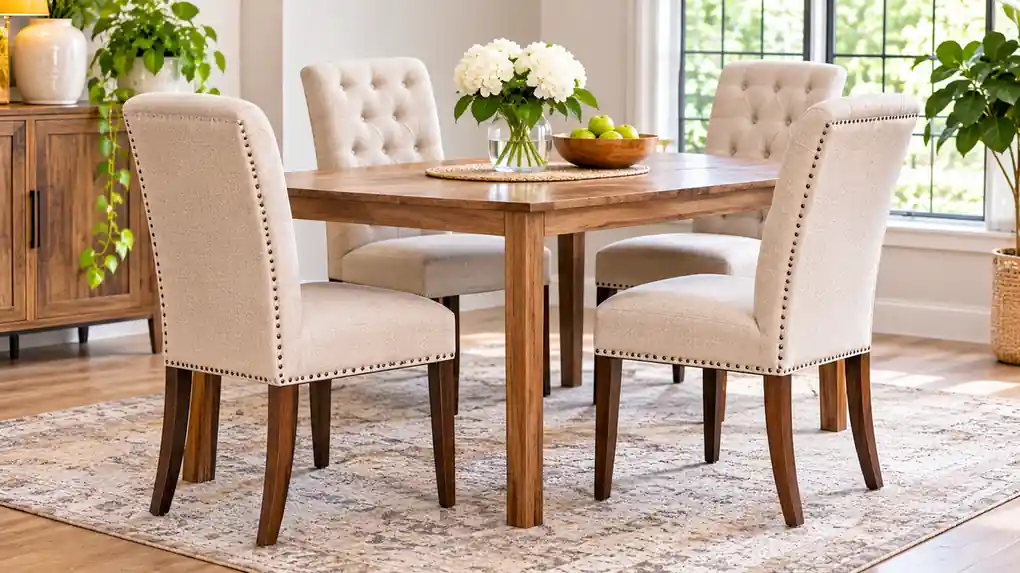
Are upholstered dining chairs worth it?
They’re worth it if comfort and style matter to you and you’re ready to clean them. Padding makes a long meal easier on your back and legs, and the fabric softens the sound of the room. A set of upholstered chairs can also make a plain table look finished.
They are less practical if the table sees a lot of spills, like a table with small children, or if you don’t want to spot-clean. In that case, wipe-clean materials or removable covers are better, or you can choose wood chairs with a seat cushion that you can swap.
A good middle ground is a performance fabric or a faux leather seat on a wood frame. You get comfort without the stress of every splash.
Which fabric should you choose?
Look for fabric that matches your household. Performance fabrics are made to resist stains and wear, and many wipe clean with a damp cloth. Polyester and microfiber blends are common, affordable and fairly durable. Cotton and linen look relaxed and natural, but they stain more easily and often need a treatment.
Velvet feels rich and comes in deep colors, though it can show marks and crush, so choose a tight, performance-grade version if you want it in a busy home. Leather is durable and easy to wipe, and it can age well, though it may scratch. Faux leather is cheaper and easy to clean, but cheaper versions can peel over time.
Check the durability rating when the maker lists one. A common measure is the rub count, which is how many back-and-forth rubs a fabric can take in a test. A higher number suggests it can handle more wear, but the number isn’t a guarantee, so read reviews and the care label too.
How do you judge the padding and comfort?
Press on the seat. It should feel supportive and spring back, not flat or lumpy. High-density foam holds its shape longer than soft, cheap foam, and some makers list the foam density. A seat that is too soft can feel nice at first and sag within months.
Think about the seat shape and depth. A seat depth of around 16 to 19 inches suits most adults. A back that supports the lower spine makes long meals easier. Chairs with a slight curve at the back follow the body better than a flat back.
If you can, sit in a chair for several minutes. Check that your feet reach the floor and that the seat edge doesn’t press on your thighs. Comfort is personal, and a chair that looks great can still feel wrong.
What should you check in the frame?
The frame decides how long the chair lasts. Solid hardwood frames, like oak, beech or ash, are strong and can be repaired. Plywood frames can be strong when built well, and metal frames are sturdy and light. Thin particleboard frames can crack, so look for details in the product description.
Look at the joints. Glued and screwed joints with corner blocks last longer than staples alone. Give the chair a gentle shake in a store, and check for wobble. At home, tighten any loose bolts after the first few weeks, since screws settle with use.
Check the weight rating, too. Many chairs are rated for around 250 to 300 pounds, though ratings vary. Choose a rating that suits everyone who sits at your table.
What sizes and heights fit your table?
Standard dining tables are about 28 to 30 inches tall, and chairs with a seat height of about 17 to 19 inches usually fit. You want roughly 10 to 12 inches between the seat and the underside of the table. Measure your own table, since some are lower or have a deep apron.
Check the width and arm style. A chair about 18 to 22 inches wide lets you seat people at about 24 inches per person. Armchairs need more room and may not slide under the table. If your table is narrow, use armless chairs for the sides and save armchairs for the ends.
Make sure the chairs fit your room’s walkways. A tall back or a wide seat takes more space when the chair is pulled out. Leave about 36 inches behind the chair for people to pass.
How do you clean and protect upholstered chairs?
Read the care label first. Many fabrics are marked with a code: “W” means water-based cleaners, “S” means solvent-based cleaners, “WS” means either, and “X” means vacuum only. Follow the code, and test any cleaner on a hidden spot before you use it on the seat.
Blot spills right away with a clean cloth, and don’t rub, which pushes the stain deeper. Vacuum the seats often to lift crumbs. A fabric protector spray can help, but check that the product suits your fabric.
Chairs with removable covers are the easiest to keep clean, because you can wash the covers as the label says. Seat covers or cushions that tie on are another simple option if you want to refresh the look or protect new chairs.
Which style is best for kids and pets?
For young children, choose wipe-clean fabric or faux leather, and consider a darker color or a pattern that hides marks. Rounded edges are safer, and sturdy frames stand up to leaning and wiggling. A chair with a low-profile back is easier to wipe than one with deep tufts.
For pets, tight weaves resist claws better than loose weaves, and leather or performance fabric is easier to clean. Avoid thick textures that trap hair. If pets jump on chairs, a seat cover you can wash helps.
Think about the floor too. Add felt pads on the chair legs to protect hard floors, and replace them when they wear out.
What mistakes should you avoid?
The most common mistake is choosing by looks and ignoring the fabric. A light fabric in a busy home will show every mark. Another is skipping the seat height and finding that the chairs don’t fit under the table.
Others include not checking the weight rating, buying thin foam, ignoring the frame and forgetting about cleaning. Order a swatch if the seller offers one, and check the return policy so you can send the chairs back if they don’t suit you.
Frequently Asked Questions
What fabric is best for dining chairs?
Performance fabric or faux leather is best for busy homes. Cotton and linen look nice but stain more easily.
How tall should the seat be?
Usually about 17 to 19 inches for a standard 28 to 30 inch table, with about 10 to 12 inches below the tabletop.
How do I clean an upholstered dining chair?
Check the care code on the label, blot spills quickly and vacuum often. Test cleaners on a hidden spot.
Are removable covers worth it?
Yes, if you want easy cleaning. You can wash the covers as the label says.
How can I tell if a chair is well made?
Look for a solid frame, glued and screwed joints, dense foam and a clear weight rating.
Conclusion
Upholstered dining chairs make meals more comfortable and make a room feel finished. Choose a fabric that fits how you live, check the padding and frame, and match the seat height to your table.
Read the care label and clean spills right away. With the right fabric and a sturdy frame, upholstered chairs can last for years and stay a pleasure to sit in.
Related guides
 Extendable Dining Table: Sizes, Leaf Types, Mechanisms and What to CheckAn extendable dining table gives you a small table for everyday meals and a bigger one when guests come. It s a…Read more →
 Counter Height vs Bar Height: Differences, Stool Sizes and Which to ChooseCounter height and bar height are two common table heights, and they re easy to mix up. Both are taller than a…Read more →