Bar Stools for Kitchen: Seat Height, Size, Style and Comfort Guide
The right bar stools make a kitchen counter feel like a place to sit, not just a place to work. The wrong ones leave your knees jammed under the edge or your feet dangling. Because the choice comes down to a few measurements, it’s easy to get right if you check them before you shop.
Bar stools for a kitchen are tall seats made for counters and islands. They come in counter height, bar height and adjustable versions. The names refer to the height of the counter they match, not to where you use them, so a “bar stool” can sit at a kitchen island just fine.
This guide explains how to match stool height to your counter, how much space each stool needs and how to choose between backless, swivel and upholstered styles. You’ll also find notes on materials, comfort and common mistakes.
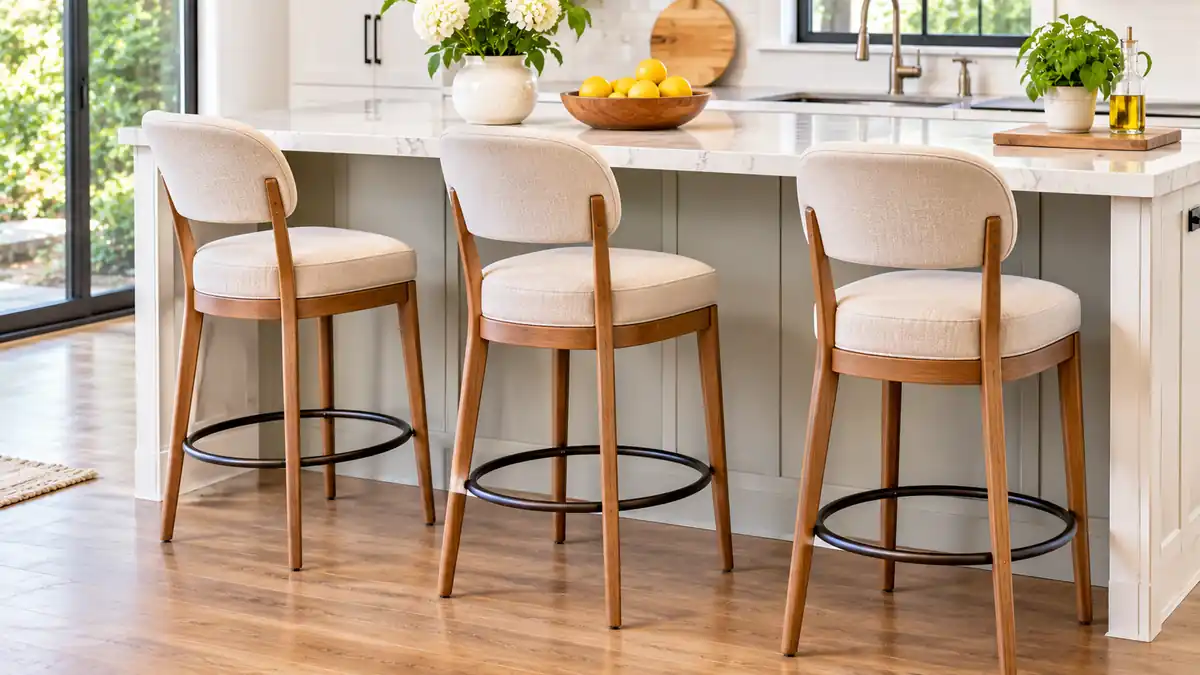
What stool height do you need for a kitchen counter?
Match the seat height to the height of the surface. A standard kitchen counter is about 36 inches tall, and stools for it usually have a seat height of about 24 to 26 inches. A bar-height counter is about 42 inches tall, and stools for it usually have a seat height of about 28 to 30 inches.
The gap between the seat and the underside of the counter should be around 9 to 13 inches. That’s enough room for your legs and not so much that you feel like you’re sitting too low. A simple way to check is to measure your counter, subtract about 10 to 12 inches and look for a stool near that seat height.
Counters aren’t always exactly 36 or 42 inches, so measure yours. Also look at how the product lists its height. Some makers list the overall height including the back, and some list the seat height only. Use the seat height number for matching.
How much space does each stool need?
Plan about 24 inches of counter width for each stool, measured center to center. That gives elbows some room and stops stools from hitting each other. For comfort, 26 to 30 inches per person is better if you have space.
Check the width of the stool itself. A 16-inch seat in a 24-inch slot looks fine, but a 20-inch seat will crowd the next one. Also check the depth, since a deep seat with a tall back takes more room when you pull it out from the counter.
Leave clearance behind the stools so people can walk past. About 36 inches of space behind a seated person lets someone squeeze by, and 44 inches or more lets them pass easily. In a tight kitchen, choose backless stools that tuck fully under the counter.
Should you choose backless, low-back or high-back stools?
Backless stools take up the least visual space and slide under the counter. They’re good for short visits, small kitchens and kids who hop on and off. The tradeoff is comfort, since you have nothing to lean on.
Low-back stools give some support and still look light. High-back stools are the most comfortable for long meals and for homework or working at the counter. They also tend to be heavier and more costly.
If you will sit for more than a few minutes at a time, choose a back and a footrest. A footrest at the right height takes pressure off your legs. Look for a rail that’s about 10 to 12 inches below the seat, and check that it’s strong enough to take weight.
Are swivel stools a good idea?
Swivel stools are easy to turn toward conversation and easy to get into. They’re a favorite in busy kitchens where people go back and forth. Some include a return feature that turns the seat back to face the counter.
The drawback is that swivels can feel less stable, and kids may spin them. If you pick a swivel, look for a wide base and a smooth, quiet mechanism. A fixed stool is the safer choice if young children will use it.
Stools that adjust in height are handy if the household includes people of different heights, or if you’ll use the stools at both a counter and a bar. Check the weight rating and the height range before buying.
What materials and finishes last?
Wood stools are sturdy and warm, and they can be refinished. Metal stools are strong and easy to wipe down, and some are stackable, which helps in small homes. Plastic and molded stools are light and cheap, but they can scratch.
For the seat, think about how much you spill. Leather and faux leather wipe clean, though they can feel hot or cold and can crack over time. Fabric is soft, but it stains unless it’s treated or removable. Woven seats, like rattan and cane, look relaxed but are harder to clean around crumbs.
Check the floor protection. Metal or wood legs can scratch hard floors, so use felt pads or rubber tips. If your floors are soft or delicate, look for stools with built-in glides.
How do you match stools to your kitchen style?
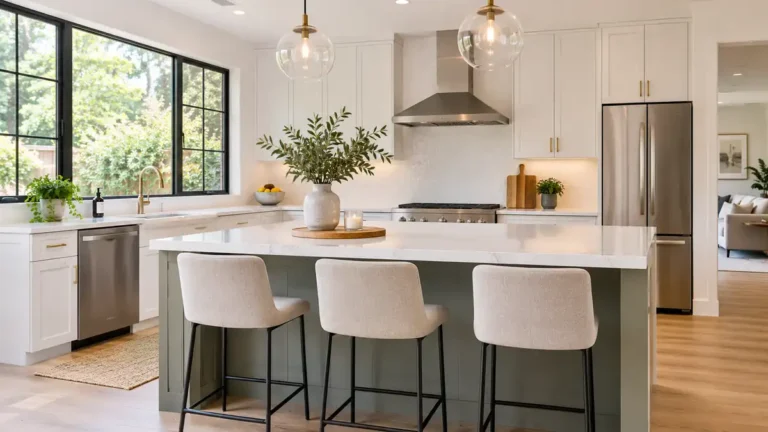
Pick one idea and repeat it. In a modern kitchen, simple metal or molded stools in a single color work well. A farmhouse kitchen suits wood stools with a rounded seat. For a traditional kitchen, a wood frame with a padded seat feels at home.
Keep the stools in proportion to the island. A very heavy stool at a slim island looks clumsy, and tiny stools at a long island look lost. If your island is long, an even number of stools spaced evenly looks balanced.
You can mix the finish with the cabinets. Matching the stool color to the cabinets can look calm, while a contrasting color adds interest. Don’t forget the light above the island, since the stools should look good under it.
How do you care for bar stools?
Wipe wood and metal frames with a soft damp cloth, then dry them so water doesn’t sit in the joints. Vacuum fabric seats often, and treat spills right away, because stains set quickly. Check the care label, since some covers can be spot-cleaned and others need a professional.
Tighten the screws and bolts a few times a year. Stools get a lot of movement, and loose joints are the usual reason they start to wobble or squeak. If a swivel seat gets stiff, a small amount of the lubricant the maker suggests can help.
Finally, lift the stools instead of dragging them. Dragging wears down the glides and scratches floors, and it shortens the life of the stool.
What mistakes should you avoid?
The most common mistake is buying the wrong height. If the stool is too tall, people hit their knees, and if it’s too short, they sit too low to eat. Measure the counter, and check the seat height listed by the maker.
Another is forgetting the overhang. If the counter doesn’t extend far enough over the base, even a correct stool height will feel cramped. A third mistake is choosing stools with arms that don’t fit under the counter. A fourth is ignoring weight ratings.
Finally, try to sit on a stool before you buy, or check the return policy. Comfort is personal, and a stool that looks great online may feel hard or tippy once it’s in your kitchen.
Frequently Asked Questions
What height bar stool goes with a 36-inch counter?
A stool with a seat height of about 24 to 26 inches.
What height stool goes with a 42-inch bar?
A stool with a seat height of about 28 to 30 inches.
How many bar stools fit at a kitchen island?
Plan about 24 inches of counter width per stool, so a 6-foot island seats about three.
Are backless stools comfortable?
They’re fine for short sits and tuck away neatly. For long meals, choose a stool with a back and a footrest.
How far should the stool seat be from the counter?
Aim for about 9 to 13 inches between the seat and the underside of the counter.
Conclusion
Bar stools for a kitchen work when the seat height matches the counter, each stool gets enough width and the style suits how you sit. Measure first, then choose between backless, low-back and high-back designs based on how long people will stay.
Check the maker’s listed seat height, the weight rating and the floor protection. A few minutes of measuring will save you from sending stools back.
Related guides
 Kitchen Shelves: Open Shelving Sizes, Materials, Weight and Install TipsKitchen shelves are a quick way to add storage and style without the cost of new cabinets. They keep everyday…Read more →
 Pantry Cabinet Guide: Sizes, Types, Shelving and How to Choose OneA pantry cabinet gives your kitchen a home for dry food, small appliances and bulk items that don t fit in…Read more →
 Kitchen Cart Guide: Sizes, Materials, Casters and How to Choose OneA kitchen cart is a small rolling table you can park next to the counter, use as extra prep space and wheel…Read more →
 Kitchen Island With Seating: Size, Overhang, Clearance and Stool HeightA kitchen island with seating gives you a spot to cook, eat and talk in the same place. It adds counter space…Read more →