Kitchen Shelves: Open Shelving Sizes, Materials, Weight and Install Tips
Kitchen shelves are a quick way to add storage and style without the cost of new cabinets. They keep everyday plates, glasses and jars in easy reach, and they make a small kitchen feel more open. They also ask for more care than closed cabinets, because everything on them stays on show.
Kitchen shelves are open shelves fixed to the wall, often in place of upper cabinets or on a blank stretch of wall. They can be floating, which means the supports are hidden, or they can sit on visible brackets. They can also be freestanding racks that stand on the counter or the floor.
This guide explains how to choose the size, spacing and material for kitchen shelves, how much weight they can hold, how to hang them safely and what’s smart to store on them. You’ll also find the mistakes that cause sagging, grease and clutter.
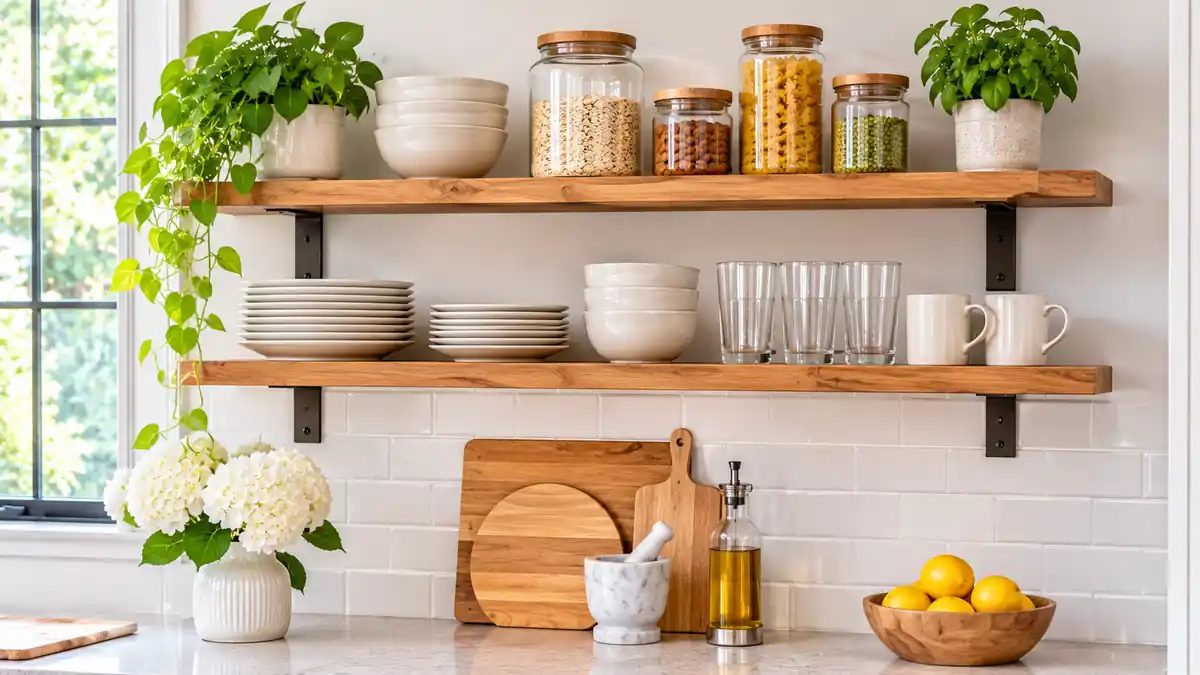
Are open kitchen shelves a good idea?
Open shelves work best when you value easy access and a lighter look, and when you don’t mind dusting and keeping things tidy. They’re quick to reach, so you don’t open and close doors while you cook. They also show off nice dishes, and they cost much less than cabinets.
The tradeoffs are real. Dishes and glasses collect dust and kitchen grease, so items near the stove need more frequent washing. Shelves also show clutter, so they suit people who like to edit what they own. If you have a lot of mismatched or bulky items, closed storage may be the better choice.
A good compromise is to mix both. Use cabinets for the things you don’t want to see and keep one or two shelves for daily dishes, jars and plants. That way the kitchen feels open without turning into a display you have to manage all the time.
What size and spacing should kitchen shelves have?
A common shelf depth is about 10 to 12 inches, which fits dinner plates and most bowls. Shelves that are deeper than 12 inches can swallow smaller items, while shelves under 8 inches only suit spice jars and cups. Shelf thickness often ranges from about 1.25 to 2 inches, and thicker boards look sturdier.
For length, think about the wall and what you will store. A shelf of 36 to 48 inches is easy to install and hold. Longer shelves need more brackets or support, because a long span will sag under weight.
Spacing depends on what goes on each shelf. About 12 to 14 inches between shelves suits plates and bowls, and 16 to 18 inches suits glasses and tall jars. Hang the lowest shelf at a height you can reach easily, and keep shelves over a counter high enough that you can use the counter below. Many people place the bottom shelf about 18 inches above the counter, though you should adjust it to your height and your appliances.
What materials work best?
Solid wood is a classic choice. It’s strong, looks warm and can be refinished, but it needs a sealed finish in a kitchen because of steam and spills. Plywood with a veneer is stable and cheaper, though the edges need to be finished well.
Metal shelves, like stainless steel, are easy to wipe and handle heat and moisture. They suit a working kitchen and give an industrial look. Glass shelves look light, but they can chip and show every smudge.
Avoid materials that soak up water. Unfinished particleboard and thin MDF can swell if the kitchen is humid, so look for a sealed or laminated surface. Whatever you choose, check the product page for the maker’s weight rating, because boards of the same size can carry very different loads.
How much weight can kitchen shelves hold?
It depends on the shelf, the brackets, the fasteners and the wall. A shelf screwed into wall studs can hold much more than one held by plain drywall anchors. Plates, glasses and canned goods are heavier than they look, and a single stack of dinner plates can weigh several pounds.
Use the maker’s rated load as the limit, and stay well below it. Spread heavy things over the length of the shelf and put them near the brackets. Don’t store heavy appliances on a decorative floating shelf unless the maker says it’s designed for that weight.
If you’re not sure, ask a professional or choose heavier-duty brackets. Floating shelves with hidden rods can carry less weight than shelves on visible brackets, which is a common surprise.
How do you install kitchen shelves safely?
Start by finding the studs, which are the wooden uprights inside the wall. A stud finder helps, and fixing brackets into studs gives the strongest hold. Mark the height with a level so the shelf doesn’t tilt, and use a pencil to mark the screw spots.
If studs don’t line up with where you want the shelf, use anchors that are rated for the load, such as toggle bolts for hollow walls. Use the screws that come with the brackets only if they suit your wall, and replace them if they don’t. Drill pilot holes to keep the wood from splitting.
Tile and plaster need special care. Drilling into tile needs a proper bit and slow speed, and old plaster can crumble. If you’re not comfortable, hire someone. Also check that there are no pipes or wires behind the spot before you drill.
What should you store on kitchen shelves?
Keep the things you use daily within easy reach. Plates, bowls, mugs and glasses are natural choices, and so are pretty jars of pasta, grains and tea. A few cookbooks and a plant add some personality.
Keep heavy items low and light items high. Don’t put things you rarely use at eye level, because they take the best spots. Store oils and sauces near the stove only if you’re happy to clean them, since grease collects on everything in that zone.
Group items by type and use a few matching containers to keep the look calm. Leave some empty space so the shelf doesn’t look crowded, since open shelves look best with room to breathe.
What mistakes should you avoid?
The main mistake is hanging shelves without hitting studs or using the right anchors. Another is picking shelves that are too shallow for dinner plates. A third is placing shelves right above the stove, where heat and grease build up fast.
It’s also common to overfill the shelves and make the kitchen feel busy. Cleaning is another thing people forget. Plan to wipe the shelf and wash the items on it every so often.
Finally, check that the shelf doesn’t block outlets, windows or the swing of a cabinet door. A quick test with painter’s tape on the wall shows how the shelves will look and fit before you drill.
Frequently Asked Questions
How deep should kitchen shelves be?
About 10 to 12 inches suits plates and bowls. Shallower shelves hold cups and spice jars.
How far apart should kitchen shelves be?
Roughly 12 to 14 inches for plates and bowls, and 16 to 18 inches for glasses and tall jars.
Can floating shelves hold dishes?
Some can, but check the maker’s weight rating. Shelves on visible brackets usually hold more than shelves with hidden rods.
Do I need studs to hang kitchen shelves?
Studs give the strongest hold. If you can’t hit them, use anchors rated for the load.
Are open shelves hard to keep clean?
They collect dust and grease, so plan to wipe them and wash the items often, especially near the stove.
Conclusion
Kitchen shelves work when the size, spacing and fixings match what you want to store. Choose a depth that fits your dishes, fix the brackets into studs where you can and keep heavy items low. Mix open shelves with closed storage if you want both style and ease.
Check the maker’s weight rating and follow the install instructions. With a little planning, a few shelves can make the kitchen look lighter and keep daily items close.
Related guides
 Bar Stools for Kitchen: Seat Height, Size, Style and Comfort GuideThe right bar stools make a kitchen counter feel like a place to sit, not just a place to work. The wrong ones…Read more →
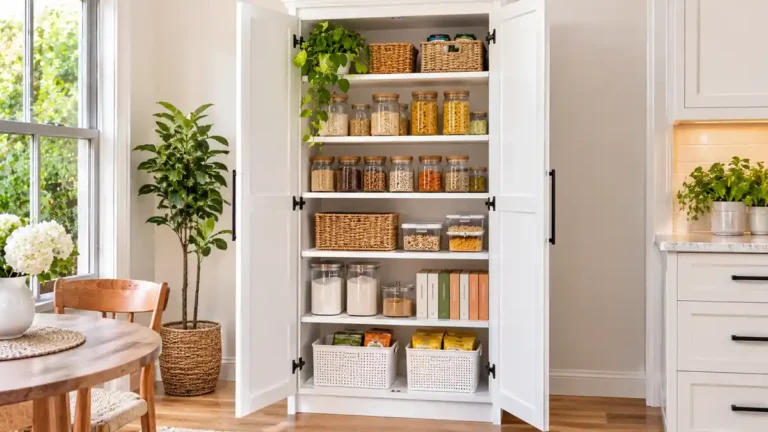 Pantry Cabinet Guide: Sizes, Types, Shelving and How to Choose OneA pantry cabinet gives your kitchen a home for dry food, small appliances and bulk items that don t fit in…Read more →
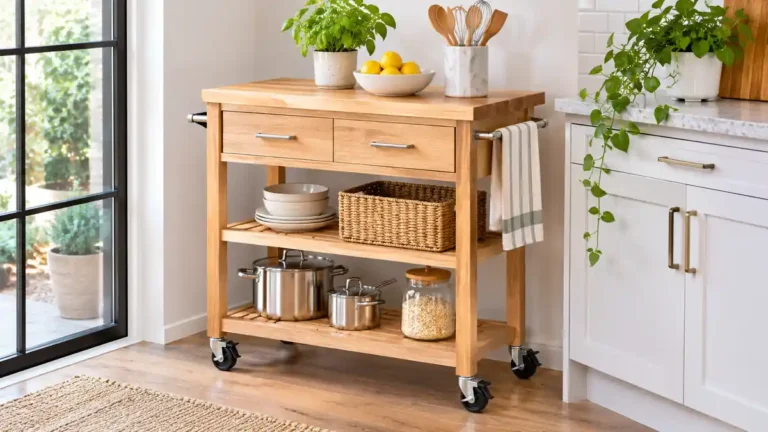 Kitchen Cart Guide: Sizes, Materials, Casters and How to Choose OneA kitchen cart is a small rolling table you can park next to the counter, use as extra prep space and wheel…Read more →
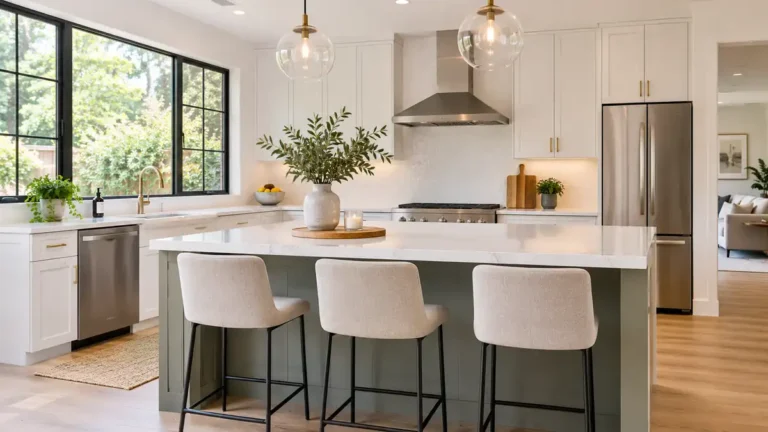 Kitchen Island With Seating: Size, Overhang, Clearance and Stool HeightA kitchen island with seating gives you a spot to cook, eat and talk in the same place. It adds counter space…Read more →