Pantry Cabinet Guide: Sizes, Types, Shelving and How to Choose One
A pantry cabinet gives your kitchen a home for dry food, small appliances and bulk items that don’t fit in regular cabinets. If your counters are covered in boxes and jars, a pantry cabinet can clear them in one afternoon. It’s also one of the few kitchen upgrades you can add without a remodel.
A pantry cabinet is a tall storage unit built for food and kitchen supplies. It can stand alone like a wardrobe, or it can be built into a wall or a run of cabinets. Most have adjustable shelves, and some add pull-out drawers, door racks or a small countertop area for appliances.
This guide explains the main types of pantry cabinets, the sizes that are common, how to plan the shelves and what to check before you buy. It also covers organization and the mistakes that waste space.
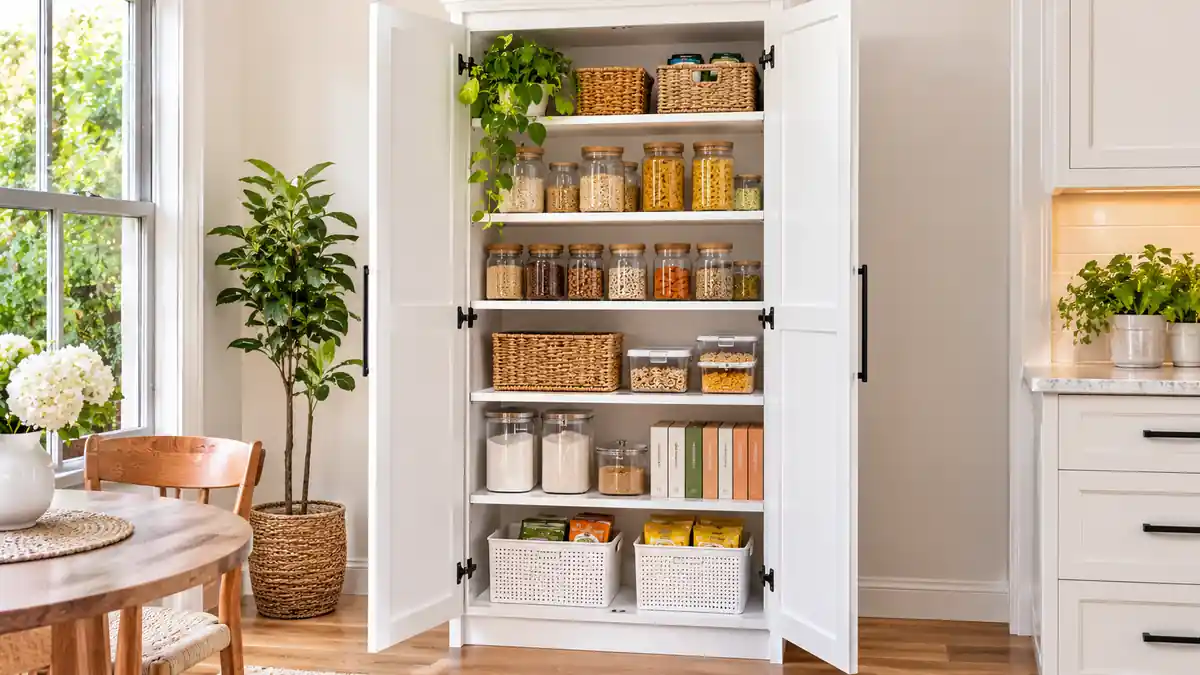
What types of pantry cabinets are there?
The main types are freestanding, built-in, corner and pull-out pantries. A freestanding pantry cabinet is a tall piece of furniture you can move, and it’s the easiest choice for renters. A built-in pantry is part of the cabinetry, so it looks neat and uses every inch of height, but it takes planning and installation.
A corner pantry fits in a corner of the kitchen, using space that is often wasted. It can hold a lot, but the corner shelves can be hard to reach unless they rotate. A pull-out pantry is a narrow cabinet on slides that sits between a fridge and a wall or between two cabinets, and it slides out like a drawer.
A walk-in pantry is a small room with shelves on the walls. It holds the most, but it needs floor space and usually a remodel. If your kitchen is small, a tall cabinet or a pull-out pantry is more realistic.
What size pantry cabinet do you need?
Standard pantry cabinets are about 72 to 96 inches tall, 18 to 36 inches wide and 12 to 24 inches deep. Kitchen base cabinets are usually 24 inches deep, and many pantry cabinets match that so they line up with other cabinets. Shallower units, about 12 to 16 inches deep, help you see everything at a glance.
Measure the space first, including the height from the floor to the ceiling and any light fixtures or vents. Leave room to open the doors fully, and check that nearby drawers and the refrigerator door won’t hit the pantry. If the cabinet has deep shelves, make sure you have enough floor clearance to reach the back.
Think about how much you store. A family that buys in bulk needs more depth and shelf area than a single person who shops weekly. As a rough guide, a 24-inch-wide, 72-inch-tall cabinet with five shelves holds a typical week or two of dry goods for a small household. These numbers vary by household, so treat them as a starting point.
How should the shelves be spaced?
Adjustable shelves are better than fixed ones because food packages come in different heights. A common spacing is about 10 to 12 inches between shelves for cans and boxes, and more space for cereal boxes and tall bottles. You can leave a taller gap near the bottom for large items like a stand mixer or a bag of pet food.
Shelf depth matters as much as height. Shallow shelves, about 12 inches deep, stop things from disappearing at the back. Deeper shelves, 18 to 24 inches, hold more but can hide older food. If you choose deep shelves, add pull-out trays or a lazy Susan so you can reach the back.
Check the shelf weight rating. Canned goods are heavy, and a shelf rated for light loads can bow over time. If the maker doesn’t list a weight limit, ask or choose a thicker shelf material.
Which materials and door styles work best?
Solid wood and plywood hold up well and carry weight, while particleboard and MDF cost less but can swell if they get wet. Look for a durable finish that wipes clean, since flour, oil and sticky jars will find their way onto the shelves. Metal wire shelves allow airflow and let light through, though small items can tip.
Door style changes how the pantry works. Solid doors hide clutter and keep out light, which helps food last longer. Glass doors look pretty if you keep things tidy. Door racks add more storage, but they add weight to the doors, so check the hinges. Sliding or bifold doors help in tight spaces where a swinging door would hit something.
Ventilation is another point. Food does best in a cool, dry place away from heat and direct sun. Don’t put a pantry cabinet right next to the oven or in a spot that gets a lot of sun, because heat can shorten the life of food.
How do you organize a pantry cabinet?
Start by grouping food by type, such as baking, breakfast, canned goods, snacks and pasta. Put the things you use every day at eye level, and keep heavy items on lower shelves. Store lighter or rarely used items high up.
Clear containers keep dry foods fresh and let you see what’s left. Label them with the name and the date you opened the package. Use the rule “first in, first out,” which means you put newer items behind older ones so nothing expires unnoticed.
Baskets and bins help with loose items like snack bars and spice packets. A turntable works well for oils and sauces. If you have small kids, keep snacks they can reach on a low shelf and put cleaning supplies and anything unsafe out of reach.
Can a pantry cabinet hold small appliances?
Some can, if they’re designed for it. Look for a cabinet with a pull-out shelf or a built-in outlet so you can use a toaster or a coffee maker without carrying it out each time. Make sure any outlet is installed by a qualified person and follows local rules.
If you plan to store a mixer or an air fryer, measure the appliance and check the shelf height. Heavy appliances belong on a lower shelf or a pull-out tray rated for the weight. Leave space around anything that gets hot so air can move, and don’t close the door on an appliance that’s still warm.
What mistakes should you avoid?
The most common mistake is buying a cabinet that’s too deep without a way to reach the back. Another is ignoring the weight of canned goods and loading a light shelf. A third is skipping measurements, which leads to doors that hit the refrigerator or a cabinet that doesn’t fit under a low ceiling.
It’s also easy to forget about anchoring. Tall cabinets can tip, especially when the doors are open and the shelves are unevenly loaded. Use the anchor kit that comes with the unit and fix it to a wall stud, which is a safety step the maker usually recommends. This matters most in homes with children.
Finally, don’t fill every inch on day one. Leave about a quarter of the space free so you have room to adjust, and so the pantry stays usable when you shop in bulk.
Frequently Asked Questions
What is the standard size of a pantry cabinet?
Common sizes are 72 to 96 inches tall, 18 to 36 inches wide and 12 to 24 inches deep. Check each product’s listing.
Is a freestanding or built-in pantry better?
A freestanding pantry is easier and works for renters. A built-in pantry uses space better and looks cleaner, but needs planning and installation.
How deep should pantry shelves be?
Shallow shelves around 12 inches show everything at a glance. Deeper shelves hold more but need pull-out trays to reach the back.
Should I anchor a tall pantry cabinet?
Yes. Tall cabinets can tip, so use the maker’s anchor kit and fasten it to a wall stud.
How can I make a small pantry hold more?
Use adjustable shelves, door racks, clear stackable containers and pull-out baskets. Keep like items together.
Conclusion
A pantry cabinet works best when its size, shelf depth and door style match how you cook and shop. Measure the space, choose adjustable shelves and anchor the unit to the wall. Then sort your food by type so you can find things quickly.
If you rent, a freestanding cabinet is the simplest fix. If you’re planning a remodel, a built-in or pull-out pantry can use space that otherwise goes to waste.
Related guides
 Kitchen Shelves: Open Shelving Sizes, Materials, Weight and Install TipsKitchen shelves are a quick way to add storage and style without the cost of new cabinets. They keep everyday…Read more →
 Bar Stools for Kitchen: Seat Height, Size, Style and Comfort GuideThe right bar stools make a kitchen counter feel like a place to sit, not just a place to work. The wrong ones…Read more →
 Kitchen Cart Guide: Sizes, Materials, Casters and How to Choose OneA kitchen cart is a small rolling table you can park next to the counter, use as extra prep space and wheel…Read more →
 Kitchen Island With Seating: Size, Overhang, Clearance and Stool HeightA kitchen island with seating gives you a spot to cook, eat and talk in the same place. It adds counter space…Read more →