Curtain Length: Standard Sizes, How to Measure and Which Style to Choose
Curtains that are the wrong length can make a room look unfinished. Short curtains look like they were bought for a different window, and very long ones can pool awkwardly on the floor. The right length is easy to find once you know how to measure and which look you want.
Curtain length is the distance from the top of the curtain, usually the rod or the top of the heading, to the bottom edge. It should be chosen with the rod height, the window and the style in mind. The same window can look very different with sill-length, floor-length or puddled curtains.
This guide explains the standard curtain lengths, how to measure for them, what each style looks like and how rod height and width change the result. You’ll also find tips on fabric, lining, hems and the common mistakes.
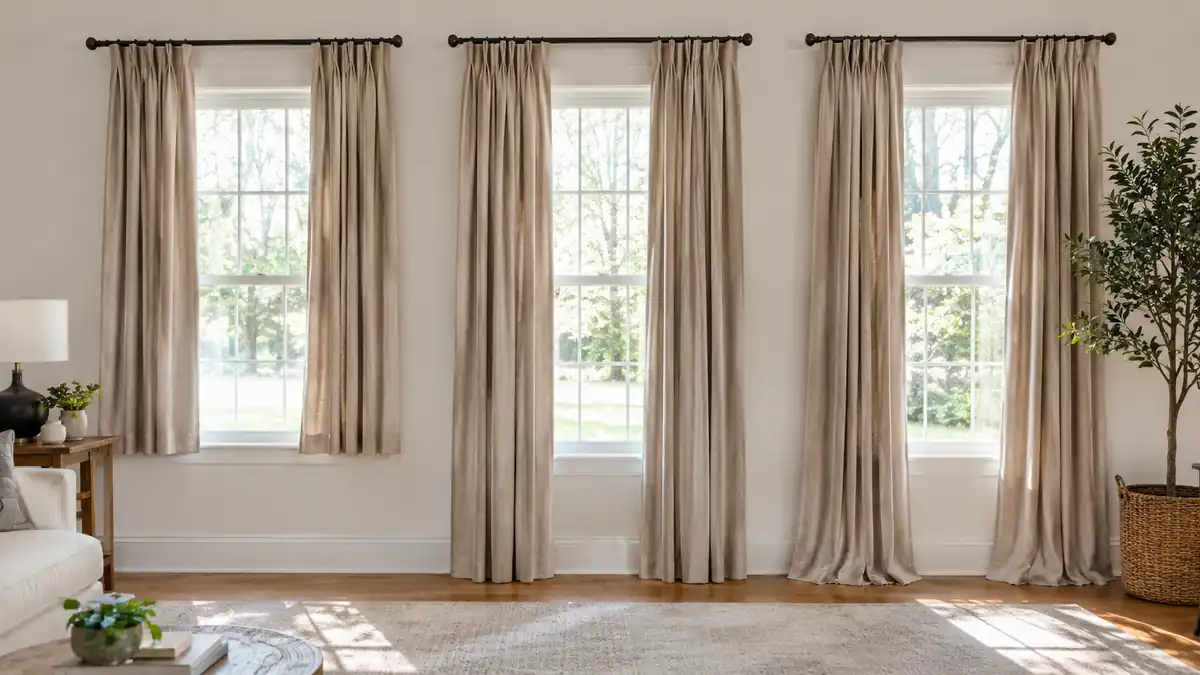
What are the standard curtain lengths?
Ready-made curtains usually come in a few standard lengths, most often 63, 84, 95 and 108 inches. A 63-inch curtain suits a small window with the rod set just above it. An 84-inch curtain is the most common length and fits many standard windows with an 8-foot ceiling. A 95-inch length suits taller windows or rods hung higher, and 108 inches suits tall ceilings.
Sizes vary by brand, and the listed length may include or exclude the heading and the rod pocket, so read the details. If your window needs a length between sizes, choose the longer one and have it hemmed, or look for custom or made-to-measure curtains.
Always measure your own window. A standard size is a starting point, not a guarantee of a good fit.
How do you measure for curtains?
Start with the rod. Decide where you’ll hang it, and install the bracket or place a tape at that height. A common rule is to hang the rod about 4 to 6 inches above the window frame, or even closer to the ceiling to make the ceiling look higher.
Measure from the rod, or from the spot where the curtain will hang, to where you want the curtain to end. If the curtain hangs from rings or clips, include the drop of the rings. If it hangs from a rod pocket, include the heading above the rod.
For the width, measure the rod length and multiply by 1.5 to 2.5 for fullness. A fuller curtain looks richer and drapes better, and a flat curtain looks thin. Write down the numbers, and measure twice before you buy.
What curtain styles are there?
Sill-length curtains end at the windowsill, or about half an inch above it. They’re practical in kitchens and bathrooms, where long curtains can get wet or be in the way, and over a radiator or a desk. They look tidy and casual.
Apron-length curtains end a few inches below the sill, about 4 to 6 inches, and cover the apron under the window. This length looks a little more finished than a sill-length drape but is still easy to live with.
Floor-length curtains end about half an inch above the floor, or just touch it. This is the most common and polished choice for living rooms and bedrooms. Break-style curtains end a bit longer, so they bend slightly at the floor, and puddle-style curtains pool on the floor by several inches for a romantic look. Puddling needs more fabric and more care.
What length looks best for each room?
In a living room or bedroom, floor-length curtains give a clean and elegant look. Hang them so they clear the floor by about half an inch, or let them just kiss the floor. This length makes the ceiling look higher, especially when the rod is hung high.
In a kitchen, sill-length or café curtains are practical, since they stay clear of the counter and sink. In a bathroom, sill-length or a moisture-resistant fabric is best, and a shower curtain follows its own rules, usually ending a few inches above the tub’s edge or the floor.
In a child’s room, avoid long cords and puddled curtains, which can be a safety risk. Choose cordless blinds or short, tidy curtains, and follow safety guidance for window coverings.
How do rod height and width change the result?
A rod hung higher than the window makes the window look taller and the room feel bigger. Hang it about 4 to 6 inches above the frame, or midway between the frame and the ceiling. If you have crown molding, you can hang the rod just under it.
A rod that is wider than the window makes the window look wider and lets in more light. Extend the rod about 8 to 12 inches beyond each side of the frame, so the curtains can stack back without covering the glass.
The right combination of height and width often matters more than the exact curtain length. A good rod position with a slightly imperfect hem looks better than the perfect hem on a badly placed rod.
Which fabric, lining and hem should you choose?
Light fabrics like cotton and linen drape softly and let light through, while heavy fabrics like velvet and thick weaves block light and add warmth. Add a lining for privacy, light control and a fuller look. Blackout lining helps with sleep, though it changes how the curtain hangs.
Check the care label. Linen and cotton may shrink, so wash them as the maker says, or allow a little extra length. Natural fabrics can also stretch or relax in humid rooms, so check the hang after a few days.
Hem tape or a tailor can adjust a curtain’s length. Iron-on hem tape works for simple changes, and a tailor does a neater job on heavy or lined curtains. Hang the curtain for a day before you hem, so the fabric settles.
How do you hang and care for curtains?
Use sturdy brackets that match the weight of the curtains and screw them into studs or use anchors rated for the load. Space brackets about every 40 to 48 inches on a long rod, and add a center support if the rod bends. Hang the curtains on clip rings or hooks, and let them settle for a day before you judge the length.
For care, vacuum curtains lightly with a brush attachment to remove dust, and wash or dry-clean them as the care label says. Steam out creases while they hang instead of ironing a heavy lined curtain. Rotate or shake them from time to time so sun fades the fabric evenly.
What mistakes should you avoid?
The most common mistake is curtains that are too short, so they float above the floor. Another is hanging the rod at the window frame, which makes the window look smaller. A third is curtains that are too narrow and look flat.
Others include ignoring the weight of heavy curtains, which need strong brackets, and skipping the lining. Also remember to check the child safety rules for cords and rods. A final mistake is buying without a return plan, since curtains can look different in your home than in a photo.
If you’re unsure, hang a sample or a plain sheet at your chosen height. It helps you see the length and width before you buy.
Frequently Asked Questions
What is the standard curtain length?
Common ready-made lengths are 63, 84, 95 and 108 inches. Choose by measuring from your rod to the floor or sill.
How far should curtains hang from the floor?
About half an inch above the floor for a clean look, or just touching it.
How high should I hang the curtain rod?
About 4 to 6 inches above the window frame, or higher to make the ceiling look taller.
How wide should curtains be?
The curtain’s total width should be about 1.5 to 2.5 times the rod width.
Should curtains touch the floor?
They can, but a small gap is easier to keep clean and looks tidy. Puddle styles touch and pool on purpose.
Conclusion
The right curtain length depends on the rod height, the window and the style you want. Measure from the rod to the floor or the sill, choose fullness of 1.5 to 2.5 times the rod width and hang the rod higher and wider than the window to make it look larger.
Check the lining, the care label and the safety rules for children. With a few measurements, your curtains can make a room feel taller, softer and more finished.
Related guides
 Japandi Style: Colors, Furniture, Materials and How to Get the LookJapandi is a calm, simple style that blends Japanese and Scandinavian design. It suits people who like clear…Read more →
 Mid-Century Modern Style: Furniture, Colors, Materials and How to Use ItMid-century modern is one of the most popular interior styles today, and it s easy to see why. The furniture is…Read more →
 How to Arrange Furniture in a Living Room: Layouts, Spacing and FlowA living room can have good furniture and still feel awkward if the pieces are in the wrong places. The right…Read more →
 Pendant Light Height: How High to Hang Over Islands, Tables and StairsA pendant light can make a room look finished, but only if it hangs at the right height. Too high, and it looks…Read more →