Duvet vs Comforter: Differences in Warmth, Care, Cost and How to Choose
Duvets and comforters look alike on a bed, and shops often mix up the names. They work differently, and the difference affects how you wash, style and pay for your bedding. Knowing it helps you choose the one that suits you.
This article is part of our bedding guide, where you can compare related options.
A comforter is a single finished piece you use as it comes. A duvet is an insert that lives inside a separate cover you take off and wash. That one difference drives most of the others.
This guide compares the two on warmth, care, cost and style, explains which is better for different people and shows how to use both together. You’ll also find a comparison table, a checklist and answers to common questions. For more detail on each, see the duvet cover and duvet insert guides.

What Is a Comforter?
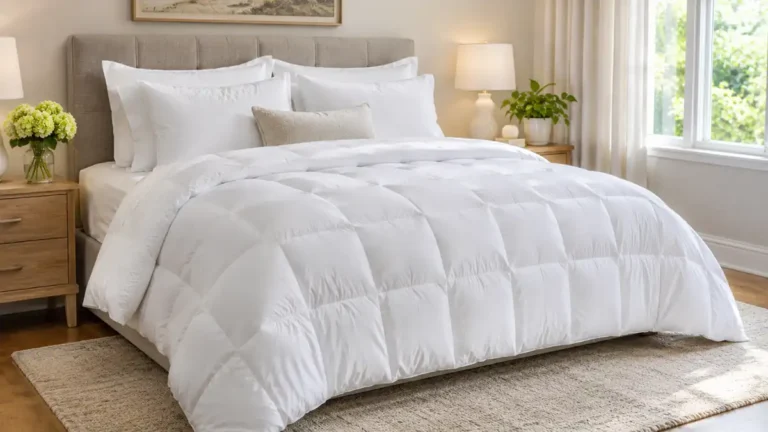
A comforter is a thick, quilted blanket with fill sewn inside a decorative cover. The fill is held in place by stitching, so it doesn’t shift. You put it on the bed as it is. Comforters often come in sets with matching shams and sometimes sheets.
What Is a Duvet?
A duvet, or duvet insert, is a plain filled bag, usually white, with down, feathers or a synthetic fill. It goes inside a removable duvet cover. The cover protects the insert and gives the bed its look.
Duvet vs Comforter: Comparison Table
| Factor | Comforter | Duvet (insert plus cover) |
|---|---|---|
| Pieces | One | Two |
| Style change | Fixed look | Swap covers |
| Washing | Wash the whole piece | Wash the cover often |
| Warmth | Depends on fill | Depends on fill |
| Cost | Often lower | Can be higher |
| Convenience | Ready to use | Need to put the cover on |
| Look | Often flat and quilted | Often plush and fluffy |
Warmth
The sources conflict. One says a comforter is generally warmer and more insulating than a corresponding duvet. Another says duvets are generally more plush, more dense, softer and warmer. A third argues that warmth comes from the fill, not the format.
Duvets tend to come in a fixed warmth rating (a tog rating, mostly outside the US), so a winter-grade duvet may be too warm for summer use, and vice versa. Checking the fill and warmth rating matters more than the format. See the duvet insert guide for fill power and construction.
Care and Washing
Duvets are easier to maintain day to day. Most duvet covers are machine washable, and the insert needs less frequent cleaning.
A comforter is harder to clean. With no protective cover, the entire comforter must be washed. Depending on the fill, some comforters may be dry-clean only, or too bulky for home washers. Down or feather duvet inserts need specialist care, since duvets filled with feathers or down cannot be machine washed at home, according to one source. Always check the care label.
If you want easy cleaning, a duvet with a washable cover is simpler. If you want a no-fuss piece you rarely wash, a comforter works.
Cost
One says on average, duvets are 30 to 50 percent more expensive than comforters. Another notes that because a duvet involves two pieces, the initial cost may be higher, but also that comforter sets that include a coordinating comforter, sheets and cases are budget-friendly and convenient. A third says that for the same material, a comforter will cost about the same as a duvet, if not a little bit more.
Material usually drives price more than format does. Compare the cost of the insert plus a cover with the cost of a comforter of similar quality.
Style and Look
Duvet: offers more style flexibility with interchangeable covers and a plush, luxurious look. You can change your bedroom style by changing the cover. Comforter: gives a polished look in one piece, often with matching accessories. The look is fixed.
If you like to update your bedding with the seasons or your mood, a duvet is better. If you want a quick, matched bed, a comforter is easier.
Putting It On
A comforter just goes on the bed. A duvet needs a cover, which can be a small chore. Corner ties or clips help hold the insert in place. Methods like the “burrito” roll make it easier.
Can You Use Both?
Yes. One guide notes that a duvet cover can be used over a comforter, and a light blanket can add warmth without buying a heavier insert. A comforter inside a duvet cover protects it from dirt and lets you change the look. Make sure the sizes match.
Which Should You Choose?
Choose a duvet if: you: want to change the look often; prefer easy washing of the cover; like a plush, fluffy feel; are willing to spend more upfront.
Choose a comforter if: you: want a ready-to-use piece; prefer a lower upfront cost; like the convenience of a matched set; don’t want to put a cover on.
Think about warmth: choose a fill and weight for your climate and how you sleep. Allergies matter too: down alternative suits sensitive sleepers.
How to Choose
Decide your priority. Cost, style, ease or warmth? Check the fill. Down, down alternative or other. Check the warmth level. Check the size to match your bed. Check the care label. Think about covers and sets. Consider allergies. Compare total cost. Include covers. Read reviews. Check the return policy.
What mistakes should you avoid?
A few common mistakes are worth avoiding: assuming the format sets the warmth (the fill matters more); ignoring care needs (some pieces are hard to wash); buying a duvet without a cover (you need both); mismatching sizes (the insert should fit the cover); choosing based on price alone (material drives cost and quality); forgetting allergies (fill type matters).
Frequently Asked Questions
What is the difference between a duvet and a comforter?
A comforter is a single finished piece. A duvet is an insert that goes inside a separate cover.
Which is warmer, a duvet or a comforter?
Warmth depends on the fill and weight, not just the format.
Which is easier to wash?
A duvet, since you can wash the cover often and the insert less often.
Which costs more?
One says duvets average 30 to 50 percent more, another says price depends on material.
Can I put a comforter in a duvet cover?
Yes. A duvet cover can be used over a comforter.
Do I need a top sheet with a duvet or comforter?
It’s up to you. A top sheet adds a washable layer.
Conclusion
A duvet and a comforter both keep you warm, but they differ in care, cost and style. A duvet with a cover offers more flexibility and easier washing. A comforter is a simple, ready-to-use piece.
Think about your priorities, check the fill and warmth and consider using a cover over a comforter if you want the best of both. The right choice will make your bed cozier and easier to keep fresh.
Related guides
 Comforter vs Duvet: The Real Difference and Which One to ChooseA comforter is a single quilted blanket that you can use on its own. A duvet is a soft insert that goes inside…Read more →
 Best Comforter: Down vs Down Alternative, Fill Power, Fill Weight and Baffle Box ConstructionThe best comforter depends on how warm you sleep, whether you have allergies and how much you want to spend.…Read more →
 Best Duvet Covers Guide: Percale vs Sateen vs Linen, Thread Count, Closures, Ties and FitQuick answer: a duvet cover is a removable case for a duvet insert. Percale is crisp, cool and breathable,…Read more →
 Kids Couch Guide: Safety, Foam Density, Washable Covers, Sizes and Modular Play CouchesQuick answer: a good kids couch has rounded edges, non-toxic high-density foam, a washable removable cover and…Read more →