Foldable Mattress Guide: Tri-Fold vs Bi-Fold, Thickness, Foam Density, Storage and Guest Use
A foldable mattress is a bed you can put away. Fold it in half or in thirds, tuck it in a closet and bring it out when guests arrive. It sleeps one person or two, depending on the size, and costs far less than a spare bed. For small homes, dorms, kids’ sleepovers and camping, it is one of the most practical sleeping solutions.
This article is part of our mattress buying guide, where you can compare related options.
But foldable mattresses vary a lot. A thin, cheap foam pad sleeps poorly and falls apart at the fold. A well-made one can be comfortable for years. This guide explains the fold types, how thick the mattress should be, what foam density means, why the fold line is the weak point, how to store it and how to choose for guests or everyday use.
Types of Foldable Mattresses
Tri-fold mattress: folds into three panels, like a Z. Stores compactly. A queen tri-fold folds to roughly 60 by 27 inches, with height depending on thickness, which suits closets, under-bed storage and car trunks, according to one source. Bi-fold mattress: folds in half. Bi-fold designs are often more durable at the fold, while tri-folds store more compactly, according to one source. Roll-up mattress: rolls into a tube. Often thinner. Folding mattress with a case: a carry bag or case with handles. Folding bed with mattress: a frame plus mattress. See the folding bed guide. Futon mattress: bends but is thicker and heavier. See the futon mattress guide. Sofa bed mattress: folds inside a sofa. See the sofa bed couch guide.
| Type | Storage | Durability | Best for |
|---|---|---|---|
| Tri-fold | Most compact | Fold lines wear | Guests, travel |
| Bi-fold | Less compact | More durable at fold | Frequent use |
| Roll-up | Light | Thin | Camping |
Thickness
Thickness recommendations vary by body weight and use.
One retailer suggests 3 to 4 inches in a soft or medium feel for lighter sleepers, and 6 to 8 inches in a firmer build for heavier sleepers. Another guide says a tri-fold model in the 4 to 6 inch range offers the best mix of comfort and portability for most households. Thinner folding designs tend to feel firmer than thicker ones.
Thicker mattresses are more comfortable but heavier and bulkier when folded. For occasional guests, 4 to 6 inches may be enough. For regular sleeping, choose the thicker end and good foam. A mattress topper can help. See the mattress topper guide.
Foam Quality and Density
Foam density affects support and durability.
One guide recommends high-density foam, typically 30 kilograms per cubic meter or higher, so the mattress supports weight without being very thick. That is about 1.9 pounds per cubic foot. Look for CertiPUR-US certification, which tests foam for certain chemicals and emissions, and a removable, washable cover. Memory foam appears often in the recommendations, but polyfoam and hybrid foams are used too. Ask for the foam density in the product details. Low-density foam sags quickly.
See the memory foam pillows guide for notes on memory foam and off-gassing.
The Fold Line Is the Weak Point
The fold is where most folding mattresses fail.
One review recommends continuous foam with deep cut channels rather than separate blocks stitched together. Separate blocks can shift, leaving gaps. Check how the fold feels when you lie on it. A hard ridge or a dip at the fold will bother your back. Check that the cover is stitched securely at the folds. Unfold and fold gently, and avoid forcing it. Let the mattress lie flat for a day after unpacking so the foam relaxes.
If the fold line is uncomfortable, put a topper over the whole mattress, or choose a bi-fold design.
Firmness
Firmness depends on your weight and sleep position. Thinner folding designs tend to feel firmer. Heavier sleepers need firmer, thicker foam, and lighter sleepers may prefer a softer feel. Side sleepers need some give at the shoulders and hips. Back sleepers need support. See the how to choose a mattress guide for firmness by sleep position.
Size
Foldable mattresses come in single (twin), full, queen and sometimes king. Match the size to the sleeper and room. See the twin vs twin XL, full vs queen and folding bed guides. Check the length for tall guests. A foldable mattress is also an option for children’s sleepovers.
Storage
Plan your storage first.
- Measure the folded size and compare it with your closet or under-bed space.
- Check the weight. Thick foam is heavy.
- Use the case or a storage bag to keep the mattress clean.
- Store flat if possible, or stand it upright. Avoid heavy items on top, which can crush foam.
- Keep it dry.
- Air it out before storing.
A queen tri-fold at roughly 60 by 27 inches fits many closets.
Uses
Key points: guest bed. The most common use. Pair with a protector and sheets. See the mattress cover and fitted sheet guides; kids’ sleepovers; small apartments. A bed that disappears by day; camping and travel. Thinner models; floor lounging and movie nights; extra bed in a home office; temporary bed during renovations.
For long-term daily sleeping, a regular mattress or a sofa bed with a real mattress may be better.
Comfort Tips
Add a mattress topper. Use a fitted sheet that fits the thickness. See the fitted sheet guide. Use good pillows. See the memory foam pillows guide. Place it on a firm, flat surface. Avoid sleeping on a rough floor without a pad. Use a rug on hard floors. Let the foam expand fully before use.
Care
Key points: use a washable cover; spot clean the foam; air dry fully; do not wash foam in a machine; rotate the mattress if used often; keep it away from moisture.
What are the main strengths and weaknesses?
On the plus side: easy to store; affordable; light and portable; many sizes; handy for guests. On the downside: fold lines can be uncomfortable or wear out; thin models feel firm; not as supportive as a full mattress; cheap foam sags; may have a smell at first.
How to Choose a Foldable Mattress
Decide how often you will use it. Choose tri-fold or bi-fold. Choose thickness: 4 to 6 inches for most households, thicker for regular use. Check foam density: about 30 kilograms per cubic meter or higher. Check certifications and the cover. Check the fold construction: continuous foam with channels. Measure storage space. Check size and length. Check the trial and return policy. Read reviews for fold line comfort.
What mistakes should you avoid?
A few common mistakes are worth avoiding: buying a thin mattress for regular guests; ignoring foam density; not checking the fold line; forgetting storage size; using the mattress without letting it expand; crushing it under heavy items.
Further reading: the Sleep Foundation mattress information hub.
Frequently Asked Questions
How thick should a foldable mattress be?
4 to 6 inches for most households, with 3 to 4 for light sleepers and 6 to 8 for heavier ones.
Is tri-fold or bi-fold better?
Tri-fold stores more compactly. Bi-fold is often more durable at the fold.
What foam density should I look for?
One guide suggests about 30 kilograms per cubic meter or higher.
Are foldable mattresses comfortable?
They can be, if made with good foam. Fold lines can be less comfortable.
How do I store a foldable mattress?
Fold it, use the case and store it in a closet or under a bed.
Can I use a foldable mattress every night?
It is possible with a thick, quality mattress, but most are made for occasional use.
Conclusion
A foldable mattress is a convenient way to host guests and make the most of small spaces. Choose a thickness that suits your needs, check foam density and the fold construction and plan where it will live.
Add a topper and good bedding for comfort. With the right foldable mattress, you can offer a real bed without giving up a room.
Related guides
 Folding Mattress: Tri-Fold Foam Thickness, Sizes, Density and Who It SuitsA folding mattress is a foam mattress that folds into thirds so you can store it in a closet or carry it.…Read more →
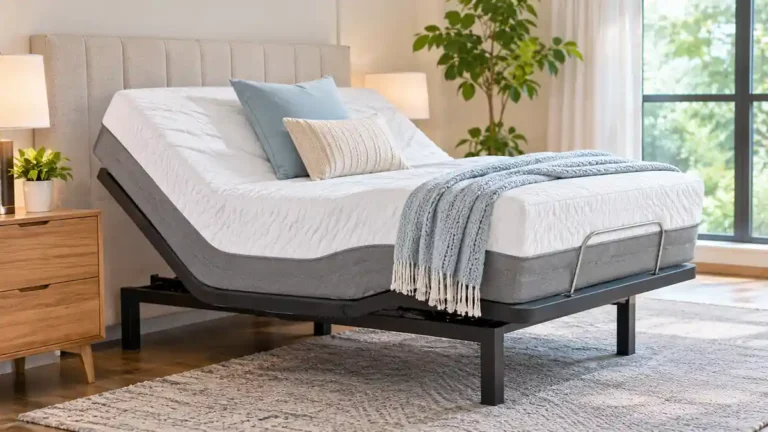 Adjustable Mattress Guide: Which Mattress Types Work on Adjustable Bases (Foam, Latex, Hybrid) and What to CheckQuick answer: most foam, latex and many hybrid mattresses work on an adjustable bed base. Casper rates memory…Read more →
 Inflatable Mattress Guide: Air Bed Height, Built-In Pumps, Leaks, Weight Capacity and CareQuick answer: an inflatable mattress, or air bed, is a mattress you fill with air for guests, camping or…Read more →
 Foldable Bed Guide: Rollaway, Bi-Fold and Tri-Fold Types, Sizes, Weight Capacity and StorageQuick answer: a foldable bed is a bed frame that folds flat for storage. Main types are rollaway, bi-fold,…Read more →