Dresser with Mirror: Attached vs Separate Mirrors, Tip-Over Safety, Anchoring and Placement
Quick answer: a dresser with a mirror is a chest of drawers with a mirror either attached to the back or sold as a separate piece. A mirror mounted on a dresser raises the center of gravity, which adds tip-over risk, so always anchor the dresser and mirror unit to a wall stud with an anti-tip kit.
This article is part of our bedroom furniture guide, where you can compare related options.
A dresser with a mirror gives you storage and a place to check your outfit in one piece of furniture. It is a classic bedroom set. It is also one of the places where safety is easy to overlook, because a tall, heavy mirror on top changes how the furniture balances. This guide explains the types, why safety matters, what a recall teaches, how to anchor, how to size and place the mirror, and how to choose. Sources included the Consumer Product Safety Commission (CPSC), Consumer Reports coverage and retailers. This is not safety certification advice. Check CPSC.gov and the manufacturer’s instructions.
Types of Dressers with Mirrors
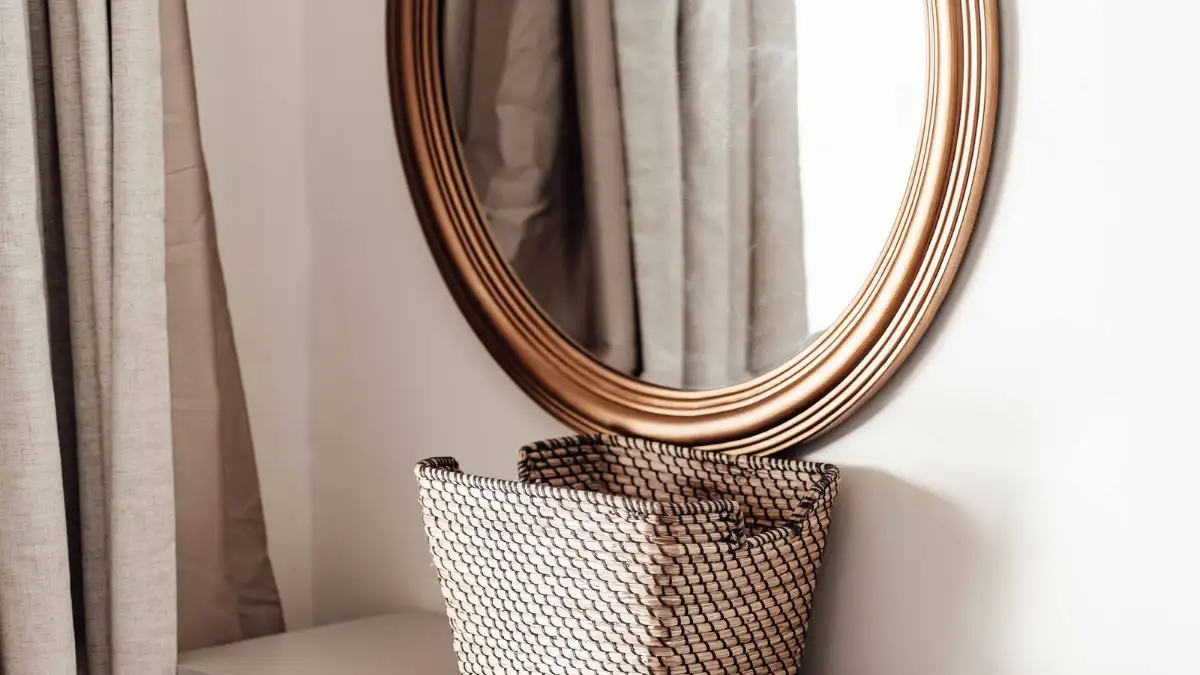
Dresser with attached mirror: the mirror frame bolts or hooks onto the back of the dresser. Common in bedroom sets. Dresser with a separate wall mirror: a mirror hung on the wall above the dresser. Sold separately or as part of a set. Dresser with a leaning or freestanding mirror: a floor or tabletop mirror placed behind or on the dresser. Dressing table with a mirror: see the vanity table guide. Triple dresser with a large mirror: a wide dresser with a big mirror. See the 9 drawer dresser guide. Kids’ dresser with a mirror: see the kids dresser guide.
Why an Attached Mirror Adds Risk
Retailer guidance says a mirror mounted on a dresser raises the center of gravity. That is the main reason an attached mirror adds tip-over risk. A mirror is heavy and sits high, so the dresser is more top-heavy than it looks.
A tall dresser with a mirror may tip more easily when drawers are open or a child climbs. Height isn’t enough. Consumer Reports tested 17 dressers marketed at 30 inches tall or less, and only five passed all of its tests. Its reporting says low dressers can still be deadly for small children. Weight shifts. Opening several drawers at once moves the center of gravity forward.
See the kids dresser guide for the STURDY Act and tip-over rules.
The Recall Lesson
A 2020 CPSC recall covered dressers that were unstable if the mirror was not installed, posing serious tip-over and entrapment hazards that can result in death or injuries to children. That recall concerned a mirror that was supposed to be installed, not a separate mirror. The lesson: follow the assembly instructions exactly, including the mirror, and check for recalls on CPSC.gov. Parts and hardware are part of the safety design.
Anchoring a Dresser with a Mirror
Retailers recommend an anti-tip kit to anchor the combined dresser and mirror unit directly to a wall stud. One installation guide says these devices are designed to withstand significant force, often rated to hold up to 200 to 400 pounds.
For an attached mirror, one guide advises attaching the supports at multiple points, engaging the solid wood framing of the mirror and the dresser’s top rail or drawer support frame.
Steps:
- Assemble the dresser and mirror per the instructions.
- Find a wall stud with a stud finder.
- Attach the bracket or strap to the dresser’s top or back frame, not just the thin back panel.
- Screw into the stud.
- If the mirror is separate, hang it on the wall into studs with rated anchors.
- Check the tension and re-check periodically.
Other safety habits: put heavier items in lower drawers. A hallmark safety practice; don’t open several drawers at once; don’t let children climb; don’t put a heavy TV on top; check for recalls if your set is older.
Attached vs Separate Mirrors
A Singapore furniture retailer notes that wall-attached mirrors generally make them more stable than freestanding mirrors. That is a general rule, not a tested finding. The search did not turn up any independent test comparing attached and separate mirrors directly.
| Feature | Attached mirror | Separate wall mirror |
|---|---|---|
| Center of gravity | Higher | Dresser unchanged |
| Installation | With dresser | On wall into studs |
| Flexibility | Fixed height | Choose height and style |
| Safety | Anchor the combined unit | Anchor both separately |
| Look | Matching set | Mix and match |
A separate wall-mounted mirror keeps the dresser lower and lighter, but the mirror must be hung securely into studs. A leaning mirror must be anchored too. See the floor mirror guide.
Sizing and Placing the Mirror
Width. About two thirds to the full width of the dresser looks balanced. Height. The mirror’s center should be near eye level for the main user. Check the total height with the mirror, and compare it with ceiling height and any window above. Gap. Leave a few inches above the dresser top for items. Light. Place the mirror to reflect light, not glare. Avoid facing a bright window. Safety. Don’t hang a heavy mirror over a bed. Style. Match the frame to the bedroom set or contrast it.
See the vanity table guide for mirror and lighting ideas at a dressing area, and the small bedroom ideas guide for how mirrors make rooms feel bigger.
Choosing a Dresser with a Mirror
Check STURDY compliance and the anti-tip hardware. See the kids dresser guide. Check the combined weight and height. Check the mirror attachment points and hardware. Choose a sturdy dresser: solid wood or strong plywood and good glides. See the wood dresser guide. Choose the mirror size and shape. Measure the room and wall, including the total height. Plan anchoring into studs. Check the delivery and assembly. Check the warranty and recalls. Read reviews for stability.
Styling
Key points: place a tray on top for perfume and jewelry; add a lamp on one side; leave a clear area in front of the mirror; keep clutter low so the mirror reflects well; hang art if the mirror is separate.
What are the main strengths and weaknesses?
On the plus side: storage and a mirror in one place; matching sets look cohesive; saves wall space for a separate mirror. On the downside: higher center of gravity; heavier and harder to move; mirror is fixed in place; needs careful assembly and anchoring.
What mistakes should you avoid?
A few common mistakes are worth avoiding: skipping the wall anchor; not installing the mirror as instructed; attaching the strap only to the thin back panel; placing heavy items on top; hanging a heavy mirror without studs; ignoring recalls.
Frequently Asked Questions
Are dressers with mirrors more likely to tip?
A mirror raises the center of gravity, so yes. Anchoring is important.
Should I anchor a dresser with a mirror?
Yes, to a wall stud with an anti-tip kit.
Can I use a separate mirror instead?
Yes. A wall-mounted mirror keeps the dresser lower, but must be hung securely.
What did the 2020 CPSC recall involve?
Dressers that were unstable if the attached mirror was not installed, creating tip-over and entrapment hazards.
How high should the mirror be?
With its center near eye level for the main user, and check total height.
Do low dressers need anchoring?
Yes. Consumer Reports found low dressers can still tip dangerously.
Conclusion
A dresser with a mirror is useful and handsome, but its height and weight demand care. Assemble it exactly as instructed, anchor the whole unit to a wall stud, keep heavy items low and check for recalls.
If you prefer, hang a separate mirror on the wall. Either way, safety first makes the set a lasting part of your bedroom.
Related guides
 Dresser for Bedroom: How to Choose the Right Size, Style and Safe SetupA dresser is the workhorse of the bedroom. It holds your clothes, keeps floors clear and gives you a surface…Read more →
 Green Dresser: Paint Choices, Shades and Bedroom PairingsA green dresser adds color to a bedroom without taking over the room. You can buy one already green or paint an…Read more →
 Wooden Dresser Guide: Solid Wood vs Veneer and How to Tell the DifferenceA wooden dresser can be solid wood, wood veneer over MDF or plywood, or a wood-look piece made of…Read more →
 Baby Dresser Guide: Changing Table Dressers, STURDY Act, Wall Anchoring and CPSC Recall LessonsQuick answer: a baby dresser stores clothes and diapers and often doubles as a changing table with a topper.…Read more →